USA - Lake Tahoe (CA & NV)
There are many places to cycle in the USA but Lake Tahoe is a special place: a dark blue wonderful lake, high mountains and wonderful pine forests.
The Lake
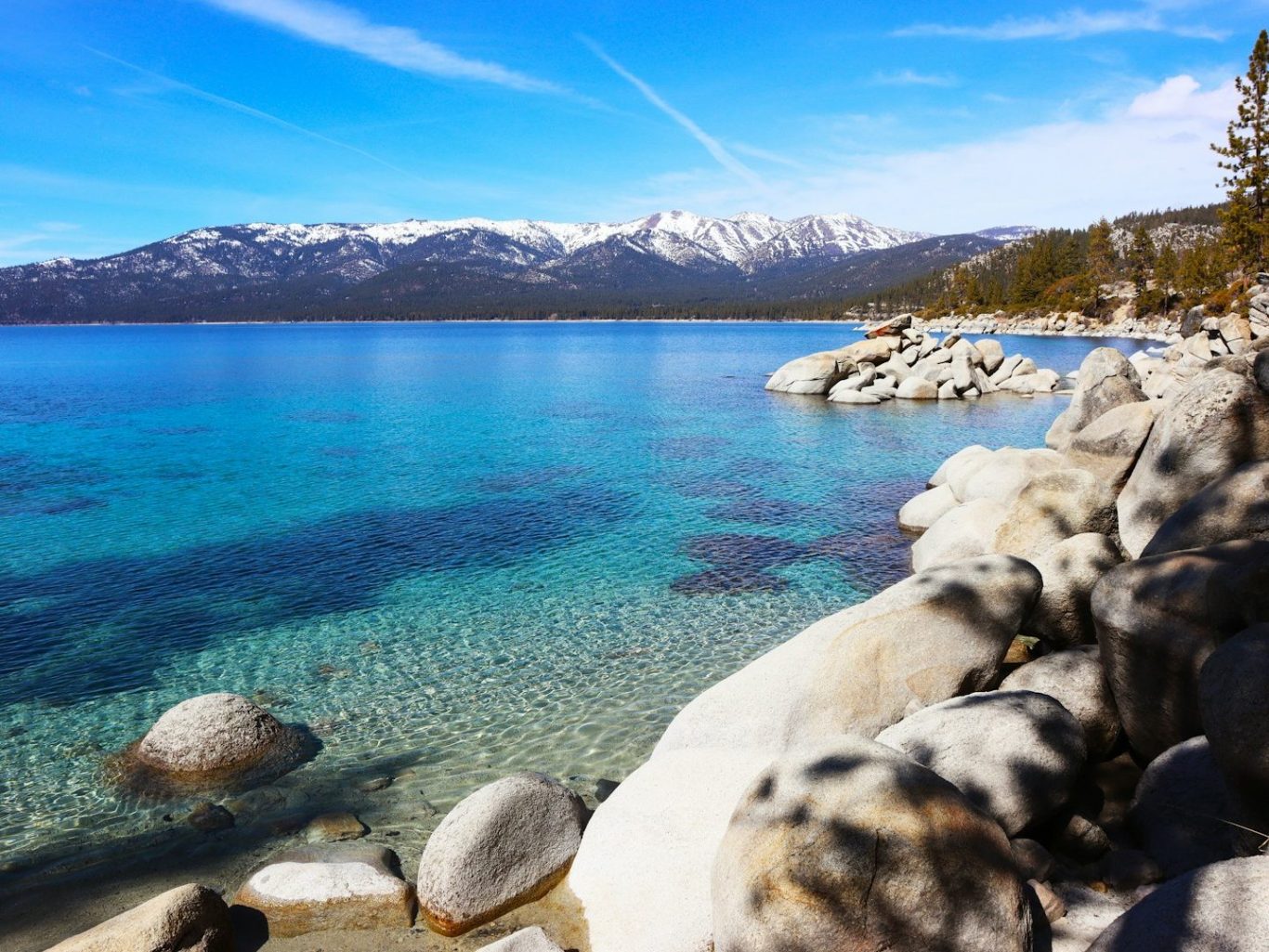
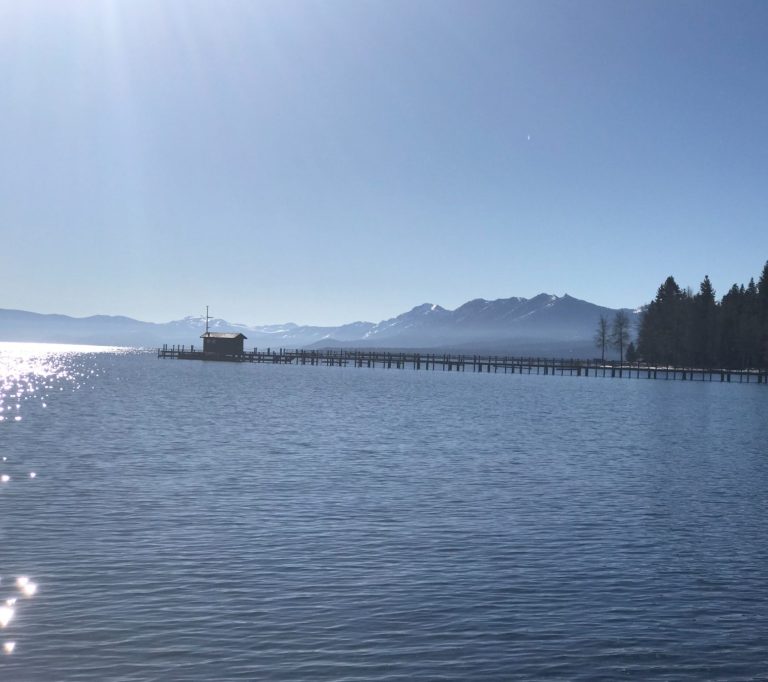
Lake Tahoe is a truly wonderful place—a large, deep blue lake surrounded by high mountains shaped by glaciers. What makes it especially special is the sun and the light, which have a warm and nurturing quality. Sport is in the blood here: cycling, mountain biking, hiking, mountaineering, and water sports are all part of daily life. A great place to base yourself is North Tahoe—either Incline Village, a resort town, Crystal Bay, or Kings Beach. All are excellent locations for accessing the Sierra Nevada north of the lake.
The south is busier, with South Lake Tahoe being the main town, offering plenty of entertainment and gambling on the Nevada side. The north, by contrast, is more peaceful.
Lake Tahoe was formed approximately 2 to 3 million years ago through a combination of geological faulting, volcanic activity, and glaciation. The basin was created when the Earth’s crust stretched, causing blocks of land to drop between the rising Sierra Nevada and the Carson Range—a process later reinforced by volcanic eruptions to the north. It sits at around 2,000 metres above sea level, with very low humidity. The surrounding mountains were shaped by glaciers and appear almost sandpapered down, creating vast, open expanses.
To the east lies Reno, with a very different ecosystem. The landscape around Reno is best described as a high-desert, arid valley environment. Situated at an altitude of roughly 4,500 feet, it is characterised by dry terrain, sagebrush, and dramatic mountainous scenery. The area is bordered to the west by the Sierra Nevada and to the east by the Virginia Range—creating a striking and unique contrast.
Around Lake Tahoe
Circling the lake
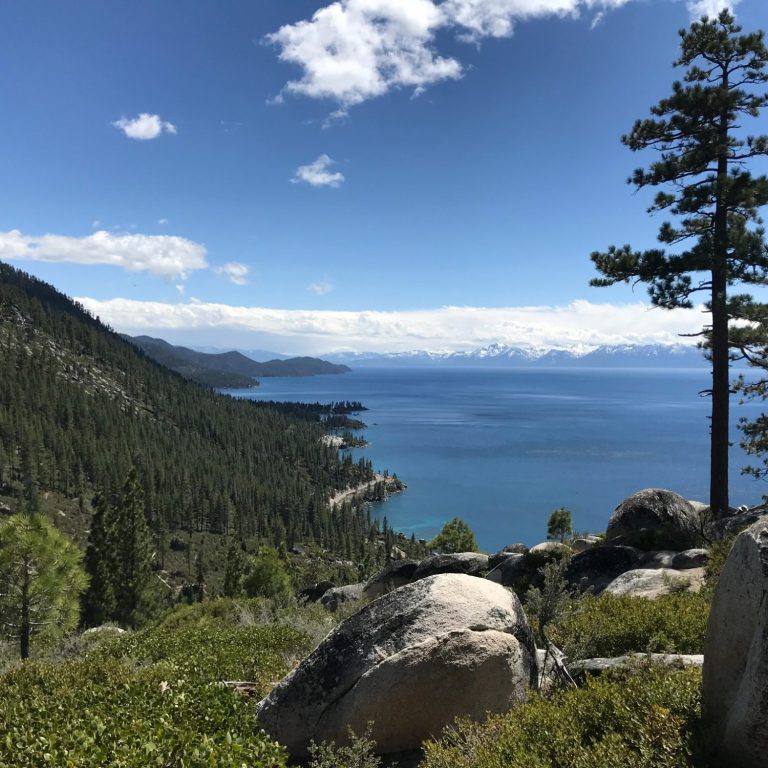
The loop around the lake is one of the most iconic rides in the US—118 km long, with an elevation gain of 1,260 m. Starting in Crystal Bay and heading clockwise around the lake, the first stop is Incline Village, which you will likely breeze through, before joining Highway 28 towards Spooner Lake. This is a fantastic road, initially hugging the shoreline before climbing high above the lake and winding through pine forests to Spooner Lake, where it meets Highway 50. Along the way, the route passes Sandy Harbor and several amazing lookout points that are well worth a stop.
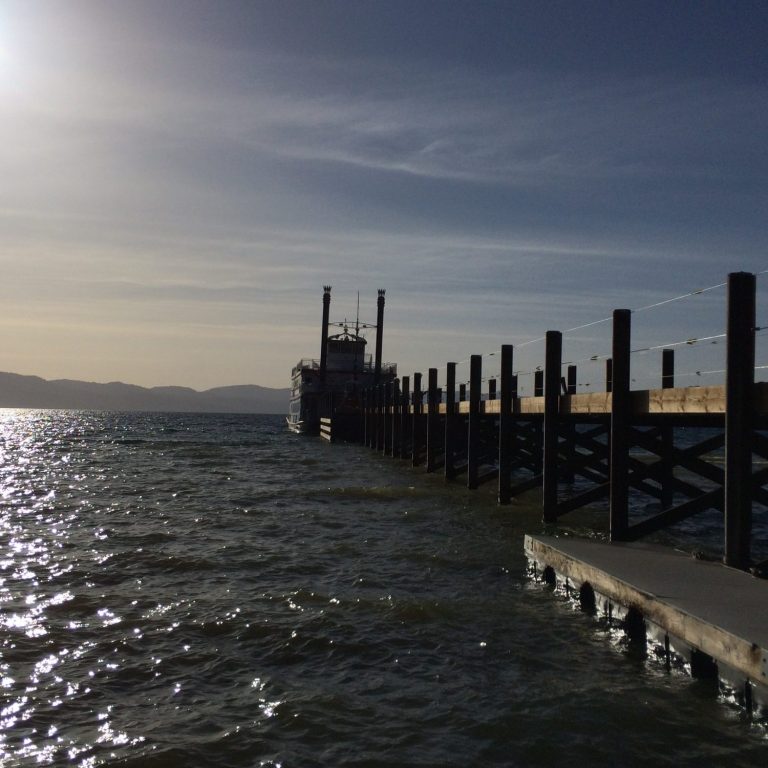
At Highway 50, the route turns right towards South Lake Tahoe along a dual carriageway. While not ideal, it is frequently used by cyclists. At Cave Rock, there is a tunnel where cyclists can press a button upon entry to activate warning lights for cars. The road then continues to Zephyr Cove, a lovely harbour known for its steamboat cruises.
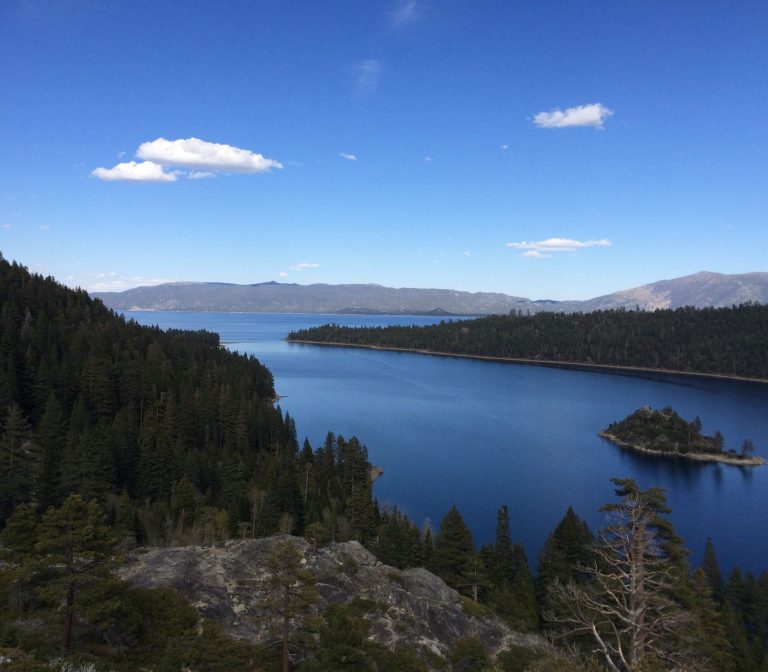
Next is South Lake Tahoe at roughly the halfway point—a busy, bustling town and a good place to stop and take in the atmosphere. Leaving town, the route turns right onto Highway 89 towards Emerald Bay. This is a particularly special stretch of road, beginning through forest and passing the historic Camp Richardson, before climbing to the famous ridge road high above Emerald Bay, with steep drops on either side. Emerald Bay itself is stunning—arguably the most picturesque part of Lake Tahoe.
From Emerald Bay to Tahoe City, the road weaves up and down through forests, along the lake, and through small hamlets such as Meeks Bay, Tahoma, and Tahoe Pines. Although busy, it is a beautiful section with plenty of opportunities to stop and admire the scenery. The final stretch from Tahoe City back to Crystal Bay continues in much the same vein—an undulating road through pine forests, with lake views and charming villages along the way.
Overall, this is a wonderful way to spend a day on the bike.
Mount Rose Pass
Highest Pass
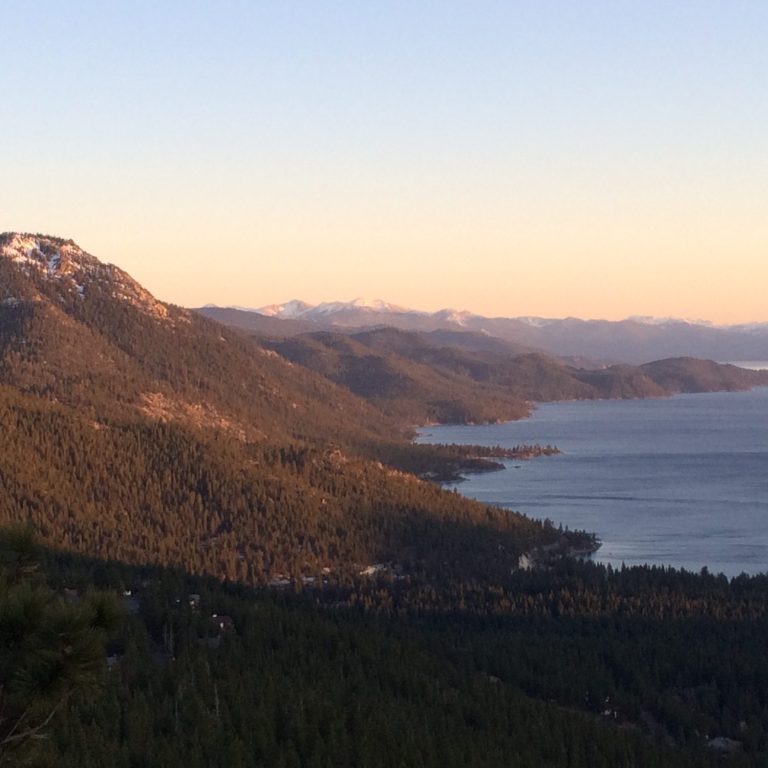
Mount Rose Pass is the pass at Lake Tahoe. It sits on State Route 431 at an altitude of 2,731 m (roughly the same as the Stelvio) and is the highest year-round open pass in the United States. It connects two very different worlds. On the west side, the road rises from Incline Village through an alpine, pine-dominated mountain landscape. Once over the summit, the arid high desert east of Reno comes into view. After descending a series of breathtaking switchbacks, the road reaches the outskirts of Reno and the desert—fascinating.
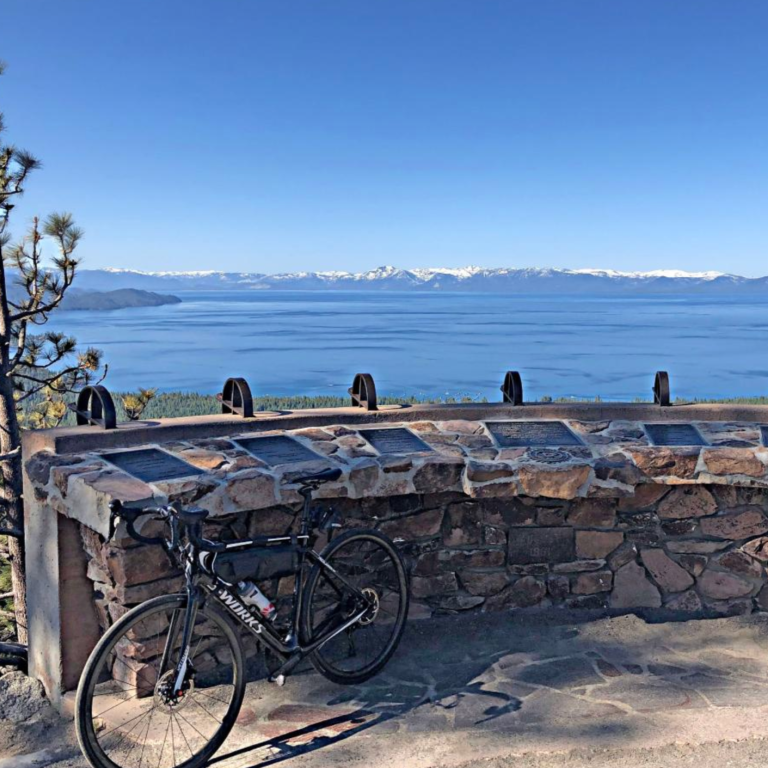
Starting from Incline Village, the highway climbs in long, straight sections, rising high above the town and passing a scenic lookout before turning sharply inland into the mountains. The road then continues on sustained ramps, passing Tahoe Meadows on the way to the summit.
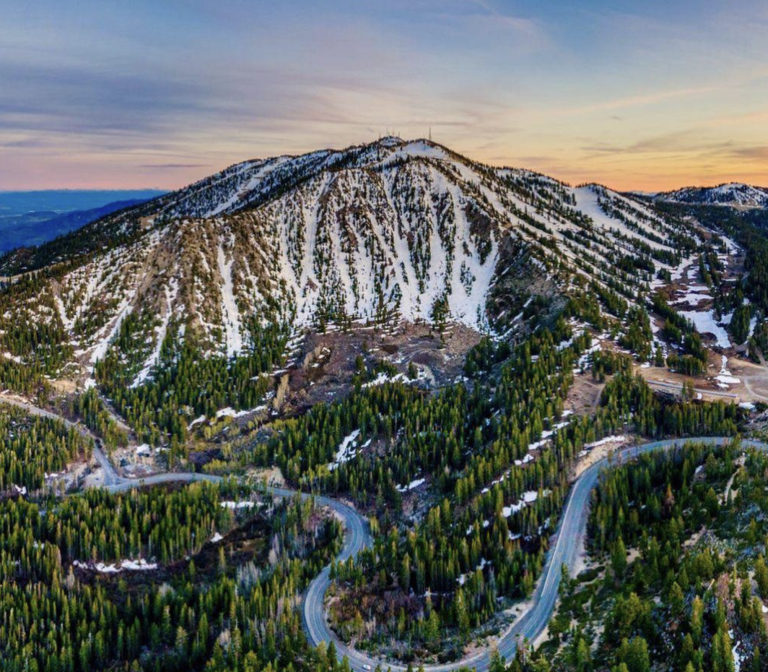
The eastern side is a different affair—and the more famous side to climb and descend. The ascent is long at 24.6 km (15.3 miles), gaining 1,253 m (4,111 ft) in elevation while negotiating 12 switchbacks and numerous sweeping turns. It begins at the Galena Shopping Center off Interstate 80 and follows an 8.9 km (5.5 mile) ramp into the mountains, climbing 375 m (1,270 ft) to the Galena Creek Visitor Center. Here, the trees—and the real enjoyment—begin, as the road rises through pine forest high above the Washoe Valley, offering spectacular views.
The climb continues through a series of switchbacks deep into the mountains, leaving the Reno desert behind. You pass the Mount Rose Ski Area, with peaks rising in all directions. The final push to the summit comes through a beautiful sequence of turns, almost doubling back on themselves before reaching the top.
Climbing both sides of this pass in a single ride is simply fabulous.
Donner Pass
Frontier History
This ride traces some of the frontier history of the area, recalling the time when settlers explored this land and the transcontinental railroad was built. Truckee is a charming historic mountain town in the Sierra Nevada and played a crucial role in the construction of the railroad. Donner Pass is named after a group of settlers—the Donner Party—who perished in the mountains during winter while seeking a route west.
The ride itself is less dramatic but transports you back to those days. Leaving Incline Village, the road follows the lake to Kings Beach, where it turns sharply right and heads inland, climbing to Brockway Summit at an elevation of 2,188 m (7,179 ft), before descending into the Truckee Valley past the Northstar ski area. Truckee sits in the Martis Valley, a high-elevation basin where cold air often settles, meaning it frequently records colder temperatures than the rest of the Tahoe Basin.
Although the main road is long and straight, you can take a paved cycle path to Truckee. It begins at an unremarkable junction on the left, just after a left-hand bend as the road leaves the forest and enters the Martis Valley plain. Truckee itself is a delightful place, with a frontier, Wild West feel, and is well worth a stop.
From here, the route follows Donner Pass Road, at first crisscrossing Interstate 80 before leaving the bustle behind and continuing along the shores of Donner Lake. After the lake, the road climbs to Donner Pass over 5.6 km (3.5 miles), gaining 340 m (1,119 ft) in elevation and offering superb views in all directions. The pass sits at 2,151 m (7,057 ft), near Donner Ski Ranch. The route returns the same way.
Mountain and Desert ride
Mountains and Desert
This is a long ride of 128 km, with a total elevation gain of 2,600 m. It combines the best of both worlds—a high alpine lake and an arid, high-elevation desert. The altitude and changes in temperature make this a demanding ride.
The route starts in Incline Village on the north shore of Lake Tahoe and follows Highway 28 along the eastern shoreline to Spooner Summit. This is a beautiful road, with great lookout points over the lake and views of Sandy Harbor along the way. At Spooner Lake, the road turns left onto Highway 50, a dual carriageway that climbs gently over Spooner Summit before descending all the way to Carson City. As this section is mostly downhill, the fast road is less of an issue.
Carson City is a small town named after the legendary frontiersman Kit Carson. It rose to prominence during the Comstock Lode silver boom of 1859 and has served as the state capital since 1861, even before Nevada officially became a state. The route passes by the State Capitol.
From there, the ride heads into the desert on Highway 50 for about 13 km. This is a fast road, so it is best not to linger. After turning off at the 341 interchange, the landscape quickly takes on a true desert character—arid, with reddish sand and low shrubs. The route follows Highway 341 towards Virginia City. After the turn-off just before Silver City, the road—Occidental Grade—becomes increasingly quiet and remote, offering wide, sweeping views over an empty landscape.
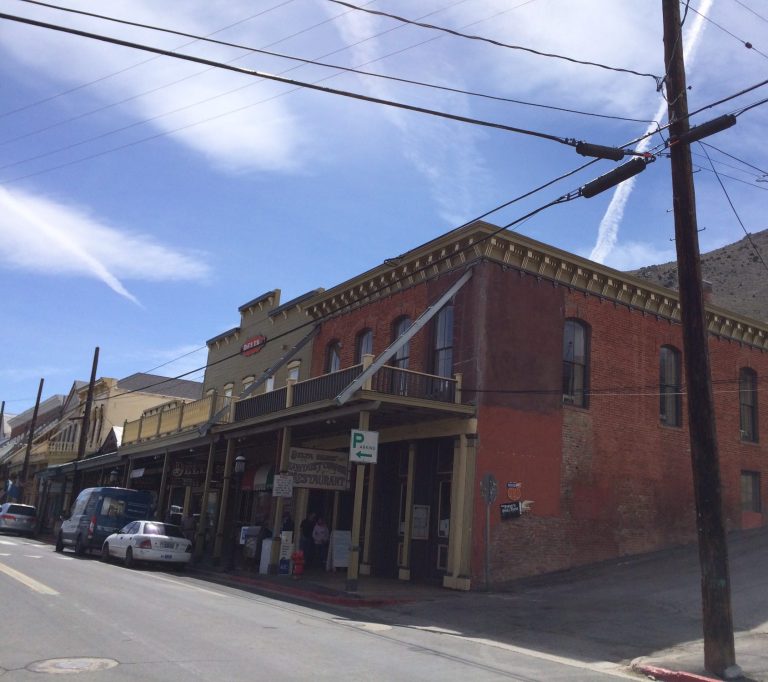
Virginia City is the next stop and well worth a visit. This charming Wild West town from the gold rush era is a great place to refuel. From here, the route continues along Highway 341 over the Geiger Grade all the way to Reno. This is a wonderfully winding road, with views of the Sierra Nevada and Mount Rose coming into sight as you approach the city.
After crossing Interstate 580, there are several shopping areas where you can take a break before tackling the mighty Mount Rose east climb described earlier.
This is a long, demanding ride, but one that is worth every mile of effort.
Climbs around Lake Tahoe
Epic Cycling Climbs in around Lake Tahoe North Lake
2,716 m, Mount Rose Pass, USA, pass connecting Reno and Incline Village: Climbing Mount Rose Pass from Reno is a striking ride that transitions from the arid high desert into a cool, alpine landscape. The ascent begins with long, steady ramps before entering pine forests near Galena, where the road becomes more scenic and engaging with sweeping bends and switchbacks. As you climb higher, views open over the Washoe Valley, and the surroundings grow more dramatic. At 2,731 m, the summit offers expansive views and a true high-mountain feel—making it a challenging but highly rewarding ascent.
2,194 m, Brockway Summit, USA, pass connecting Kings Beach and North Star: Cycling up Brockway Summit from Kings Beach is a steady, scenic climb through pine forests, gradually rising from the lake toward the highlands. The ride offers long, consistent gradients, occasional lake views, and ends at the summit with panoramic vistas of Lake Tahoe and the Carson Valley.
2,178 m, Spooner Summit, USA, pass connecting North or South Lake Tahoe and Stewart: Cycling up Spooner Summit from the western side of North Lake Tahoe is a gentle, scenic climb that begins along Lake Tahoe before turning inland through pine forests. With steady gradients and sweeping bends, it offers an enjoyable rhythm, occasional lake views, and a smooth transition from lakeside to higher terrain.
2,151 m, Donner Pass, USA, pass connecting Truckee and Soda Springs: Cycling up Donner Pass is a relatively short but rewarding climb, combining steady gradients with scenic forested slopes and views over Donner Lake. As the road winds higher through bends and switchbacks, the rugged alpine landscape and historical significance of the route become more apparent. The summit offers expansive views and a strong sense of the area’s past, making it a memorable ascent despite its modest length.
2,150 m, Ellis Peak Trailhead (Barker Pass), USA, dead end road fromTahoe Pine: Gravel road from Tahoe Pines with Barker Pass lying beyond Ellis Trail Head.
Epic Cycling Climbs in around Lake Tahoe South Lake
2,561 m, Carson Pass, USA, pass located on CA-88, slightly south of the immediate Tahoe basin, this is a major historical route over the Sierra Nevada. Cycling up Carson Pass is a challenging yet scenic climb through pine forests and alpine meadows, featuring long, steady ramps and occasional steeper sections. The summit at 2,561 m (8,400 ft) offers expansive views of the Carson Valley and the surrounding Sierra Nevada peaks, making it a rewarding high-mountain ride.
2,360 m, Luther Pass, USA, pass connecting Meyers (near South Lake Tahoe) to Hope Valley, serving as a scenic connection between CA-89 and CA-88.
2,250 m, Echo Summit, USA, pass: Situated on U.S. 50, this pass provides a major route into South Lake Tahoe, offering panoramic views of the basin and the American River canyons. Cycling up Echo Summit from Lake Tahoe is a steady, scenic climb through pine forests and open alpine terrain. The ascent features long ramps, occasional steeper sections, and sweeping curves, culminating at 2,329 m (7,644 ft) with panoramic views of Lake Tahoe, the Carson Valley, and surrounding Sierra Nevada peaks.
2,235 m, Daggett Summit, USA, pass connecting Mottsville and South Lake Tahoe: Kingsbury Grade Road is a significant climb rising out of Carson Valley towards the Heavenly Ski Area. The eastern side delivers both the main physical challenge and much of the ride’s character, with a sustained ascent that provides a rewarding workout.