Col du Galibier - France
The Col du Galibier is probably the most famous mountain pass in road cycling. Since 1911, the pass has frequently been included in the Tour de France and countless battles have been fought on its slopes. If you climb only one pass during your cycling days, this is the one.
The Col du Galibier is a high mountain pass in the French Alps, situated at an altitude of 2,642 metres above sea level. Serving as a link between the Savoie and Hautes-Alpes departments, the pass connects Saint-Michel-de-Maurienne with Briançon. Over time, the route transitioned from a local mule track into a military road, ultimately becoming a prominent location in professional road cycling.
The infrastructure was originally developed for strategic purposes. The French military constructed the first carriage road over the pass in 1879 to establish a reliable route through the alpine border region. To avoid the heavy snow accumulation that frequently blocked the highest section, engineers completed a 370-metre single-lane tunnel in 1891, located approximately 90 metres below the crest. Severe structural deterioration forced the closure of this tunnel in 1976. In response, a new bypass road was built over the mountain crest, which increased the total length of the climb and raised the maximum elevation to its current height. The tunnel eventually reopened to motor vehicles in 2002 following extensive renovation work, though cyclists are still routed over the exterior peak road.
It is most commonly climbed from the north via the long approach from Saint-Michel-de-Maurienne, which includes the Col du Télégraphe. This is a demanding 36 km ascent with 2,110 m of elevation gain. This is probably one of the most demanding climbs in the French Alp as it is in effect two climbs. It is long, high and can in the summer be very hot. But this is also one of the most rewarding rides there is.
The Col du Galibier is hidden behind a pass on both approaches, which adds to its sense of isolation. The landscape becomes stark and almost lunar, dominated by the Grand Galibier at 3,228 m and its surrounding peaks.
Access from the south is somewhat easier, via a busy valley linking Briançon and Bourg-d’Oisans. This route culminates at the Col du Lautaret, which lies just 600 m below the Col du Galibier, providing a long but effective warm-up before turning off the main road for the final push to the summit.
It is the beauty, remoteness, and wild, unpredictable nature of this area that set the Col du Galibier apart from other high Alpine passes.
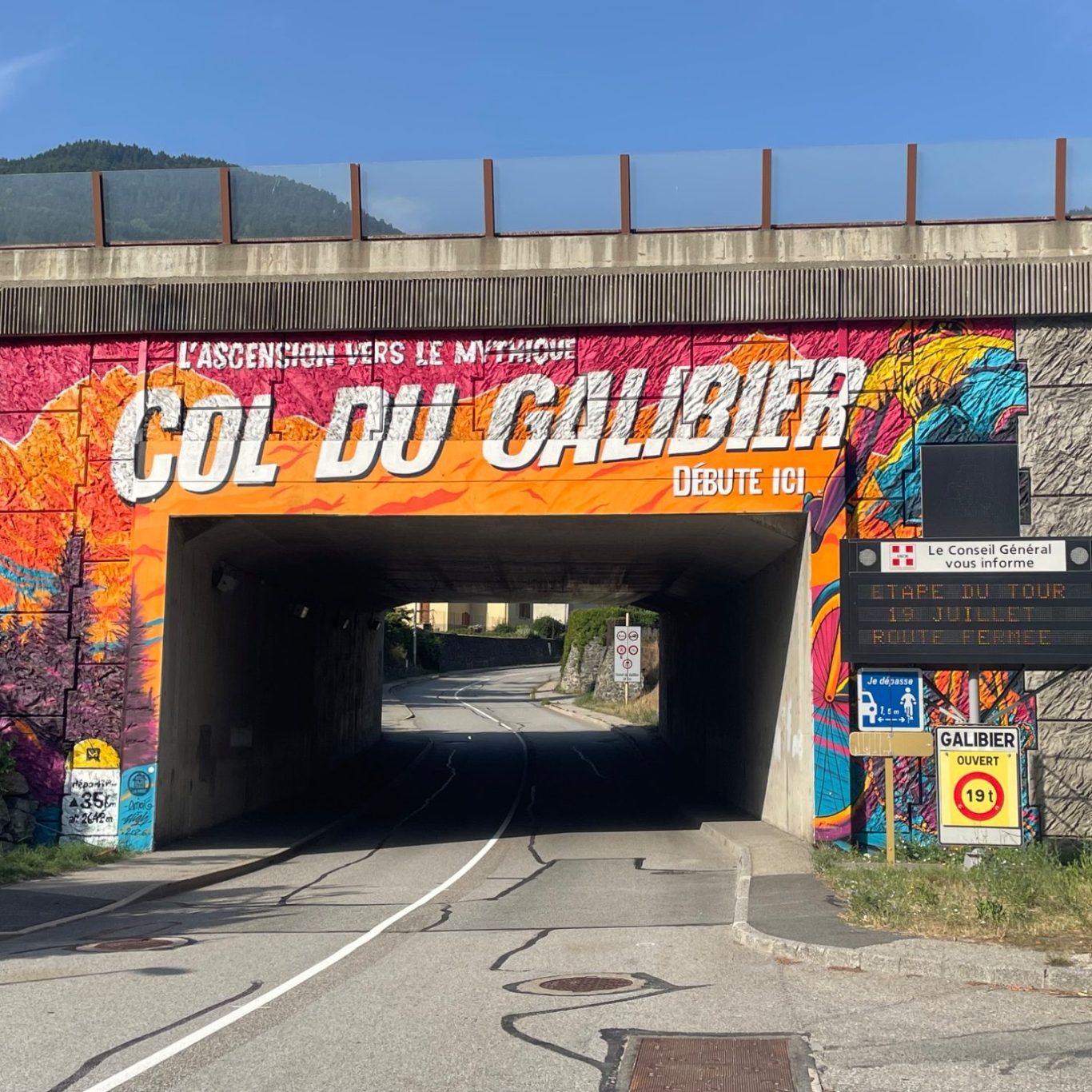
Col du Telegraphe - 1567m
Before the climb to the Galibier can start in ernest, the Col du Télégraphe has to be negotiated. The road leads from St Michele de Maurienne to Valloire past the Fort du Telegraphe which sits high above the Maurienne valley, having guarded this strategic passage through the Alps for centuries past.
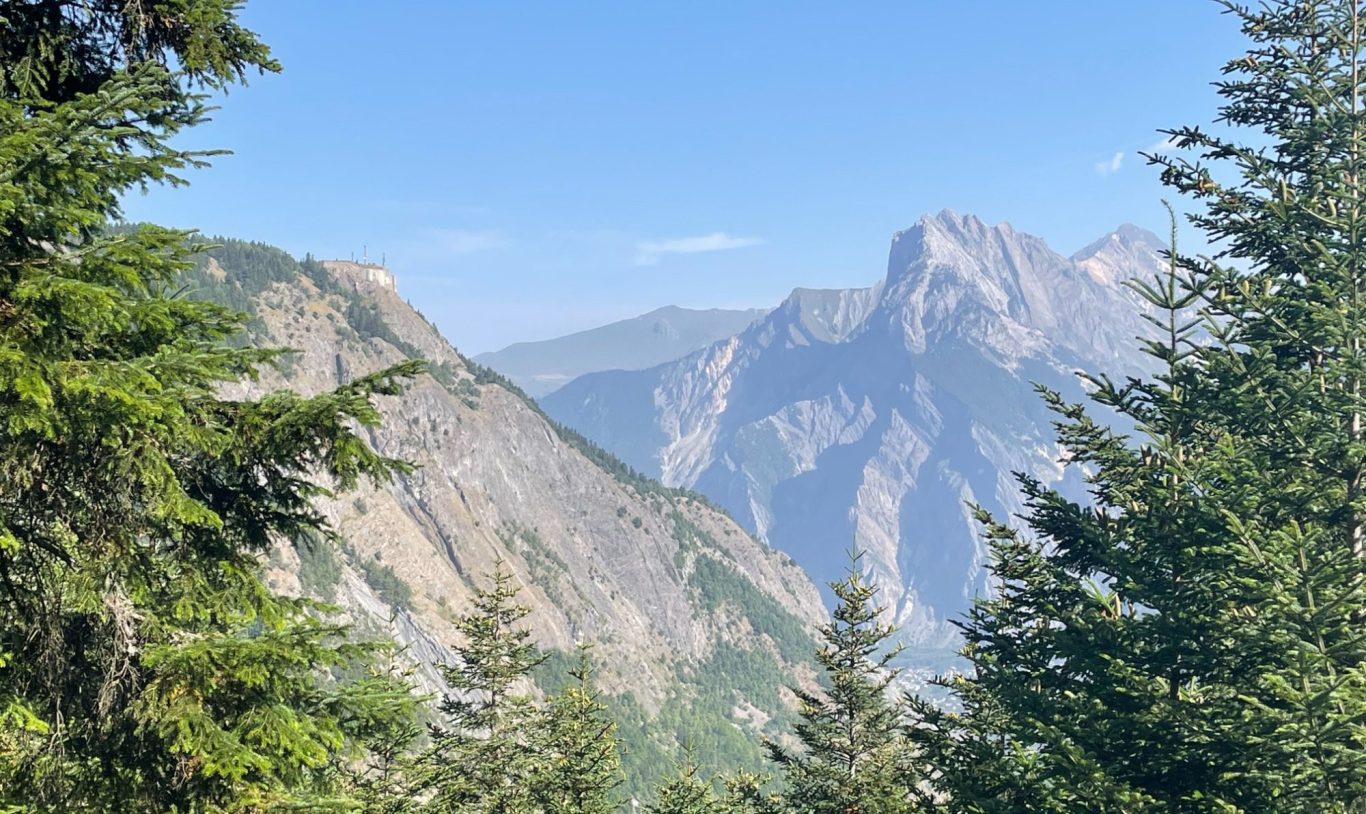
Without the Galibier, the Col du Télégraphe would probably receive far less attention, even though the climb has plenty of charm in its own right. Because it forms the first part of the classic northern ascent of the Galibier, the Télégraphe has been ridden by countless amateurs, enthusiasts, and Tour de France professionals alike. At the time of writing, it has featured in the Tour de France 31 times—an impressive record.
From a cyclist's perspective, the climb is 12 km long and gains around 850 m in elevation, making it a demanding ascent with gradients that consistently range between 7% and 10%. The road winds through forests and open sections, climbing back and forth around the hill crowned by the Fort du Télégraphe. Visible from far down the valley, the fort dominates the landscape, dramatically perched on a rocky cliff high above the road. The climb is relentlessly demanding in places and truly comes into its own in the final kilometre, where the road is carved into the mountainside, revealing fine views across the Maurienne Valley and the surrounding mountains.
Perched dramatically on its rocky outcrop, the Fort du Télégraphe is a reminder of the strategic importance of this pass in the defence of France. Today, cyclists simply ride past it on their way to the true prize beyond—the magnificent Col du Galibier.
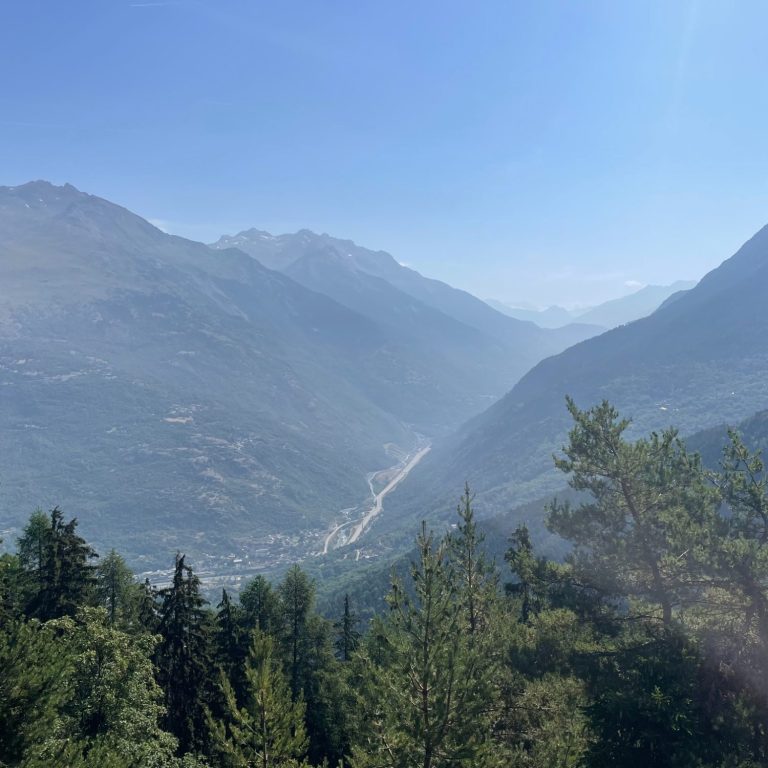
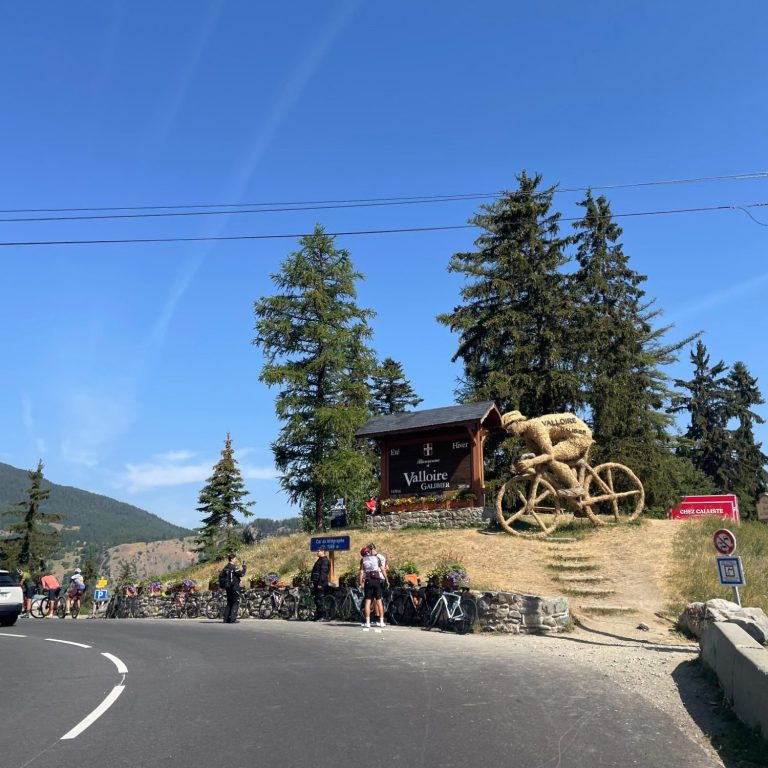
Col du Galibier – 2,642 m - Northern ascent from Valloire
After the ride up the Col du Telegraph, the core on the climb starts from Valloire and forms the heart of the Galibier ascent: 17.5 km long, with 1,213 m of elevation gain. There are only 14 switchbacks, and the road climbs relentlessly along long, straight sections, cutting deep into the mountain and leading to a place that feels remote and unique.
If a full ascent feels too demanding in one go, the climb can be broken up by starting in Valloire and perhaps riding the Col du Télégraphe on another day. Beginning in Valloire makes the ride more manageable, and starting higher up also allows you to tackle the climb early in the morning, when the road is quieter and the air is cooler.
As with all major climbs, it can be divided into distinct sections.
Deep into the valley to 2000m altitude
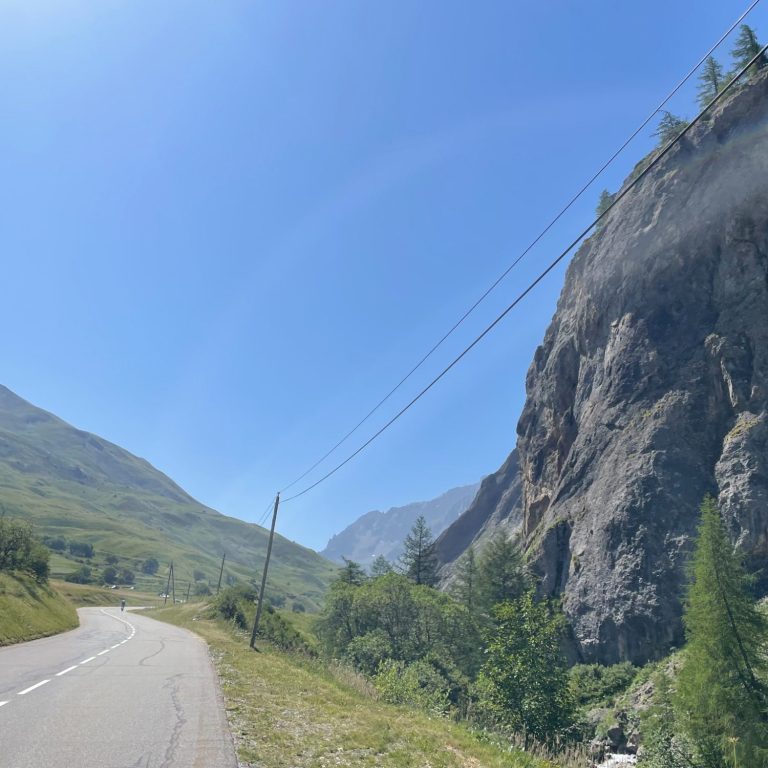
Valloire is a charming village and ski resort set in the aptly named Valloire Valley at an altitude of 1,430 m. The road begins climbing steadily through the town and, once the last hotels and ski lifts of Les Verneys are left behind, continues straight along the valley floor.
After 10.5 km and around 600 m of elevation gain, the road reaches the head of the valley at Plan-Lachat, at approximately 2,000 m. Although the route continues along the valley floor, this section is no easy ride, with consistent but demanding gradients. A headwind can make the climb even more challenging.
The route crosses the La Valloirette stream from right to left. As you progress deeper into the valley, the road hugs the base of the Roche Olvera mountain on the right. When the mountain finally recedes, the road turns sharply right at Plan-Lachat and climbs up the hillside, marking the beginning of a new section of the ascent.
Short vertical up through lovely switchbacks
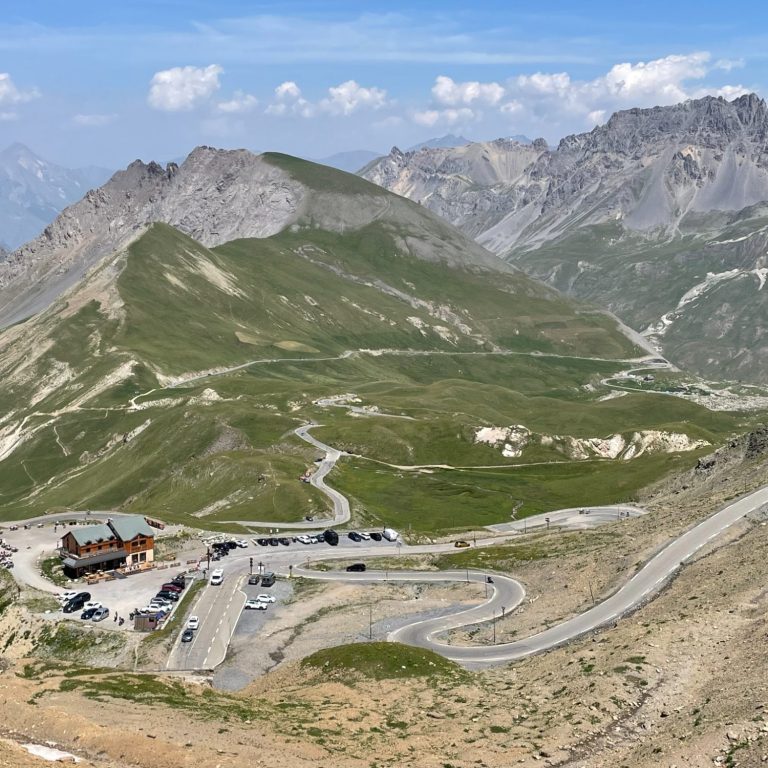
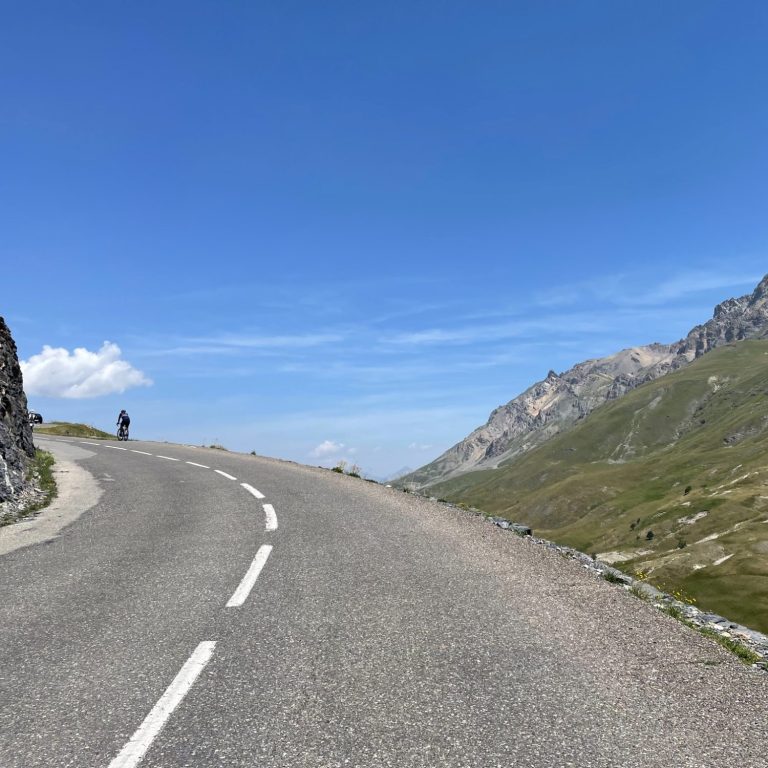
Switchback sections are rare on this climb, making this short stretch—around 2.3 km long with approximately 170 m of elevation gain—a notable exception. Here, the road rises through five beautiful switchbacks high above the Valloire Valley, leading towards an almost delta-like expanse at the foot of the Grand Galibier, which towers at 3,228 m over the landscape to the left.
This is a particularly beautiful section of the ride, marking the transition from the lower valley to a high-altitude plateau. While the valley below remains green and dotted with occasional trees and shrubs, the base of the Galibier massif becomes increasingly stark and rocky, with sheer cliffs rising above and the landscape shifting decisively into shades of brown.
The road is wonderfully engineered, and with every turn, new and spectacular views open up.
Deep into the mountain and to the top at 2642m
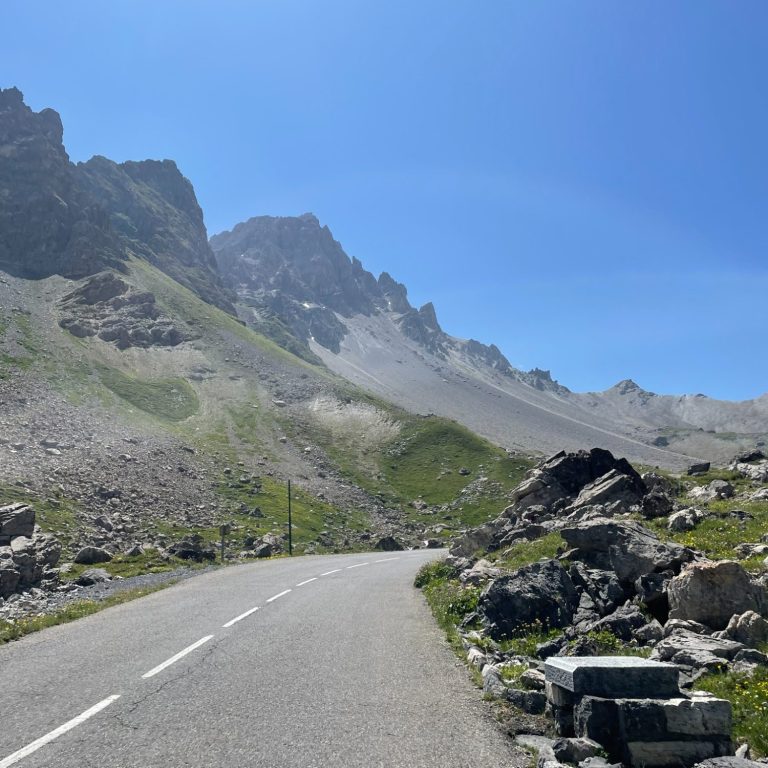
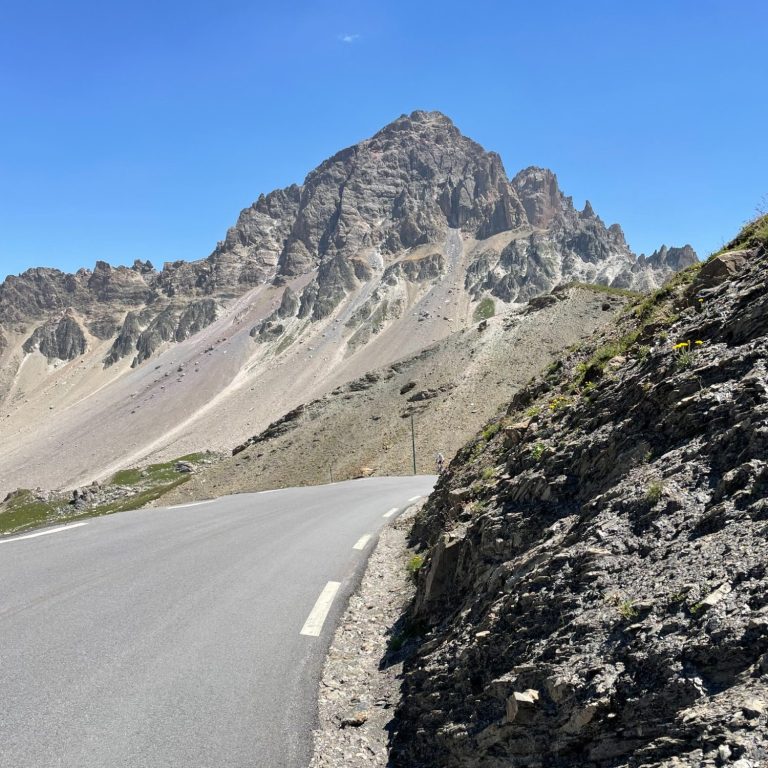
The final 5.5 km, gaining 470 m in elevation, pass through a stark, almost lunar landscape. Rocks and cliffs dominate the scenery, making you feel small as you ride along this narrow strip of tarmac, as though you could be swallowed by the elements at any moment. These are the moments that remind me why I ride my bike.
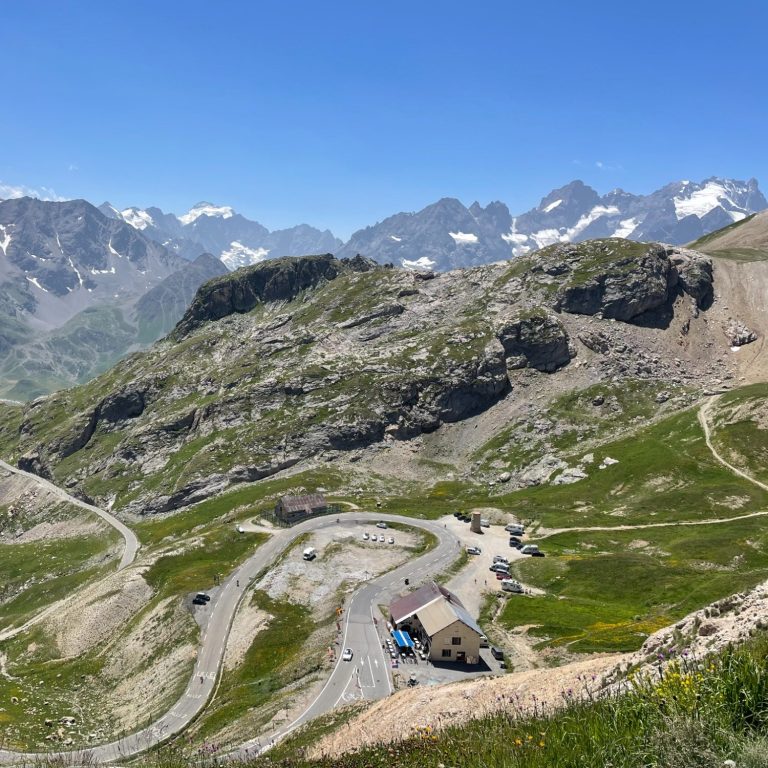
High above the road to the left rises the Grand Galibier, its rocky ridge stretching northwards. The route first runs straight towards the Granges du Galibier, a small human outpost with a mountain inn, before sweeping into a long right-hand curve towards the road tunnel. From the tunnel to the summit lies the second and final series of switchbacks, with gradients reaching up to 12%.
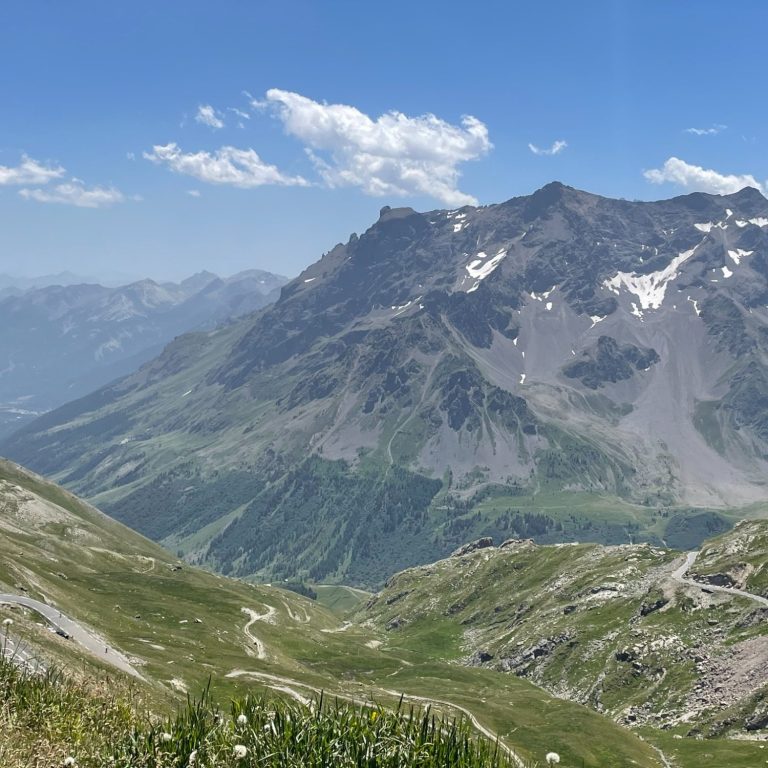
Reaching the summit of the pass is a truly unique experience, opening a spactacular mountain landsacpe north and south of the pass—nothing quite compares to the Galibier.
Col du Lautaret - 2056m
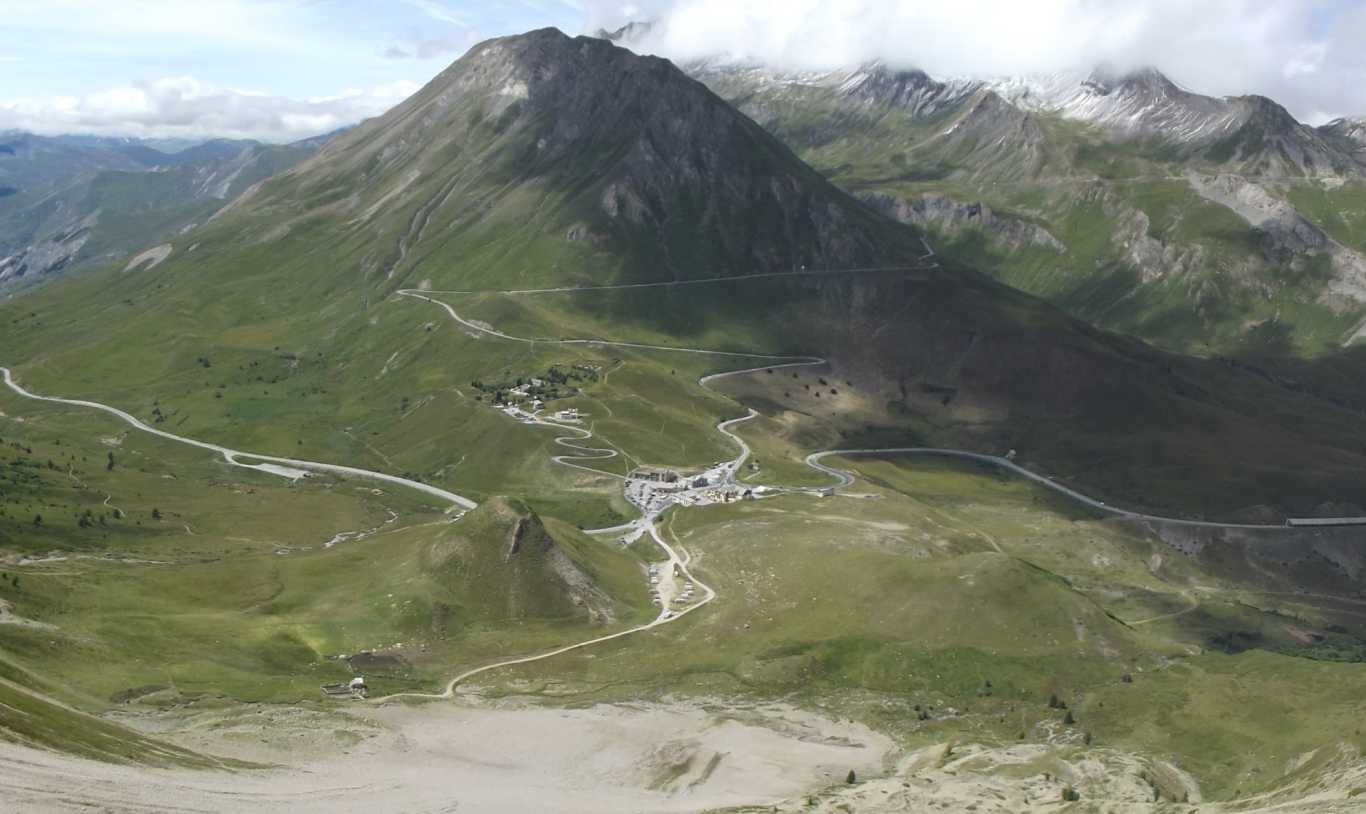
On the southern side, the Col du Lautaret serves as the gateway to the Galibier. Classified as a Category 1 climb, the tougher ascent from Bourg-d’Oisans gains 1,418 m over 34 km - you have to negotiate a number of tunnels though. From Briançon, however, it is a Category 2 climb. The pass marks the boundary between the Oisans valley and the Briançonnais region and is also regarded as the dividing line between the northern and southern French Alps.
The road connecting the two towns is busy, and while you will likely ride it when visiting the region, it is not a destination in its own right. That is a shame, as the surroundings are beautiful: a broad, open valley on the southern approach and a narrower, gorge-like valley from the west. At the summit, the Galibier massif towers over the landscape, and a botanical garden awaits those with the time and inclination to linger a little longer.
Col du Galibier from Valloire
Length: 17.5km
Altitude gain: 1213m
Max altitude: 2642 m
Average gradient: 6.9%
Max gradient: 11.9%
Col du Telegraphe from St Michel de Maurienne
Length: 11.9km
Altitude gain: 846m
Max altitude: 1567 m
Average gradient: 7.9%
Max gradient: 12%
Col du Lautaret from Bourg d'Oisans
Length: 33.7km
Altitude gain: 1418m
Max altitude: 2056 m
Average gradient: 4.2%
Max gradient: 10.5%
Route Tip: There is a route of epic proportions forming a circular ride that takes in the Galibier, Alpe d'Huez and the Col du Croix de Fer. This is a 185km ride covering 5500m climbing and maybe best done in two stages!