Col de l'Iseran - France
The Col de l'Iseran is the highest paved mountain pass in the Alps. It stands at 2,770m and tops the list of the very high mountain crossings in an almost unbelievably beautiful mountain setting.
It is located in the Savoie department connecting the French cycling heartlands of the Tarentaise and Maurienne valleys, sitting deep in the mountains close to the Italian border. A ride from Bourg-Saint-Maurice in the north to Modane in the south is just shy of 100 km.
The Iseran was originally a high Alpine crossing used by local people, travellers and herders rather than a proper road. Its importance came from its position between the Tarentaise and Maurienne valleys. For centuries, crossing it meant dealing with snow, glaciers and a very short summer season and as you ride the pass, you realise how perillious and isolated this crossing must have been in fomer times without the road.
The modern history of the pass really begins in the interwar period as France wanted to improve communications across the Alps and promote tourism in its mountain valleys. Construction of the road over the Iseran took roughly eight years, and the road was finally opened in 1937.
This was a remarkable engineering achievement: the road climbs to more than 2,770 m and has to contend with enormous snowfall and a long winter closure. The pass became famous through the Tour de France, which first crossed it in 1938. Its most dramatic moment came in 2019, when Egan Bernal attacked on the climb. A hailstorm then forced the stage to be stopped at the summit, and Bernal's advantage helped him take the yellow jersey and eventually win the Tour.
Despite the superlatives of its mountain scenery, remote location and Tour de France history, the Col de l’Iseran does not enjoy the same cult status as the Galibier or Alpe d’Huez. This is a real shame, because it is a ride of superlatives—not so much in terms of numbers, but in the feeling the road evokes.
The climb itself is superb, almost lovely. It is tougher from Bonneval-sur-Arc in the south than from Val d’Isère in the north, but it is the spectacular high-mountain surroundings and the road as it cuts deep through the mountains that give the Col de l’Iseran its unique character.
From Val d’Isère, the ski resort remains visible for much of the climb, apart from the final 3.5 km. By comparison, the southern approach is wilder and more remote. The Haute Maurienne is a traditional working valley, with charming villages scattered along the route almost to the very end.
Both sides are magnificent and should be high on any cyclist’s list. Crossing the pass at 2,770 m feels almost mythical—the sheer altitude, vast mountain landscape and sense of remoteness combine to make the Col de l’Iseran a truly unforgettable ride.
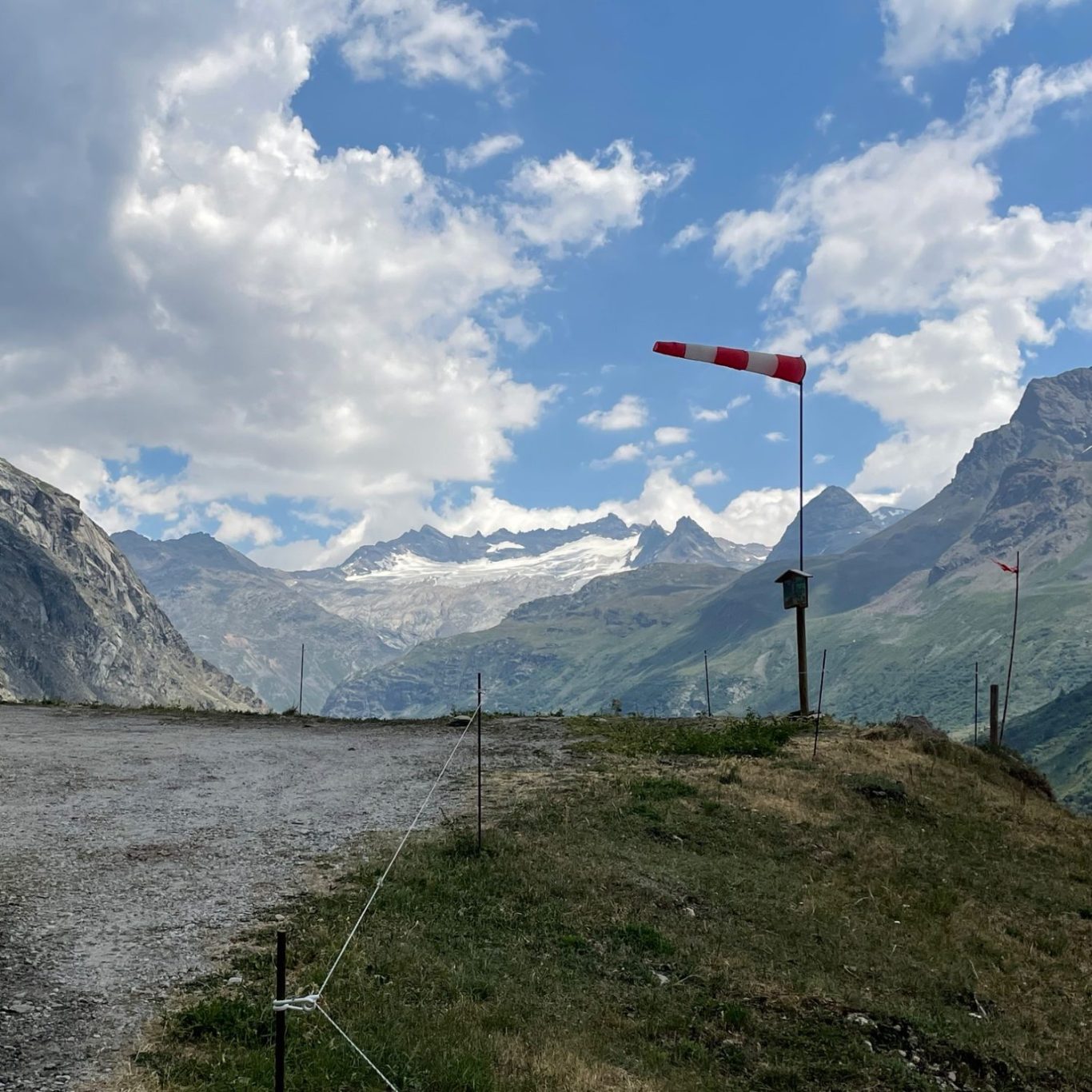
Northern ascend from Val d'Isere
If you start from Val d'Isere which is at an altitude of 1,830m, the climb is 16.7km long and covers 970m elevation gain with a manageable average gradient of 5.8%. Starting the climb from Val d'Isere instead of Bourg Saint Maurice, you can leave all the road stress behind and focus on what really matters - climbing an awesome pass road. There are three distinctive sections to this route, not too dissimilar to how the Galibier climb from Valloirer is structured.
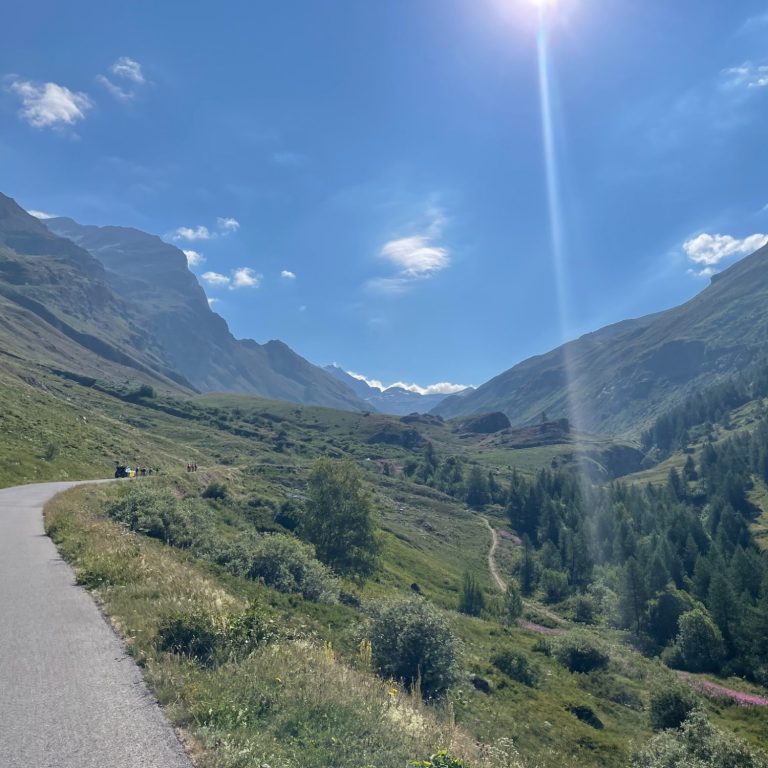
Deep into the valley
The first 5 km from Val d’Isère, with an elevation gain of 230 m, follow a straight road alongside the Isère stream, deep into the Isère Valley, before the road turns sharply uphill to the right. If you were to hike deeper into the valley and cross the Col de la Loze, you would eventually reach Italy at Lago Serrù and the Colle del Nivolet.
The Col de l’Iseran is somewhat the sister pass of the Nivolet, sharing the same dramatic and beautiful surroundings. But back to the Isère Valley we are riding through.
Once you leave Le Fornet—the last outpost of Val d’Isère—behind, the valley immediately becomes quieter. It is a relatively narrow valley, with the road running above the Isère stream. Halfway along, the ramps and switchbacks of the climb up the hillside ahead come into view on the right, giving a first glimpse of what lies ahead.
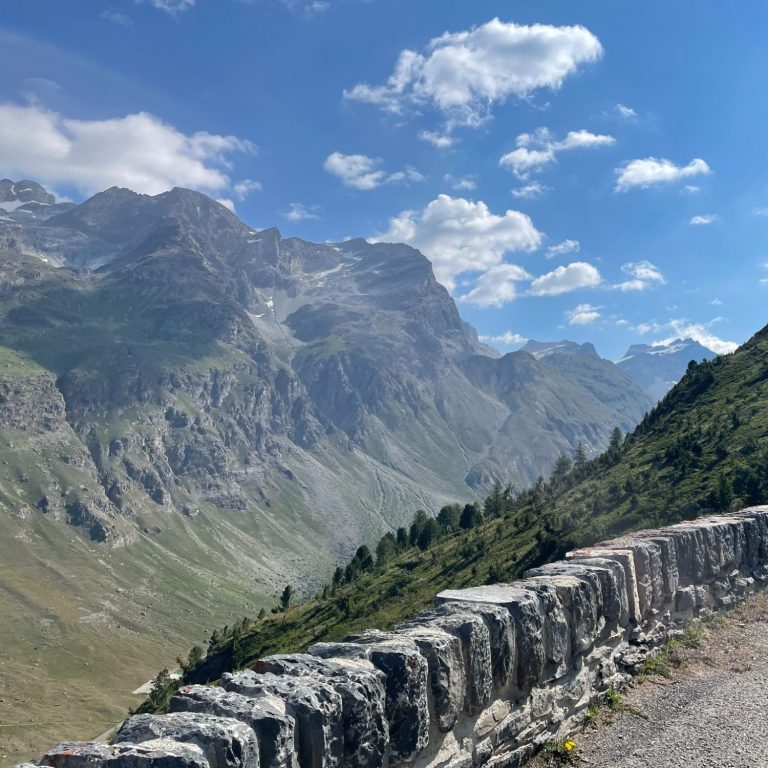
Up through lovely switchbacks
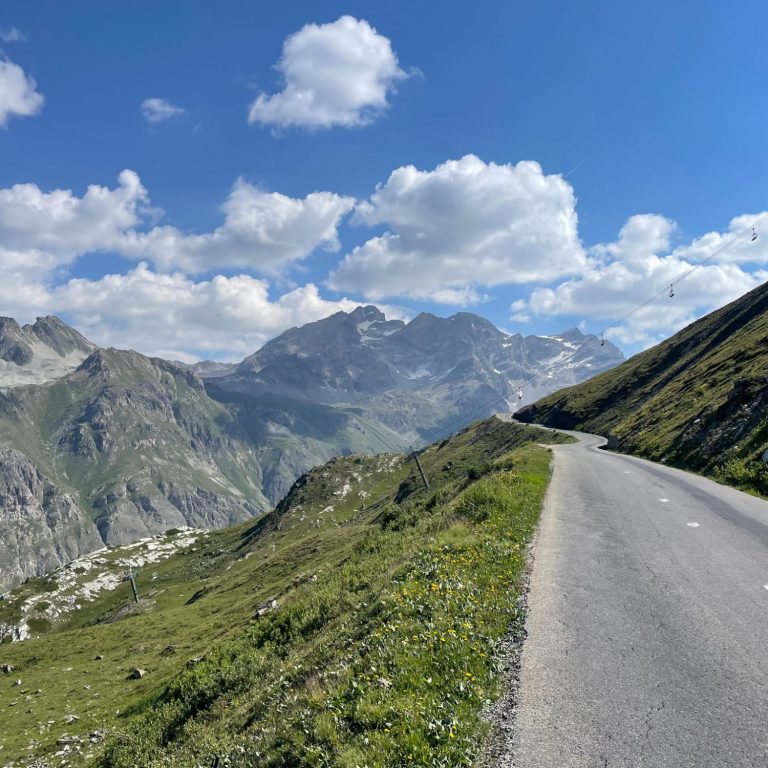
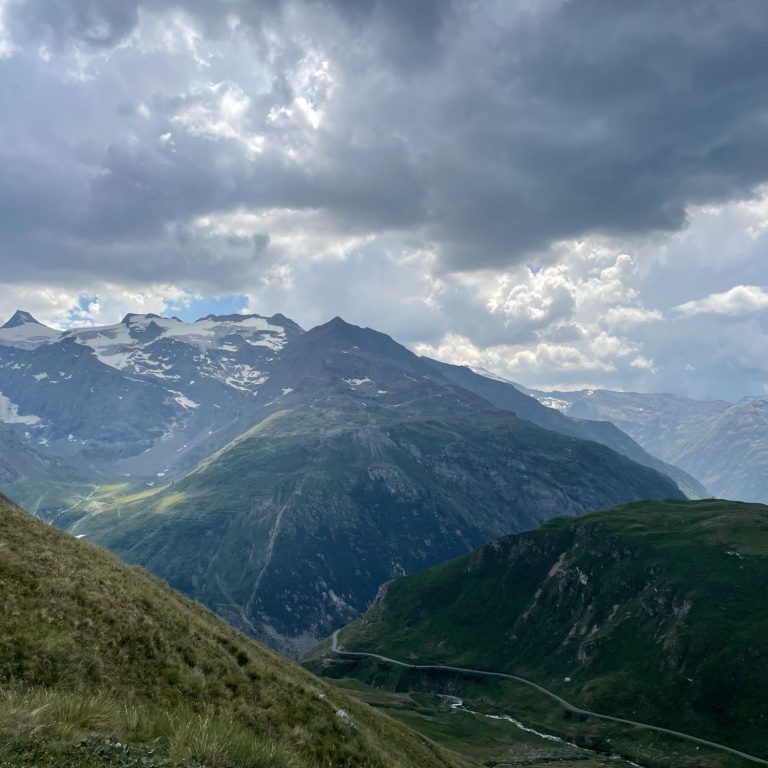
For the next section, up to an altitude of 2,520 m, the road climbs in a series of switchbacks up the mountainside, high above the Isère Valley. Val d’Isère remains constantly in view down below, and the route feels as though it is climbing upwards rather than moving forwards.
The road gains 480 m over 7.8 km, meaning the gradients are never extreme. The higher you climb, the more impressive the views become, both over the valley below and towards the surrounding mountains, many of which rise above 3,000 m.
This stretch of road passes directly through the ski area and is also used as a piste in winter, but all of this blends into the background as you ride this spectacular road.
There are seven switchbacks on this section, along with several very long ramps, some stretching up to 3 km. The climb feels less remote until the road turns right for the final 3.5 km, opening onto a vast high-altitude plateau towards the pass.
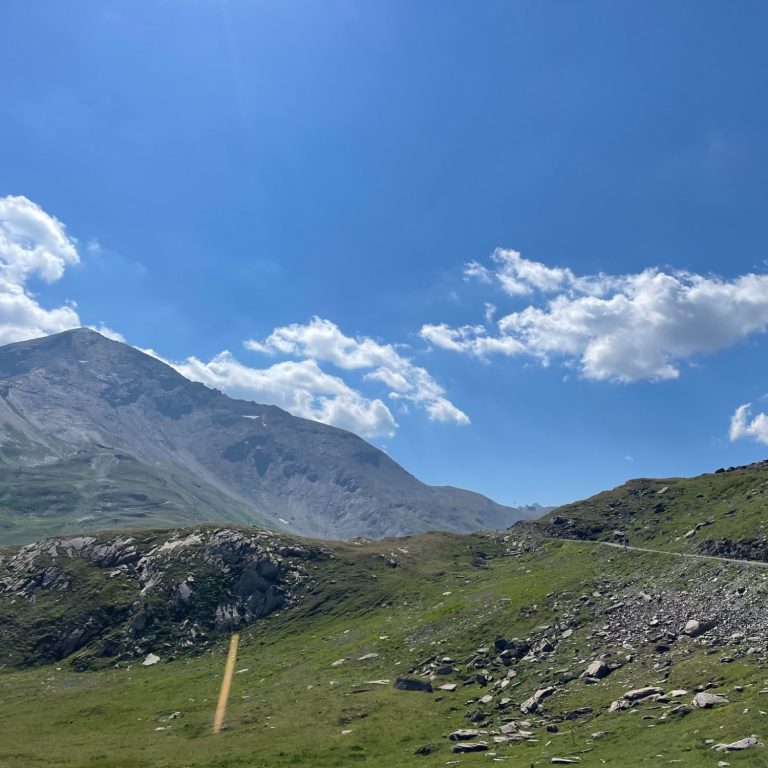
Deep into the mountain
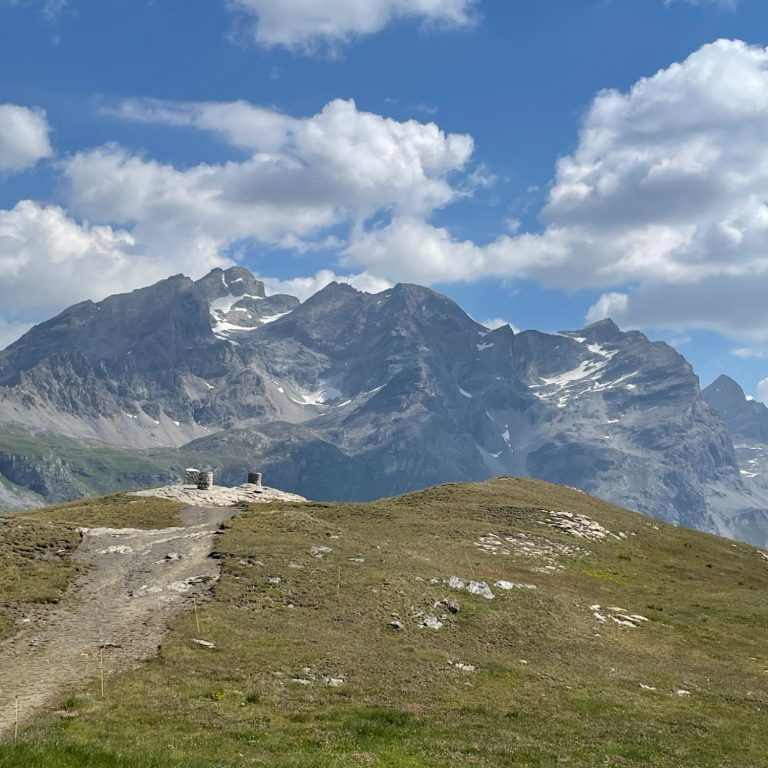
The final 3.5 km, with 260 m of elevation gain, crosses a vast open expanse between the Signal de l’Iseran (3,237 m) on the left and the Pointe des Lessières (3,043 m) on the right. The road runs straight ahead, hugging the right-hand side of this high-altitude plateau.
This section of the climb begins to feel truly isolated as the mountains close in from all sides. To the east lie the remote peaks of Italy’s Gran Paradiso National Park, while to the west the mountains of the Vanoise National Park rise to almost 3,800 m.
The gradient increases slightly here but remains below 10%, apart from the final switchbacks near the summit. At this altitude, the main challenge is not the gradient but the thin air, as the Col de l’Iseran is the highest paved mountain pass in the Alps.
The moderate gradients allow you to fully appreciate the scale, beauty, and solitude of the surrounding landscape, making this one of the most majestic climbs in the Alps.
Southern ascend from Bonneval-sur-Arc
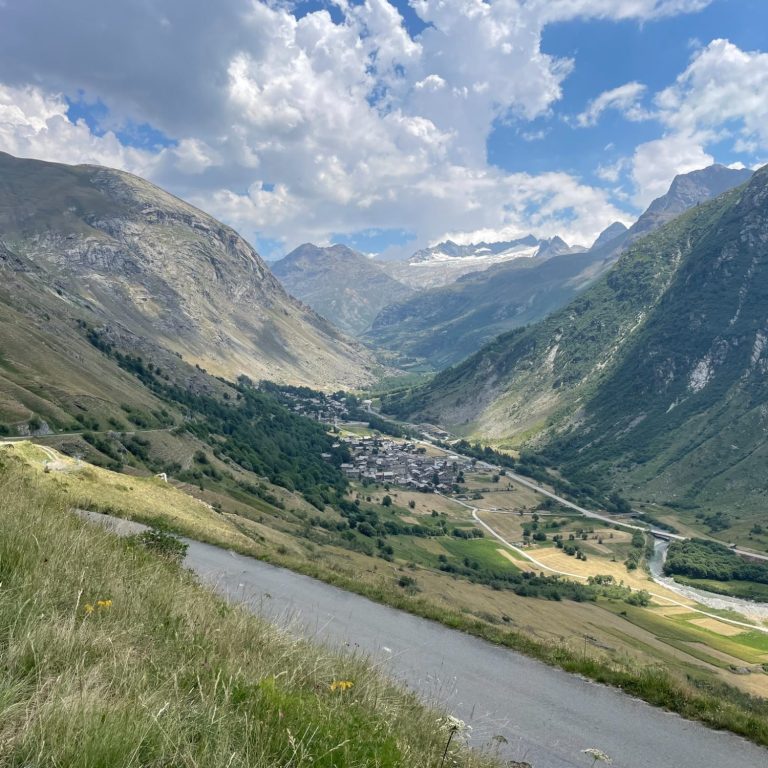
The climb from Bonneval-sur-Arc is 13.4 km long, with 980 m of elevation gain, and, with an average gradient of 7.3%, it is significantly tougher than the northern side. Bonneval is a delightful Savoyard village at the end of the Haute Maurienne Valley, seemingly in the middle of nowhere. It is also one of the most picturesque villages in the French Alps.
Climbing the Col de l’Iseran from the south feels much wilder than the northern ascent, as there are no ski stations, and the route opens up exceptional views of the mountains surrounding Mont d’Ambin and Mont Albaron, which rises to 3,638 m on the southern side of the Haute Maurienne Valley near the Italian border.
The climb becomes progressively tougher, wilder, and more dramatic the higher you ascend. It steadily tightens the screw and, like most great climbs, can be divided into several distinct sections.
Leaving the Haute Maurienne Valley behind
For the first 5.3 km from Bonneval-sur-Arc, the road climbs 350 m in elevation, rising high above the village and deep into the Lenta Valley. With an average gradient of 6.6%, this is the easiest section of the climb.
Bonneval-sur-Arc itself sits at around 1,800 m, and after a sharp left-hand turn, the road rises high above the village in two long ramps before turning deeper into the Lenta Valley towards the Col de l’Iseran. The majestic scale of the surrounding mountains increases with every metre you climb, more than compensating for the effort.
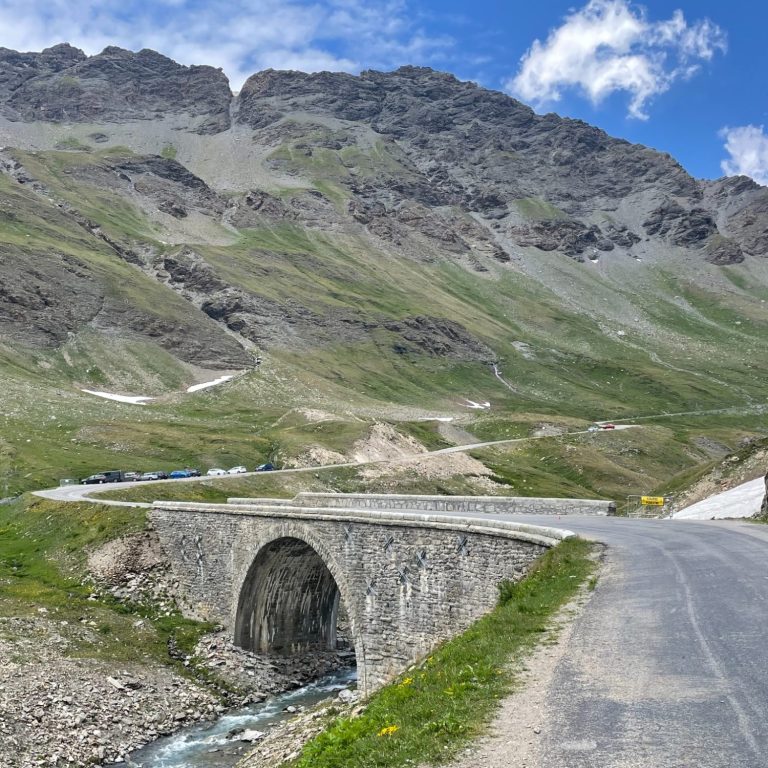
The route then continues steadily along the valley until a bridge over the Lenta River signals the beginning of a new section of this magnificent climb.
Riding into the dramatic Lenta valley
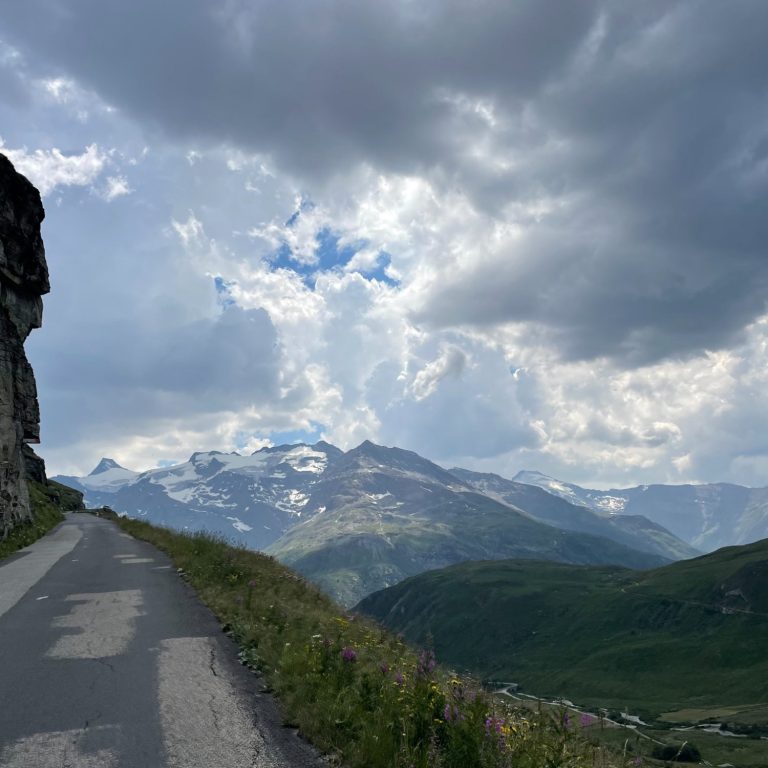
For the next section, up to an altitude of 2,532 m, the road climbs 410 m over 5.6 km, with the average gradient increasing to 7.3%. With every pedal stroke, the climb tightens the screw.
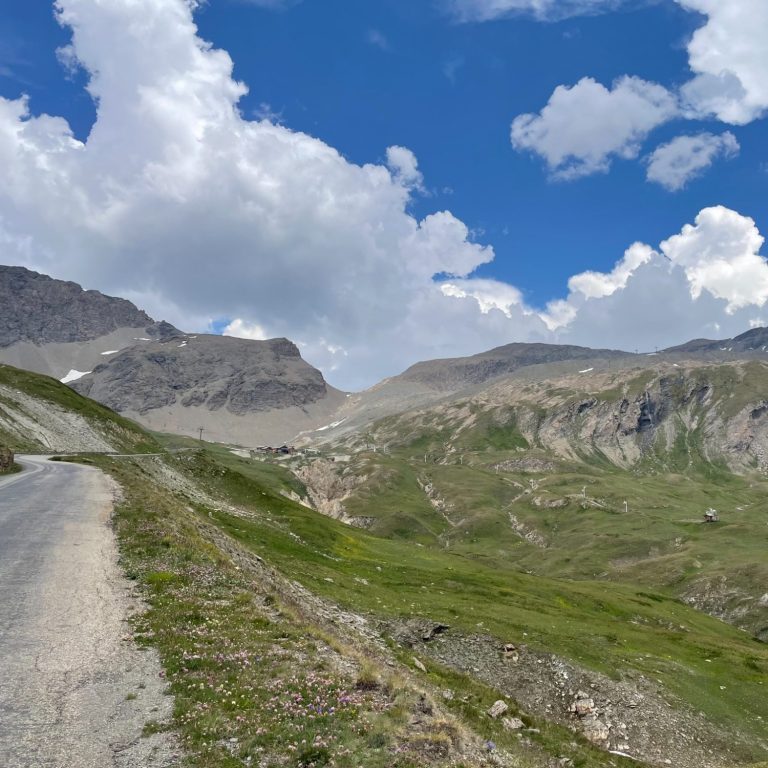
Through three switchbacks, the route rises high above the Lenta Valley, opening up incredible views of the surrounding mountains and the valley far below, which has been carved into a deep, cliff-lined gorge. The road then clings ever more dramatically to the mountainside until it reaches the Pont de la Neige, where the route finally meets the floor of the Lenta Valley once again.
This section is truly magical and quintessentially alpine: steep ramps, tight switchbacks, towering cliffs, a road seemingly hanging onto the mountainside for dear life, rickety tunnels and spectacular views in every direction.
Final push through incredible mountains
The final 2.4 km gain 220 m in elevation, increasing the average gradient to 9.2%. At the Pont de la Neige, the views back towards the southern Haute Maurienne mountains disappear, and your focus shifts entirely to the final stretch of climbing ahead. The gradient becomes brutal, while the air grows noticeably thinner.
The valley below becomes increasingly rugged and churned up, while imposing cliffs emerge in the distance. The road climbs relentlessly in an almost straight line for 1.7 km. It was on this very stretch that Julian Alaphilippe famously lost the yellow jersey during the 2019 Tour de France.
The final switchback opens up spectacular views of the surrounding mountains and the Vanoise National Park to the west. Finally, the Notre-Dame de Toute Prudence chapel comes into view, signalling your arrival at this magnificent pass.
Col de l'Iseran
From Val d'Isere
Length: 16.3km
Altitude gain: 930m
Max altitude: 2,770m
Average gradient: 5.7%
Max gradient: 15%
From Bonneval-sur-Arc
Length: 13.4km
Altitude gain: 980m
Max altitude: 2,770m
Average gradient: 7.3%
Max gradient: 15%
Route tip: Although the recognised starting point from the north is in Bourg St Maurice, starting from Val d'Isere is highly recommended. The 31km from Bourg St Maurice to Val d'Isere can be busy with heavy traffic and trucks plus a number of tight tunnels thrown in which give a cyclist nowhere to go. Also, starting form Val d'Isere makes a double ascent doable. A round trip down the southern side to Bonneval sur Arc is around 60km and 1950m climbing. The official starting point of the climb from the south is Lanslebourg and it includes a warm up climb of the Col de la Madeleine.