Travel Tips - Planes, Trains & Automobiles
Travelling with your precious carbon can be a stressful time and there are no optimal solutions but these tips might help.
Let's pray
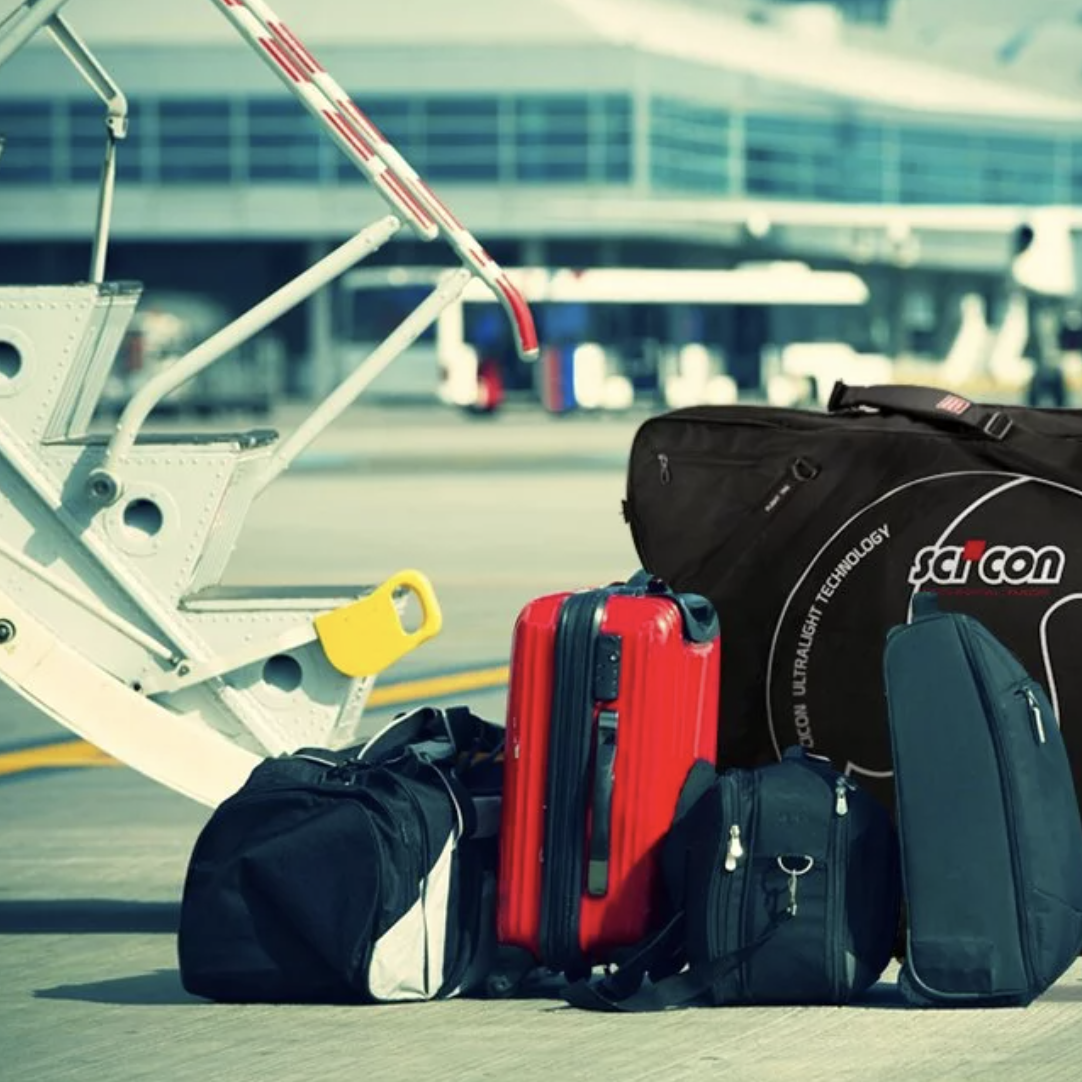
Living in the UK, there is a high likelihood that travelling with your bike involves air travel. Baggage handlers are not renown to be gentle with bike cases and I always dread the day when I hand over the bike suitcase, suitably labelled with reminders to be careful, to the smiling assassins at the oversize luggage counter.
My reminder of how much the bike means to me and that they should be careful is met with a "yeah, whatever" grin. So you pray that the bike makes it on that flight and gets delivered in one piece at the other end.
Use a proper bike case that is designed for air travel. Skimping on the bag, has a high probability that there will be some damage. I use an EVOC Pro Bike case that is sturdy but also does not require bike disassembly apart form wheels and pedals. Taking the cockpit off with internal cabling is a nightmare and should be avoided. Here are some videos for the EVOC Pro Bike case.
When packing the bike, you can take off the rear derailleur which is easily done. That way, it can’t be bent and ruin your perfectly planned holiday. It is probably worth to practice the taking off and re-attachment of the derailleur. You can also have your bike packed by your local bike shop.
Travelling by Plane - what to look out for
If possible, I try to fly business on short haul routes. The costs can be surprisingly comparable to an economy class ticket plus luggage allowance plus the extra booking fee for the bike bag both ways. That way you don’t have to play around with extra luggage booking and the treatment of business priority luggage is better that in economy.
Check your bike bag as soon as you pick it up from oversized luggage. It is very important to make a claim for any broken luggage and equipment before you leave the luggage hall. I made the mistake once and discovered damage to the bike case at home only after the event. To this day, the airline has not even acknowledge that they damaged anything. Advice from the friendly bike shop was that a bag might only last 10 trips.
Take spares with you and locate a bike repair shop at your destination. I suppose the key spare part required is derailleur hanger plate to easily swap out a bent part for a new. Other parts I take are bespoke bike specific nuts, bolts and axles. Investigate if there is a repair shop and a bike rental for good road bikes at your destination in case something goes wrong.
Depending on the size of your bag, make sure that your onward transport is large enough to take the bag. Sounds obvious but many SUVs and estate cars are just not large enough for a bike cases. A van might be required.
Travel Tips - Train
Train travel is a completely different cattle of fish to flying with your bike. There are quite a few different rules depending on the type of train and country but there are some communalities.
High Speed, Intercity & Eurostar Trains
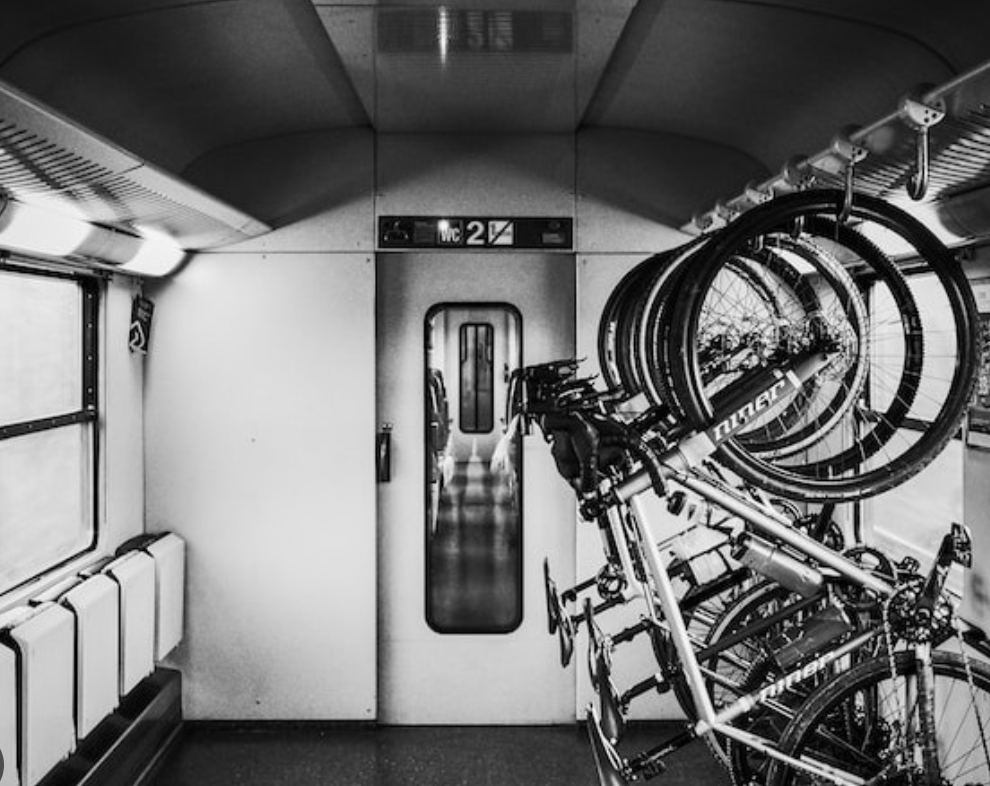
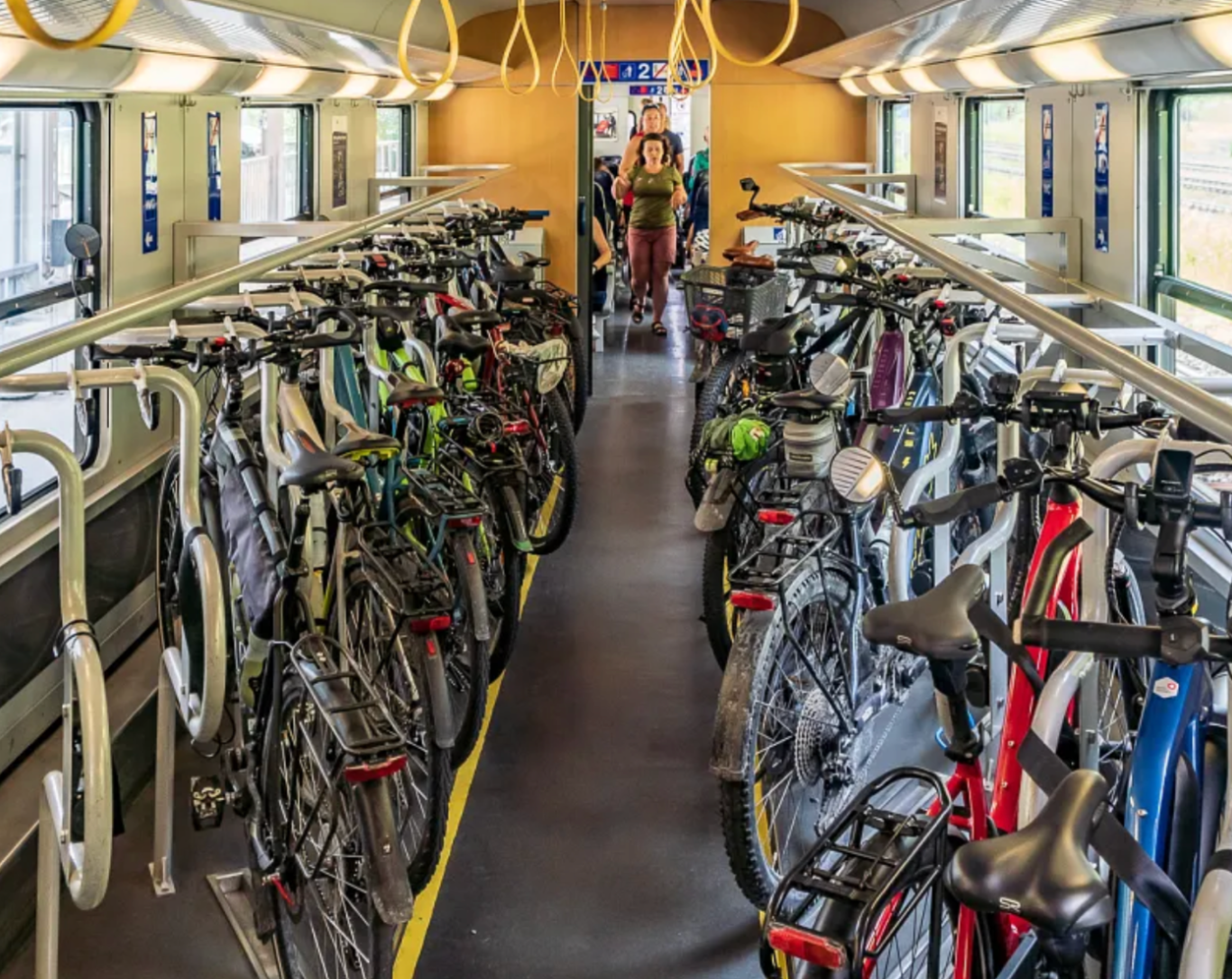
On intercity and high-speed trains in the UK and across Europe, there are usually only a limited number of bicycle spaces available, and reservations are required. Bikes are typically hung vertically on hooks, so you need to consider whether this type of storage is suitable for your bike.
The Eurostar from London to Paris accepts bikes in bags no longer than 120 cm. You must pay an excess baggage fee, arrive 90 minutes before departure, check in your bike, and then collect it on the platform in Paris.
Fortunately, many cyclists share their experiences online, and there are useful blog posts that provide detailed guidance on travelling by train in France and across Europe.
Trains in France
In France — the spiritual home of cycling — travelling with a bike by train can nonetheless be complicated. Local TER trains generally accept fully assembled bikes, but reservation requirements and fees vary because different train models operate across regions. If you are travelling a relatively short distance, TER services are often an ideal option.
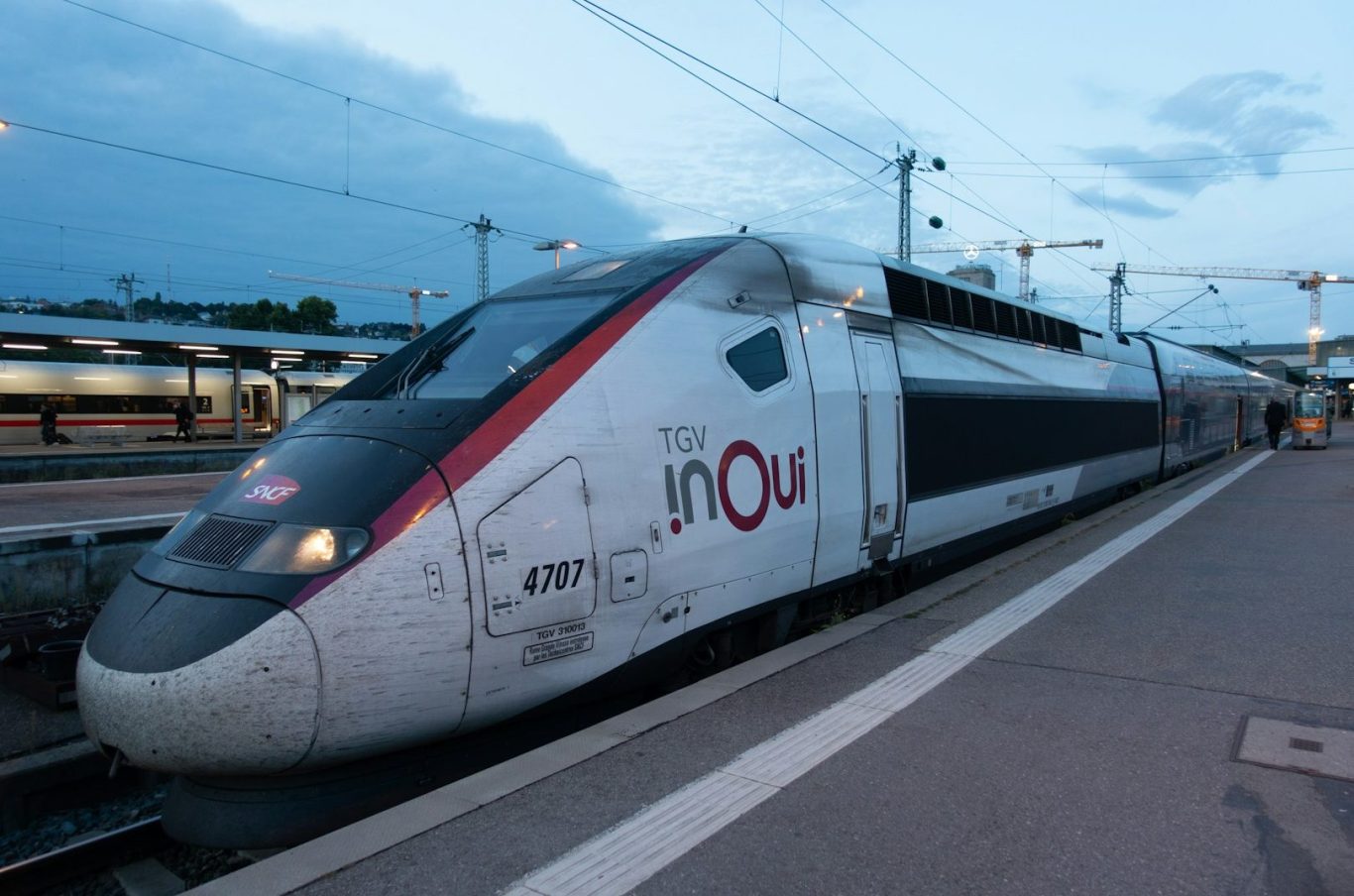
The challenge is that France is a large country, and two issues are often unavoidable: passing through Paris, since the rail network is highly centralised rather than point-to-point, and using a TGV for longer distances. The most common denominator for taking a bike on a TGV is that it must be placed in a bag no longer than 120 cm and disassembled. This usually means removing both wheels and possibly the saddle (for a smaller road bike, removing just the front wheel may be sufficient). The advantage is that the bagged bike can then be transported as hand luggage. You should store it in the designated luggage areas on the train — upstairs sections, where available, often provide more space. First-class tickets on TGV services (InOui and OuiGo) are usually only slightly more expensive and can be worth booking for the additional luggage space on board. If it does not fit in the luggage storage, you can place it in the aisle by the toilets.
If you are riding point to point, you will most likely need to take your bike bag with you for the duration of the trip. Lightweight yet durable options are available — for example, some models weigh as little as 500 grams.
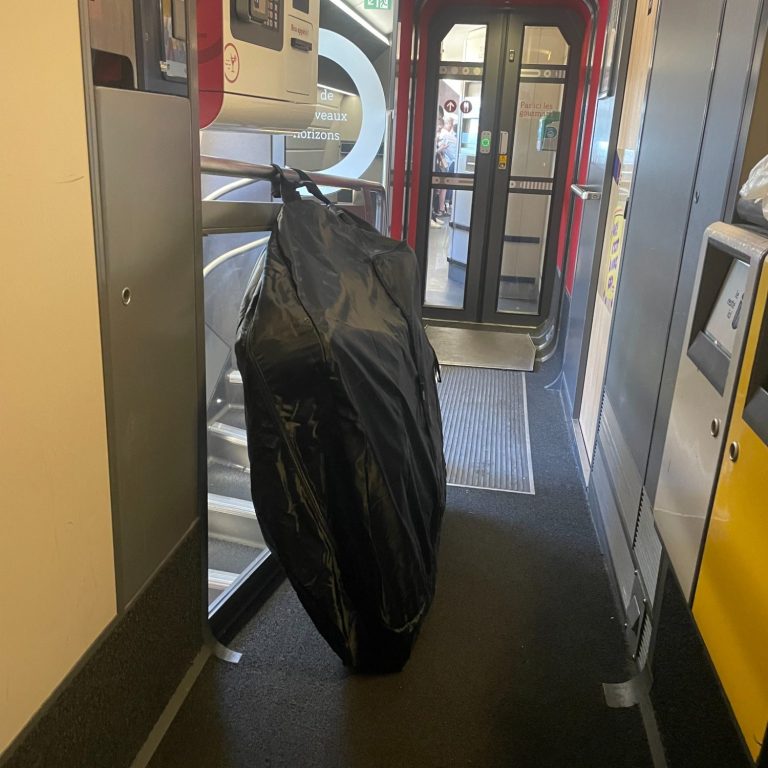
Disassembled bike in a cover on the TGV Ouigo: The luggage area is too small to accommodate the bike, but it can be placed in the aisle.
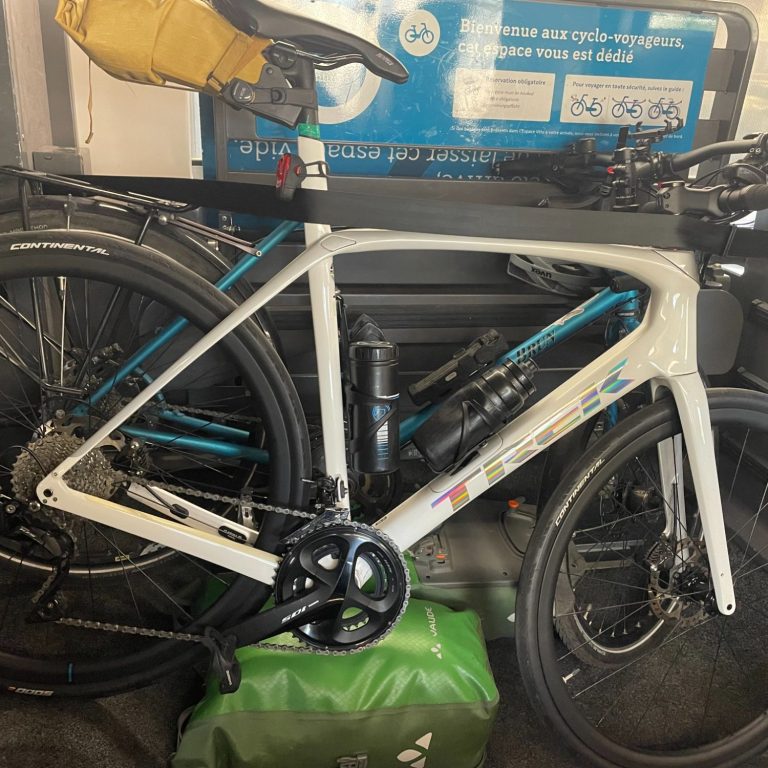
Assembled bike on a TGV Ouigo: There are very limited spaces available (two per train), but you can sit next to your bike and keep an eye on it.
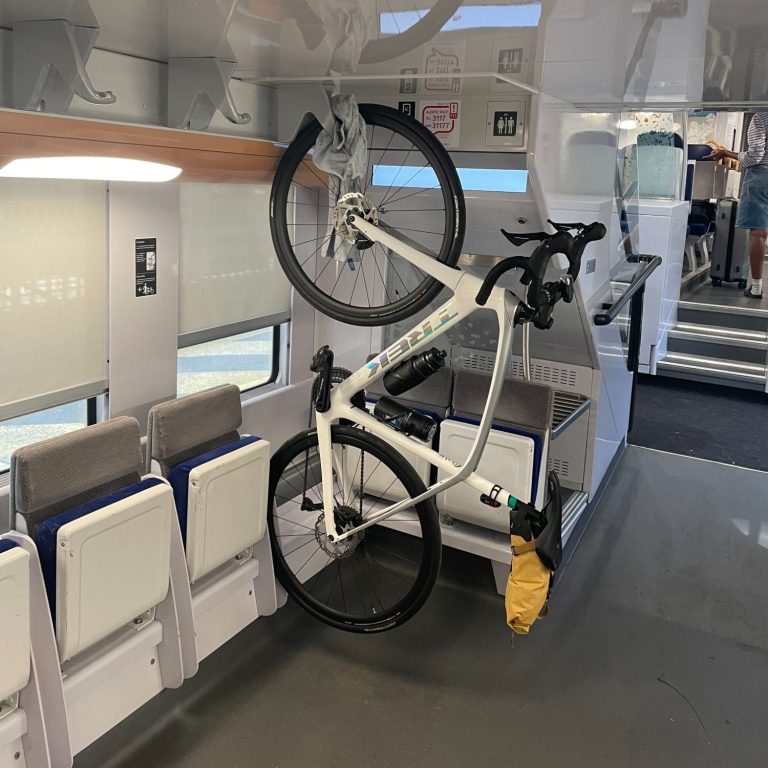
Assembled bike on a TER train: There are around six hanging spaces, but they can get busy, and you may need to hold onto your bike. Older TER trains have designated spaces where you can lean your bike against the wall.
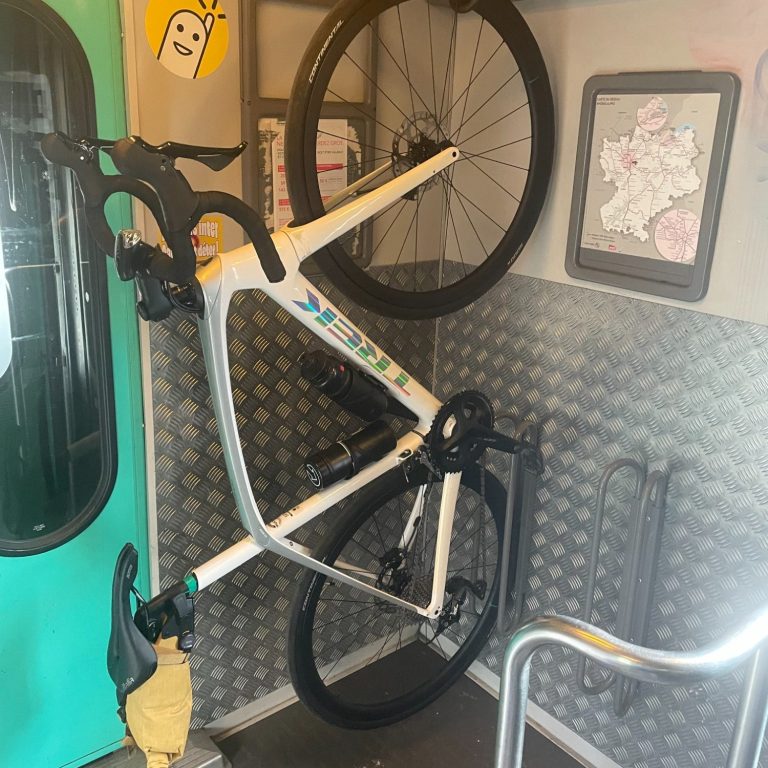
Older-style TER trains with individual carriages: There are usually a couple of hanging spaces between the carriages. However, getting in and out can be difficult, as the doors are manual and tend to close if left open, potentially trapping or damaging your bike.
Paris: Changing trains in Paris typically means carrying all your belongings through the Metro between stations. The key stations are Gare du Nord, which connects the north; Gare de l’Est, which connects the east and the Vosges; Gare de Lyon, serving the Alps and the southeast; and Gare Montparnasse, which connects the southwest and the Pyrenees.
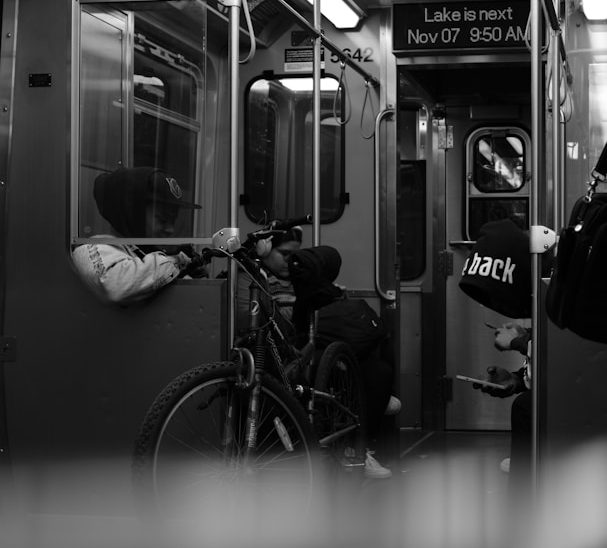
Transporting a bike through the Metro—either assembled or in a carrier bag—is cumbersome and puts you in the slow lane, especially when waiting for lifts or navigating long corridors.
Gare du Nord and Gare de l’Est are only a 5–10 minute walk apart, so no Metro connection is required. Gare du Nord connects to Gare de Lyon via the RER D and allow 60 minutes to be on the safe side (At Gare du Nord, Eurostar returns your bike fast and you are unlikely to wait after the last passengers have left the train).
Gare du Nord and Gare de l’Est connect to Gare Montparnasse via Paris Métro Line 4 and allow at least 75 minutes to change stations due to long corridors.
Paris Métro Line 6 runs between Gare Montparnasse and Gare de Lyon and also allow around 75 minutes for this transfer to be on the safe side.
If you arrive on the Eurostar, RER tickets can be purchased on board. A Paris RATP undgerground map can be found here.
Germany: Germany offers a more coherent set of rules for bike travel. On local trains, bikes can be transported in dedicated bike spaces of the carriage, you might need to hang on to it though. For ICE high speed services, a bike space (if available on that route) needs to be booked. In any case, a bike ticket needs to be purchased but the price is manageable. Germany is a very bike friendly place and the issue is not that the rules are complicated but that the spaces are gone quickly. Find more guidance for travelling with your bike on a German train here.
Austria & Switzerland
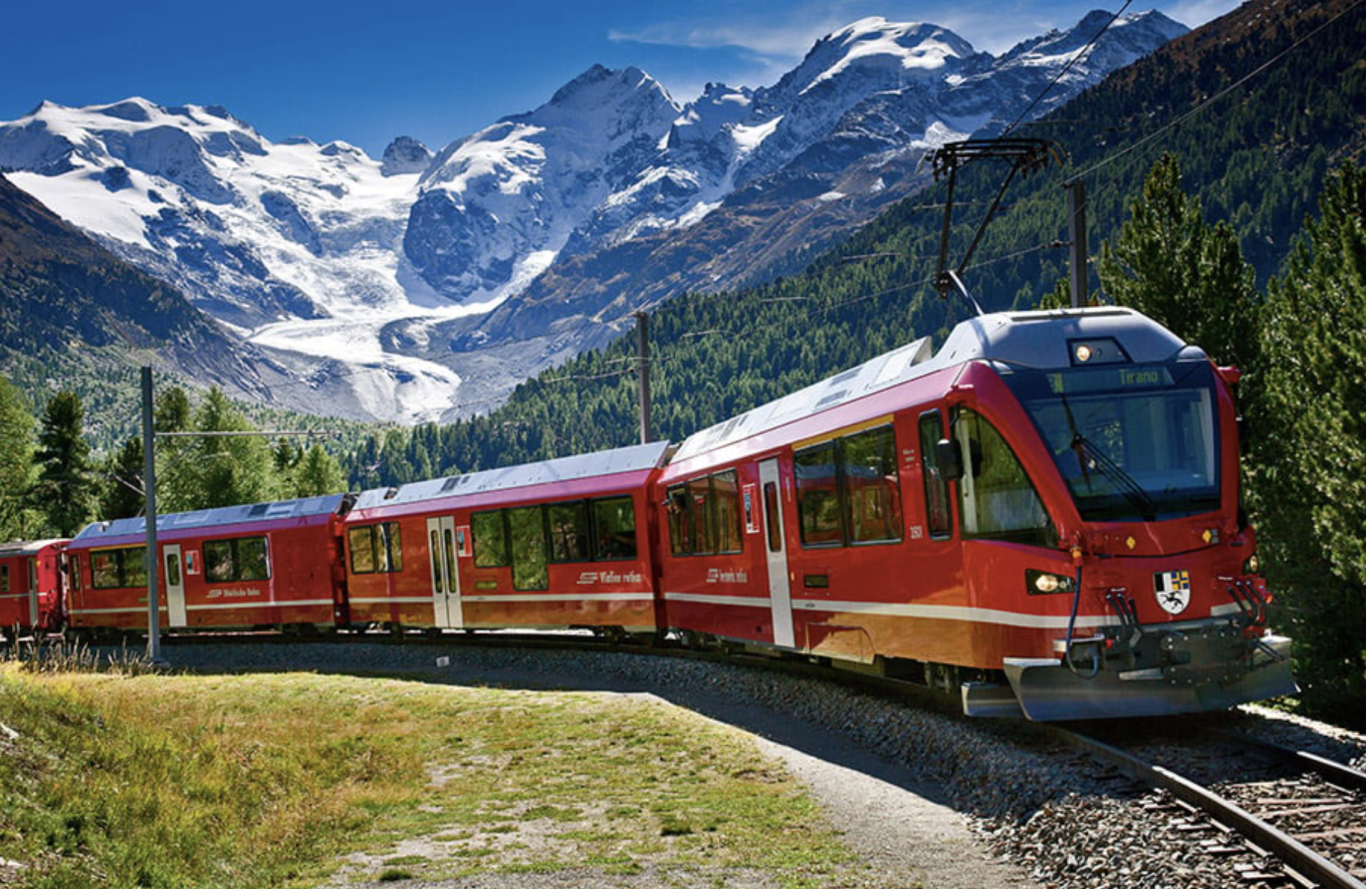
In Austria, things are easy. On local trains, bikes can be taken without reservation and on intercity trains, bike berths can be booked ahead of time, the bike does not need to be disassembled.
More guidance can be found on the ÖBB website.
The same is true for Switzerland where trains take fully assembled bikes subject to reservation and ticket. That should be arranged in advance to make sure there is space on the train as berths are limited.
More guidance can be found on the SBB website.
The rules change by country which could make it either very easy if the country you travel in is straight forward or very complex if you cross borders and train operators have different rules.
In any case, you will need to check ahead of your trip how you get yourself with your bike to where you start and where you go after your ride has finished.
Local Trains
Local trains don’t normally require a pre-booking but you would need to hang on to your bike on the train if there is no dedicated rack space like on this service in Austria. This is common across Europe. As long as you don’t go too far, this is OK.
Rules for bikes on trains vary even for the same train operator and are subject to change. In any case, your bike is likely to be knocked about a little which might determine what kind of bike you want to take and maybe renting a bike at your destination could be an option if you stay in one place or return to the same destination on a point to point ride.
Travel Tips - Car
Travel by car is probaly the easiest of all the options but has its pitfalls
Taking your bike in the car
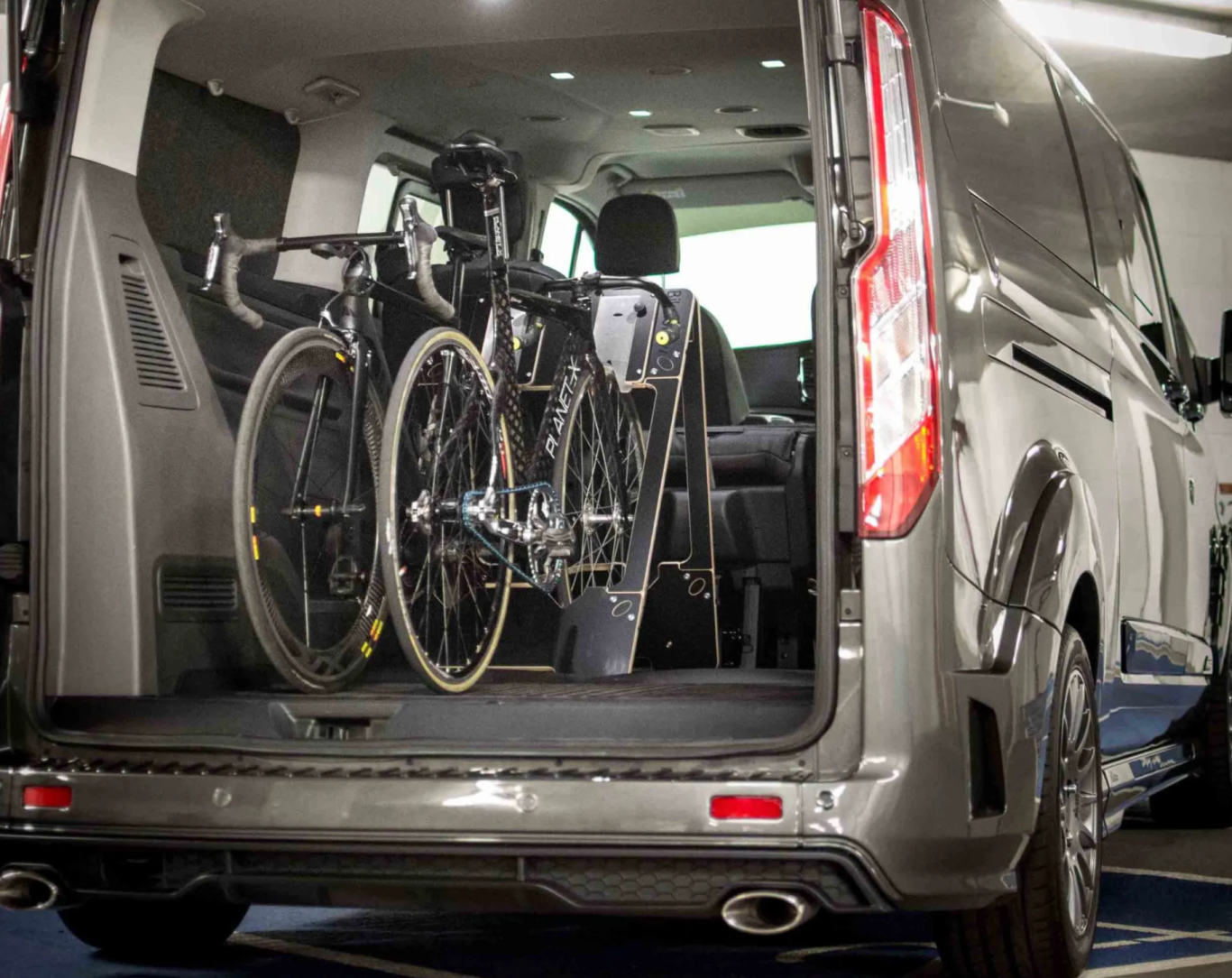
If you have a van or a people carrier, you are in the best possible position. Simply find a way to secure the bikes upright, and you are ready to go. No disassembly, no scratching, no bending of components—wonderful.
If you do not have a van, the options become more limited. The next best choice is an SUV or an estate car. When travelling alone, you may be able to lay the bike down with the derailleur facing upwards after folding down the rear seats. If there are more people in the car, the wheels—and likely the saddle—will need to be removed due to limited headroom. Removing the saddle can be a nuisance though.
If your car is too small or carrying too many passengers and their luggage, you may need to transport the bike outside. However, I would not recommend exposing any bike you truly care about to the elements by carrying it on the roof or the rear.
What can be done instead? A partially disassembled bike—with the wheels and seat removed —will likely fit inside an extra-large rooftop box with at least 80 cm of internal width. Although this requires more preparation than using a standard roof rack for bikes, your bike is protected from the elements and is generally more secure, as rooftop boxes can be locked securely. In addition, their aerodynamic shape typically results in lower fuel consumption compared to an exposed bike rack. However, the box does need to be particularly large.
Final word
Whatever way you choose to travel with your bike, there is no perfect solution. Careful preparation and finding the right travel equipment are essential. Maintenance and repair skills are also invaluable, as most forms of transport require some degree of disassembly.