Col du Petit Saint Bernard - France
The Col du Petit Saint Bernard is one of the most historic alpine passes, older than a roman road.
The Col du Petit Saint-Bernard has been an important crossing point through the Alps since ancient times, linking the Tarentaise Valley in France with the Aosta Valley in Italy. At 2,189 m, it is one of the lower and more accessible Alpine passes, which made it a vital route for trade, migration, and military movement long before modern roads existed.
The pass was already used in prehistoric times and later became an important Roman route. The Romans established a road across the pass to connect northern Italy with Gaul, and traces of Roman infrastructure can still be found near the summit. A small stone circle known as the Cromlech du Petit-Saint-Bernard, believed to predate Roman occupation, highlights how long this crossing has been used by humans.
During the Middle Ages, the pass gained further significance through the hospice founded by Saint Bernard of Menthon, who established shelters for travellers crossing dangerous mountain routes. Although the Great St Bernard became more famous, the Little St Bernard also served pilgrims, merchants, and travellers moving between Italy and France.
The pass later played strategic military roles, particularly during the campaigns of Napoleon, whose armies crossed Alpine routes to enter Italy. Due to its relative accessibility, the Col du Petit Saint-Bernard remained an important connection between the two sides of the Alps well into the modern era.
Today, while it is better known among cyclists and tourists for its beauty, the pass still carries a strong sense of history, shaped by centuries of movement through one of the great natural corridors of the Alps.
Col du Petit Saint Bernard 2,189m - Western ascend from Bourg Saint Maurice
The Col du Petit Saint Bernard from Bourg Saint Maurice is 27km long and climbs 1,406m in altitude. This route travels through the hamlet of Montvalezan, turning off the main road and rejoining it after the switchback section. This route is a little tougher than staying on the main road, but it is also quieter and more picturesque which is an advantage as the D1090 to La Rosiere can get busy. The ride falls into a number of section, I also included the section to La Thuile in Italy. Alternatively, for a longer ride, La Rosiere can be reached by riding via Saint Foy in the Isere Valley. This adds to the ride an dmakes this more of a day ride (see described below).
To La Rosiere
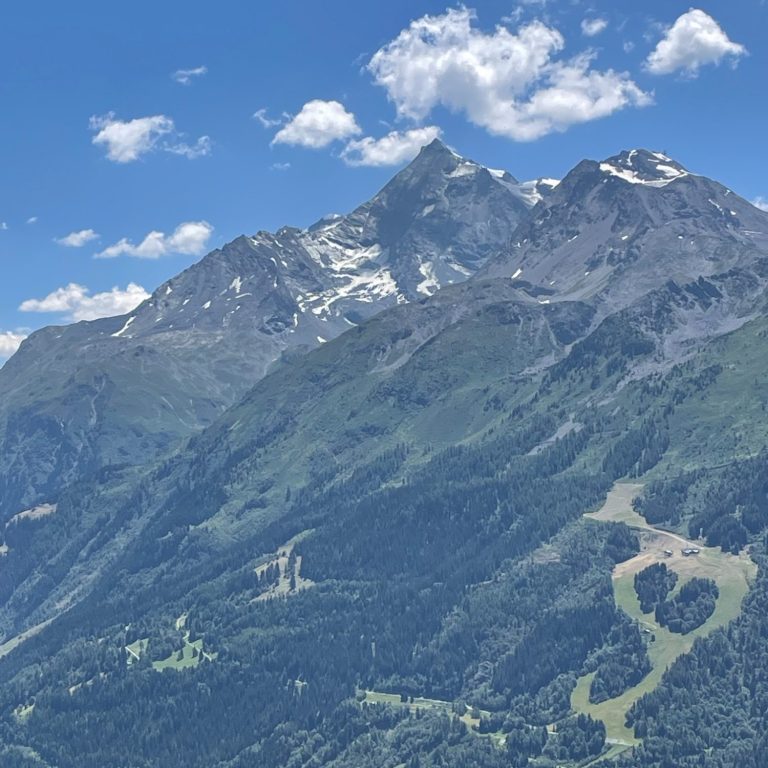
Leaving Bourg-Saint-Maurice, the climb begins at Séez, where the route turns onto the D1090 towards La Rosière. Seven switchbacks in quick succession across open meadows help gain altitude rapidly before the wooded section begins.
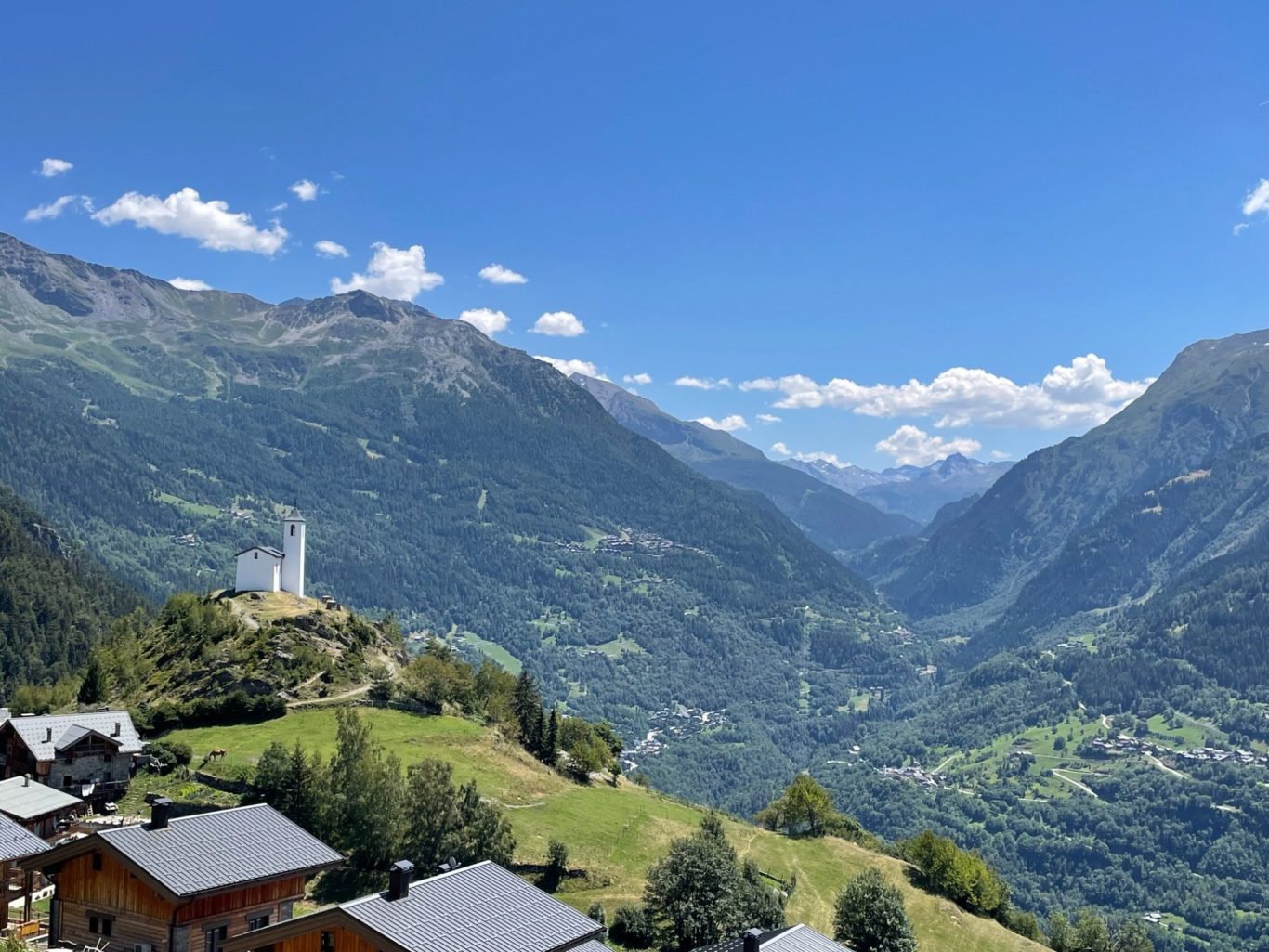
At the next switchback, the route leaves the main road and continues straight towards Montvalezan, where the traffic quickly fades away. From here, the road remains exposed, climbing through a mixture of straights and switchbacks past the various hamlets scattered across the steep mountainside, all with extraordinary views over the Tarentaise and Isère valleys.
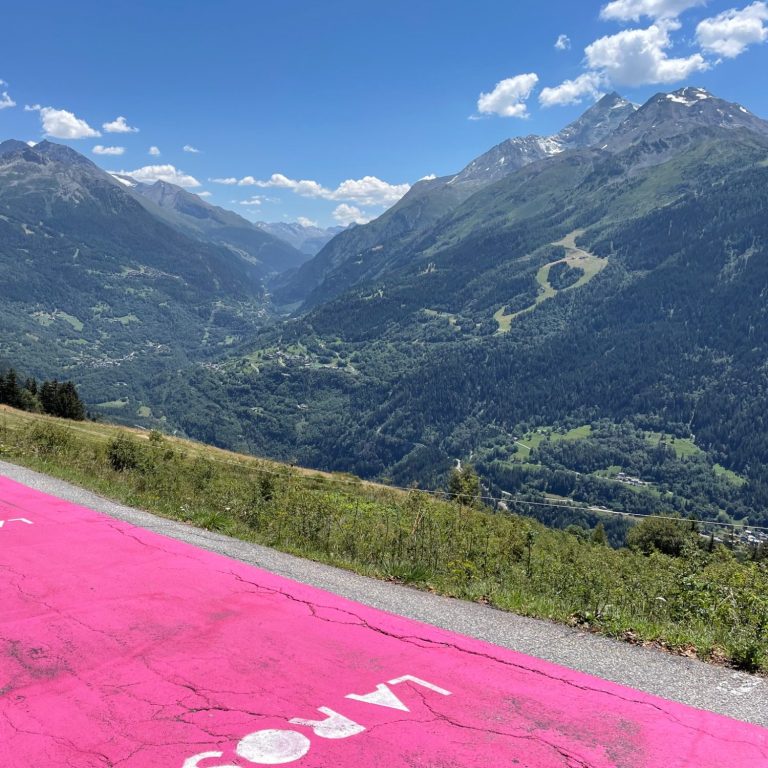
The route later rejoins the D1090, following a brightly painted pink strip of road. A further three switchbacks remain to be negotiated on a road with vast, open views before reaching La Rosière at an altitude of 1,800 m. Often referred to as the “balcony of the Tarentaise,” La Rosière offers spectacular views across the valley and far into the distance. By this point, you will have covered around 18 km and climbed approximately 1,000 m.
La Rosiere to the pass
From La Rosière to the pass is a further 8 km of riding and around 400 m of climbing, with the average gradient easing to approximately 5%. Leaving the lovely views from La Rosière behind, the road turns through two right-hand bends and heads deeper into the valley towards the pass.
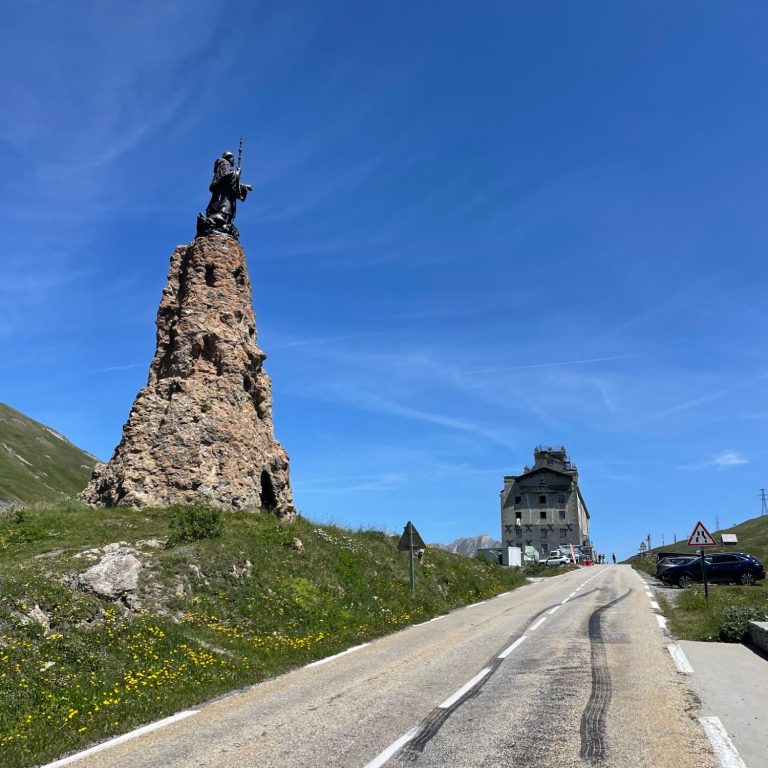
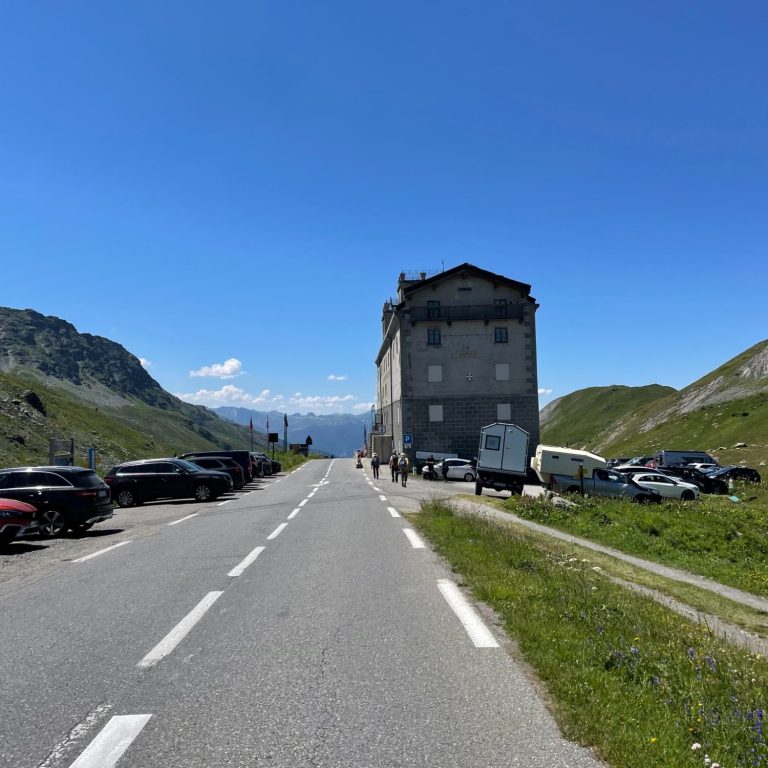
The imposing Hospice du Petit-Saint-Bernard, built in the 12th century, is visible from far below and provides a clear indication of the road ahead: straight into the mountains and ultimately towards a broad, high meadow where the pass is located.
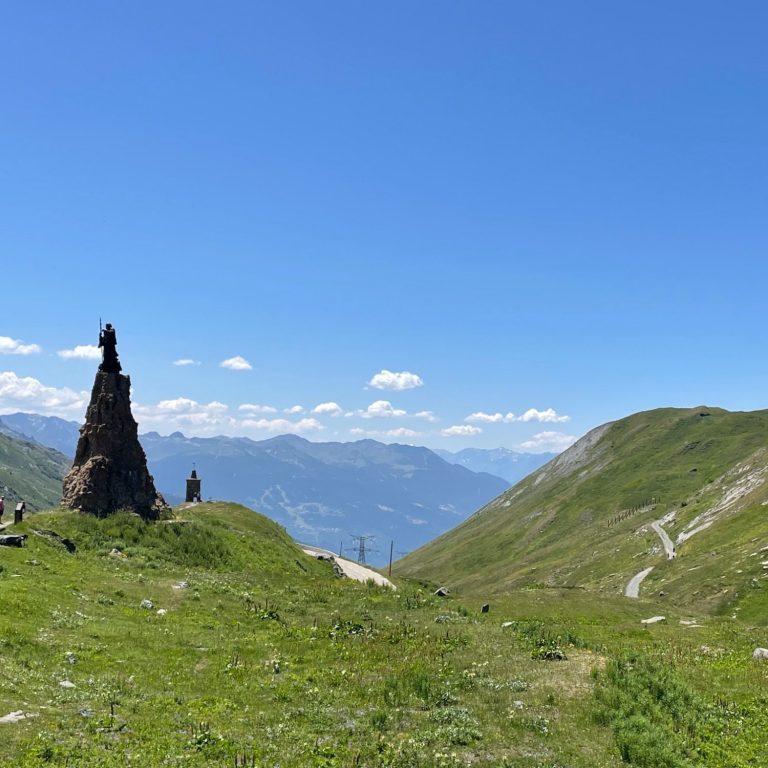
The hospice is not the only structure at the summit, as the pass itself is surprisingly busy. There are statues of Saint Bernard, remains of a Roman building and sections of the old Roman road, as well as the international border and ski lifts. Yet the Hospice du Petit-Saint-Bernard dominates both the pass and the surrounding valley.
This crossing has helped shape European history, with possibly Hannibal and certainly Napoleon leading armies across it.
Italian side at La Thuile
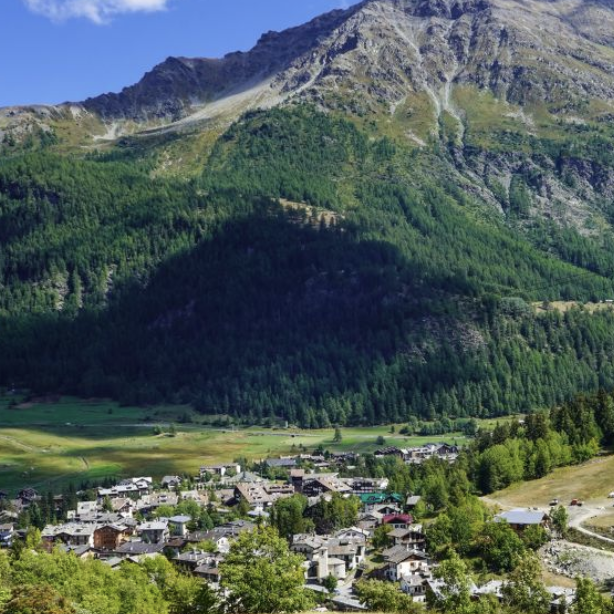
One should always take the opportunity to visit Italy when the chance arises, and descending to—and climbing back up from—La Thuile is a worthwhile extension of the ride. The road is 13 km long with around 740 m of elevation gain, offering wide-open views, forested sections, and a series of fabulous switchbacks.
La Thuile is nestled in a high Alpine valley surrounded by mountains and is a wonderful place to stop for lunch or simply enjoy the setting. The climb back up is manageable, with an average gradient of 5.7%, and the road surface is generally in better condition than on the French side.
This is a ride to savour.
Alternative way to La Rosiere
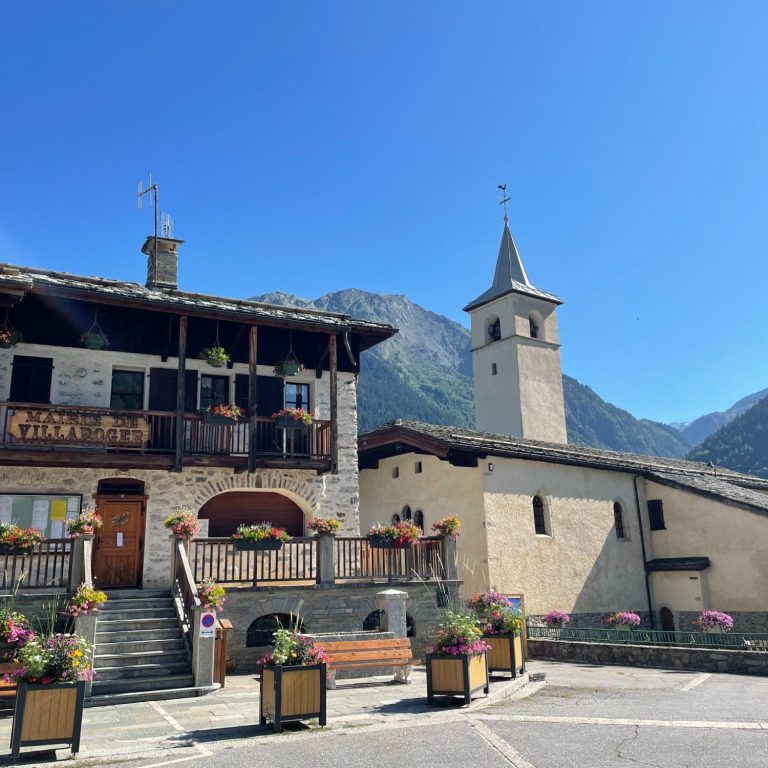
Reaching La Rosière represents the main challenge of climbing the Col du Petit Saint-Bernard, as the road beyond the village is comparatively gentle. This alternative route starts in Bourg-Saint-Maurice and follows the Isère cycle path to La Bonneville before climbing steeply to Villaroger and continuing to Sainte-Foy. From there, the D84 winds its way up the mountainside through a series of villages before reaching Hauteville and rejoining the D1090 just below La Rosière.
This is a quieter and highly rewarding alternative that offers the opportunity to explore the traditional villages of the Isère Valley. Be prepared, however, for several very steep ramps and an irregular climb that includes a number of short descents.
On a clear, sunny day, the scenery is exceptional. As you gain altitude, Mont Pourri gradually comes into view, dominating the skyline across the Isère Valley. The uneven nature of the climb, its steep gradients, and the often high summer temperatures make it especially rewarding to reach the distinctive pink strip of road that marks the rejoining of the main road, where the gradient finally eases.
Col du Petit Saint Bernard
Length: 26.7km
Altitude gain: 1406m
Max altitude: 2189m
Average gradient: 5.3%
Max gradient: 10.3%
Route Tip: A ride from Bourg Saint Maurice to La Thuile in the Aosta valley via the Col du Petit Saint Bernard is 81.4km long and climbs a total of 2,190m. climbing both sides on the pass. The gradients are never crazy and this is a fabulous way to explore this historic pass.