Italy
Once you start riding in Italy, the chances are that you don’t want to ride anywhere else. It is just the coolest country in the world! Discover its regions and routes that cross Italy East to West and South to North.
Dolomites
Wherever you ride in the Dolomites, there are no bad options. This region has it all: challenging passes, rides in lovely valleys, quaint villages and monster mountains.
Uniquely, circular rides and tours can easily be designed here. Whatever ride you chose - day rides or a multi stage routes - you are always overlooked by the incredible Dolomite cliffs. There are areas within the Dolomites which form nice riding regions.
Giro Heartland
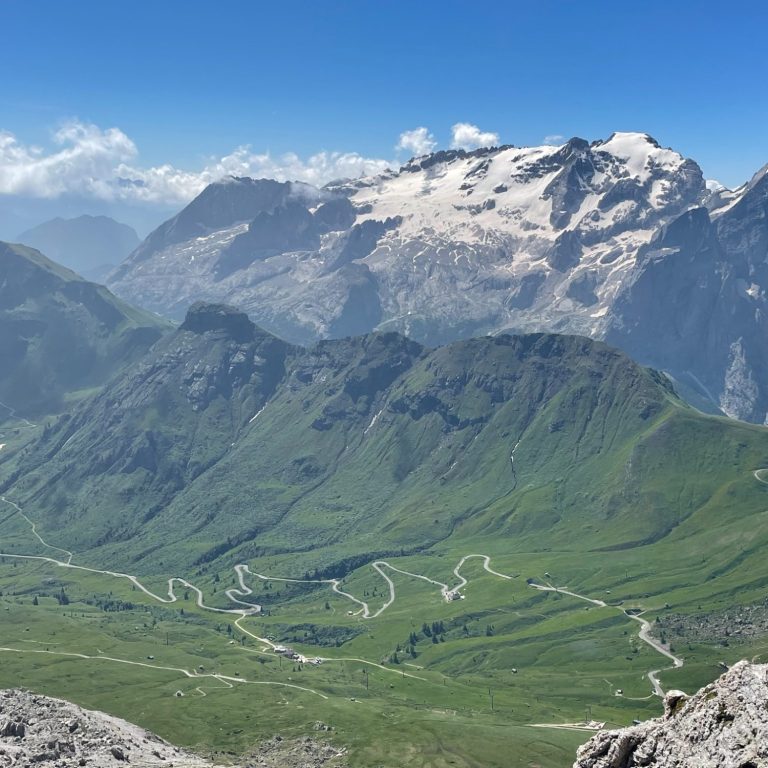
The Dolomite giro heartlands centre around the Sella and the mountain passes frequently used in the Giro. If you ride only once in Italy, this is the pace to come to. The variety of passes ranging from the crazy Fedaia ascent to all the passes of the Sella Ronda, make this a wonderful place to come and cycle.
Passo Rolle is probably the pass furthest south; Arabba is the best location for a cycling holiday which is also in easy reach of Passo Giau.
Route Tip:
Western Dolomites
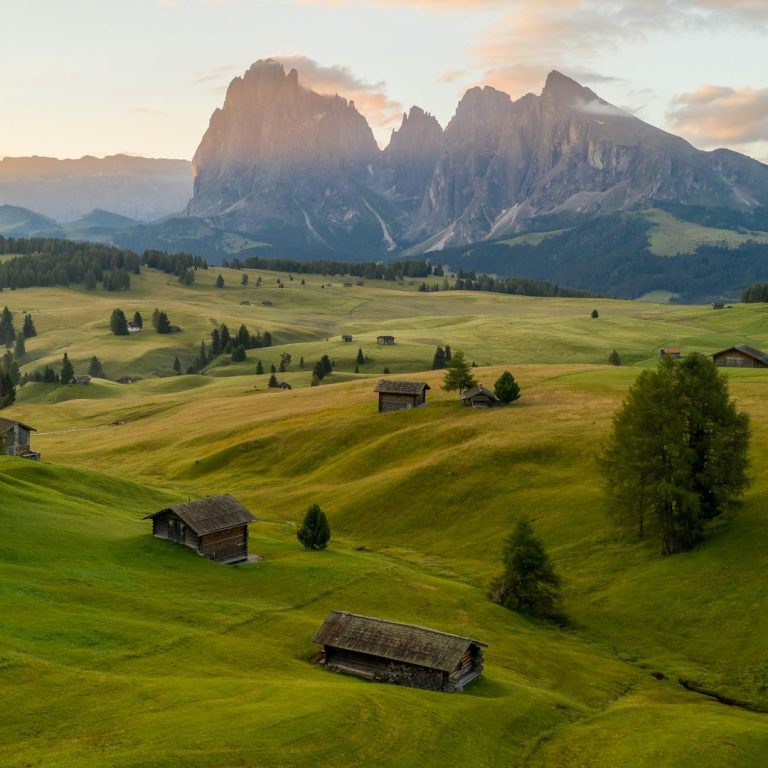
The western side of the Dolomites stretch along the Eisack Valley and is not a single geographical region but rather how I think of a coherent cycling landscape. They stretch from Brixen/Bressanone in the north to the south of Bozen/Bolzano. To the north lies the Passo delle Erbe, in the centre the Alpe di Suisie and to the south the Passo Costalungo and the Valle di Fiemme. Some of the passes and climbs are lower in altitude and the landscape is somewhat softer.
Route Tip:
Checkout this route of the Alpe de Suisi in the Western Dolomites
Cortina d'Ampezzo
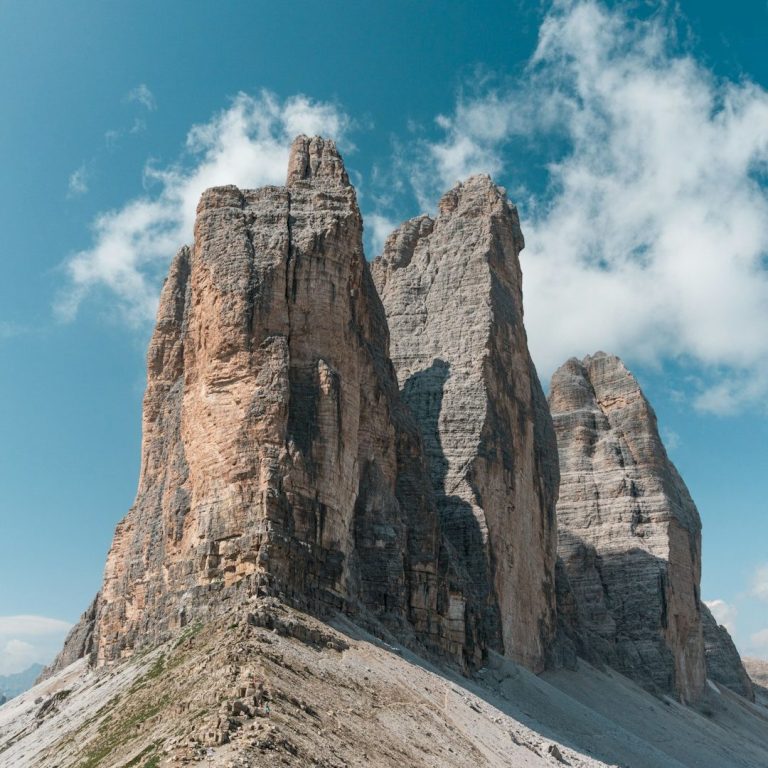
The area is dominated by the Tre Cime de Lavaredo / Drei Zinnen to the north,.
Cortina is also a good base to explore the Ventian Dolomites to the east or to take a dip into Giro heartland climbs like Passo Giau to the west.
The Further south is the more remote Staulanza pass a drive away towards Venice is the fabulous Passo Duran.
Route Tip:
Check out this route of the Tre Cime loop from Cortina d'Ampezzo
These are some of the most wonderful passes and climbs to explore the Dolomites.
2,340 m, Tre Cime di Lavaredo, Italy, dead end from Misurina: One rides this road purely to marvel at the Tre Cime mountains. Three massive cliffs, lined up next to each other, utterly mesmerising. No effort is too tough for this unique site and this road certainly demands a fair effort in return for unveiling those views.
2,244 m, Passo di Sella / Sellajoch, Italy, pass, connecting Val Gherdëina and Canazei: The highest pass on the Sella Ronda which is the circumnavigation of the Piz Boe or Sella mountain and a true wonder of cycling. Click here for a detailed climbing journal of the Sella Ronda.
2,239 m, Passo Pordoi, Italy, pass, connecting Canazei and Livinallongo del Col di Lana: From Arabba, the Passo Pordoi winds itself over 9.2km up a very wide meadow covering 642m altitude gain and 33 gorgeous hairpin turns. It is a gentle pass and a steady climb, the wide Valle di Fodom and the neighbouring cliffs of the Sella give it ist special character. Click here for a detailed climbing journal.
2,236 m, Passo di Giau, Italy, pass, connecting Cortina d'Ampezzo and Selva di Cadore / Livinallongo del Col di Lana: Cycling the Passo Giau is short, brutal, and breathtaking—a climb that feels carved straight out of the Dolomites. The Passo Giau doesn’t wear you down slowly. It hits hard, demands everything, and rewards you immediately—with one of the most spectacular finishes in the Dolomites. Over 9.8km it climbs 923m from the southern side from Selva di Cadore. Click here for a detailed climbing journal.
2,192 m, Passo di Valparola, Italy, pass, connecting Badia and Cortina d'Ampezzo / Andráz, via Passo di Falzarego
2,133 m, Passo Gardena / Grödnerjoch, Italy, pass, connecting Sëlva and Corvara, Part of the Sella Ronda route, at 8.8km it is not too long, with an elevation gain of 594m it is not too exhausting and with an average gradient of 6.7% not too steep so you can enjoy the incredible views while paddling uphill. Click here for a detailed climbing journal of the Sella Ronda.
2,105 m, Passo di Falzarego, Italy, pass, connecting Andráz and Cortina d'Ampezzo, Passo Falzarego from Cortina d'Ampezzo is a climb often climbed in combination with Passo Giau. It is a category 2 climb and where the Giau is dramatic, the Falzarego is understated. Click here for a detailed climbing journal.
2,057 m, Passo di Fedaia, Italy, pass, connecting Canazei and Rocca Pietore: A road of two halves passing at the foot of the mighty Marmolada mountain which is the highest in the Dolomites. A lesser taxing ride from Canazei brings you close to the mountain with superbe panoramics and the climb from Rocca Pietore makes you relive Giro folklore, especially Marco Pantani's attack on the famously steep straight into the mountain. Click here for a detailed climbing journal.
1,991 m, Würzjoch/Passo delle Erbe, Italy, pass: A personal favourite of mine and I think a must ride for anyone. Best to try a number of the five routes to the top which is topped off by a great view of the Peitlerkofel mountain. Click here for a detailed climbing journal.
Lombardy
Riding in Lombardy is dominated by Bormio but offers a large variety of cycling terrain which is stretching from the lakes north of Milano to the high mountain of the Ortler National Park.
From the most prestigious climbs in Italy to stunning lake side rides, Lombardy has it all. These are some of the most stunning areas to ride.
Valtellina/Sondrio
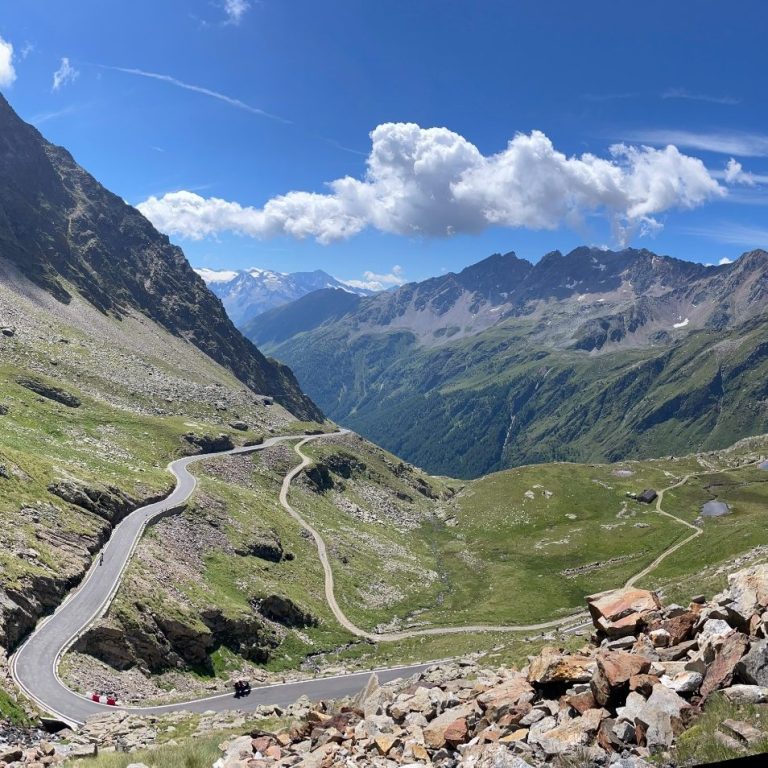
Italian cycling superlative. Home of iconic Giro passes of the Stelvio, Gavia and Mortirolo. But this North Eastern corner of Lombardy has more to offer. There are rides into forgotten valleys, away from everything and a number of long loop rides. A common loop ride from Bormio is taking in the Gavia and Mortiorol and is about 110km long and climbs 3,000 meters. Another long loop is connecting Bormio via Tirano and the Bernina pass in Switzerland and back to Bormio via Livigno, which is about 140km long and 3,000 meters climbing. This is high alpine riding of at its absolute best.
Route Tip:
Check out this route of Passo di Gavia and the Mortirolo from Bormio
The Lakes
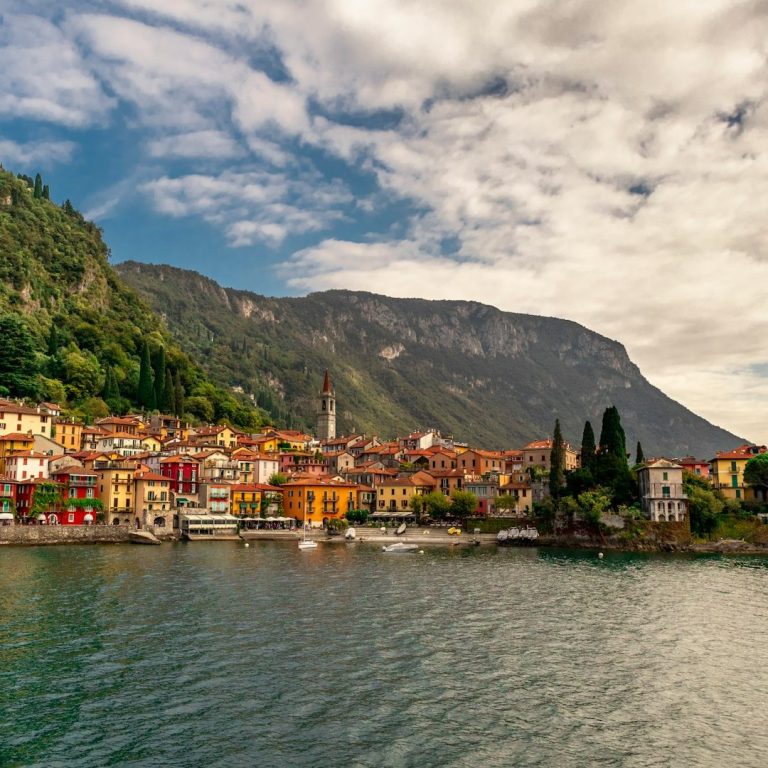
The main lakes are Lago Maggiore and Lago di Como. Both are busy and cycling is better in the off season than in mid summer when traffic and temperatures can be intense. The Lago Maggiore is less salubrious than Lago di Como. Great climbing here is mainly on the Piedmont side of the lake, including the Mottarone which offers fabulous views over the lake and a tough climb up Monte Morissolino.
On Lago di Como, the area around Varenna and Belano has significant climbing opportunities, e.g. Bocchetta di Cino. And there is always the Madonna del Ghisallo the protector of all cyclists.
Route Tip:
Checkout this route climbing the Mottarone from Lago Maggiore
Bergamo Alps
This lesser explored area centres around the Parco Regionale della Orbie Bergamasche and stretches from Lago di Como in the west to Lago d'Iseo to the east.
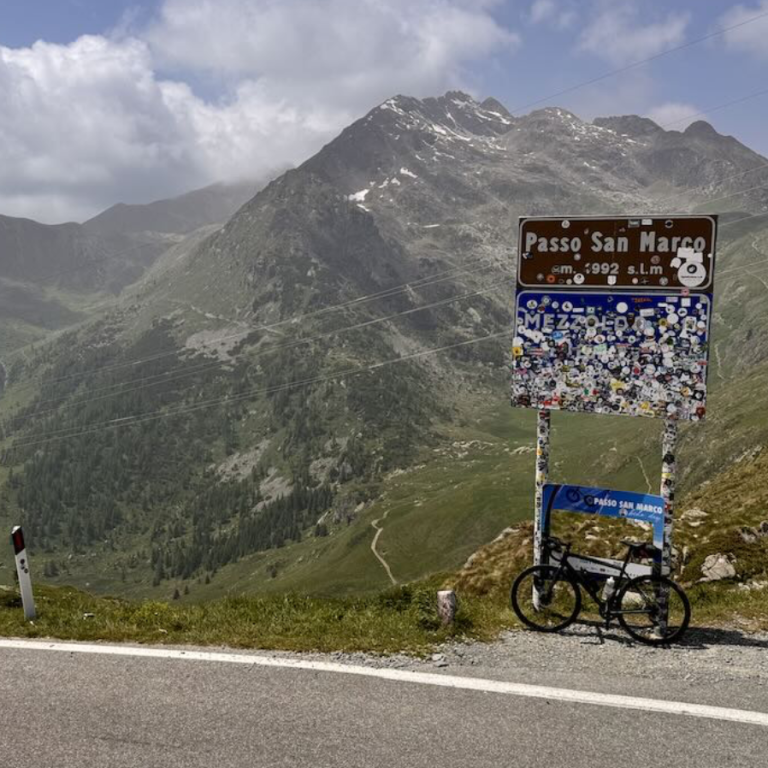
Being at lower altitude than the Valtellina it has more valley style climbs but also very challenging climbs like the Passo di san Marco and Passo di Croce Domini.
The area is much quieter and offers a riding experiences away from the popular climbs further north.
For longer breaks, it can easily be combined with cycling at Lago di Como.
Route Tip:
Must do climbs in Lombardy vary from the very high to the very lovely.
2,758 m, Stelvio Pass, Italy, pass, Prad am Stilfser Joch and Bormio: Highest and most famous pass in Italy. Counting both sides, it covers 86 hairpins on the Italian side. If the Swiss ascent via the Umbrail pass is counted too, this will add 33 switchback bringing the total 119. What further reason is required to ascend all three ways? Click here for a detailed climbing journal from Prato and from Bormio.
2,621 m, Passo di Gavia, Italy, pass, Bormio (Sondrio) and Ponte di Legno (Brescia): The wild kid of Lombardy. Tempestuous and beautiful, famous for adverse weather, the Gavia is unique. A more popular ascent from Bormio and terrific almost single track road from Ponte di Legno define this climb. A must! Click here for a detailed climbing journal.
1,993 m, Passo di San Marco, Italy, pass, connecting Morbegno with Olmo al Brembo: Preeminent pass connecting the Valtelina with the Bergamo alps. A wonderful example of the road that starts and ends in a different ecosystem. A really hidden gem of a climb.
1,941 m, Torri di Fraele, Italy, dead end from Turri Piano: Italian version of the Lacets de Montvernier, this is a rickety road winding its way up to a couple of medieval towers in 21 switchbacks which come in quick succession. Totally unique ride in a great setting. Click here for a detailed climbing journal.
1,887 m, Passo di Croce Domini, Italy, pass, connecting Breno with Bagolino: Located in the alpine foothills in the Bergamo Alps, this pass is a real leg breaker. With over 1,600m of climbing, this little known pass offers solitude and wonderful scenery.
1,868 m, Passo Mortirolo, Italy, pass, multiple ascends: Legendary Giro d'Italia pass, featuring more frequently as the weather on its bigger brothers, the Gavia and Stelvio is unpredictable in June. It is a leg breaker and the satisfaction of riding the Mortirolo comes from having ridden and conquered it. There some nice passages on the ascend from Tiolo though and the tarmac is generally in good condition. Click here for a detailed climbing journal.
758 m, Madonna del Ghisallo, Italy, pass, connecting Belagio with Asso: Madonna del Ghisallo is the holy place for all cyclist. A patron of all cyclist and the protector of our sport. A visit is an absolute must if you are in the area.
Piedmont
This is a wild and remote country which seems lightyears away from mass tourism. The roads are small and rickety, villages traditional and the food is local.
Piedmont is the ideal place for getting away from it all. There are three distinct areas to explore the mountains which offer superbe riding and climbing.
Gran Paradiso
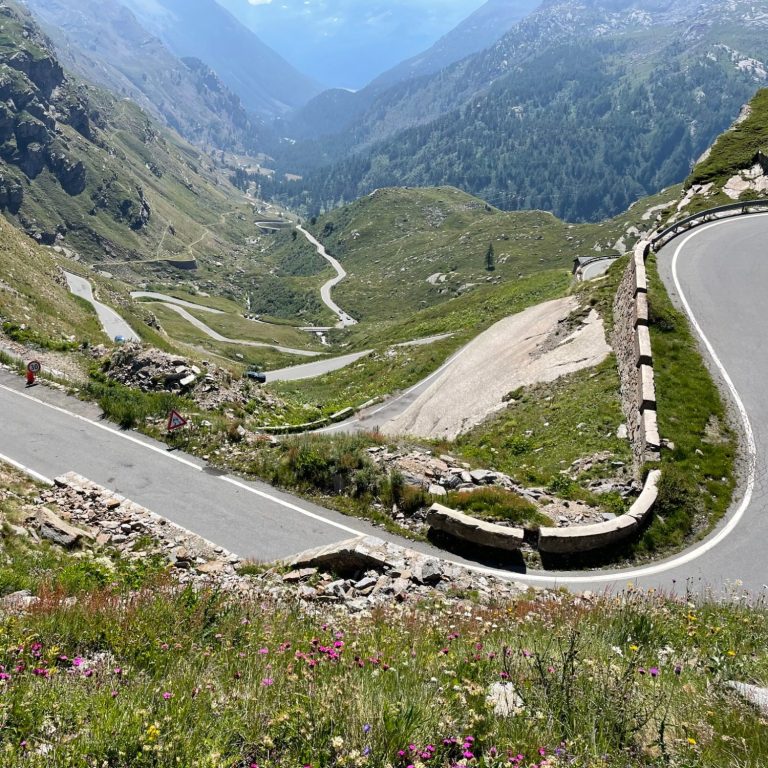
To the north west of Turin in the Gran Paradiso National Park lies the Colle del Nivolet, probably the most awesome climb in the alps.
A dreamy climb straddling reality and imagination. Other rides in the region start lower down the valley from Pont Canavese or Courgne (see route suggestion).
The Gran Paradiso is easy to combine with riding in the Aosta Valley further to the north which is framed by the 4,000+ meter peaks of France and Switzerland and offers monstrous vistas.
Route Tip:
Sestrier
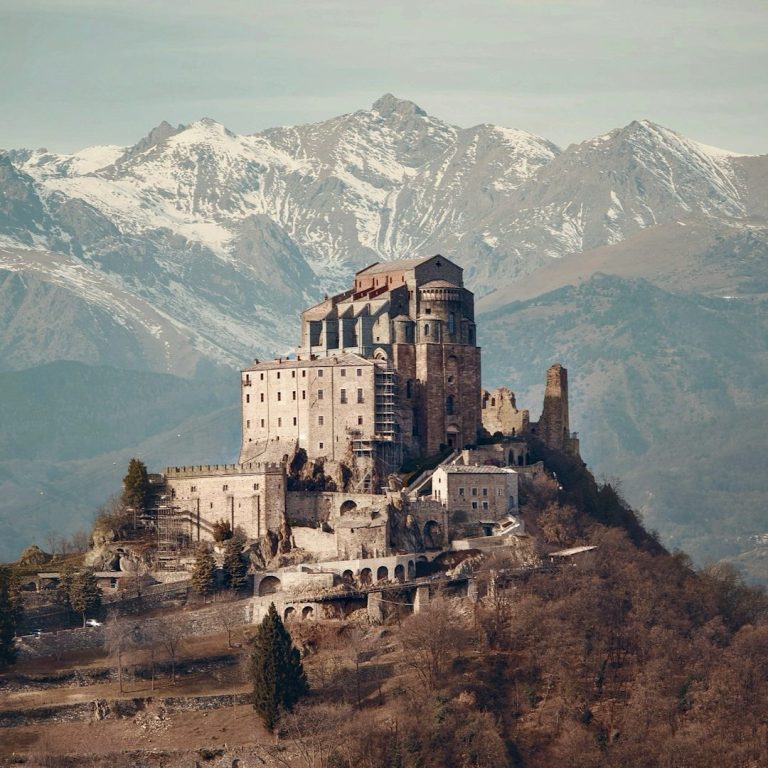
To the west of Turin is Sestriere with epic Giro climbs like the Colle delle Finestere.
Sestriere is busier and better known but offers epic road and gravel rides alike.
The Strada dell’Assietta is a somewhat crazy road and the Colle delle Finestre is also partly unpaved. These are stern tests on any bike and for any rider. It is also easy to nipp into France to Briancon although that is a very busy road.
Route Tip:
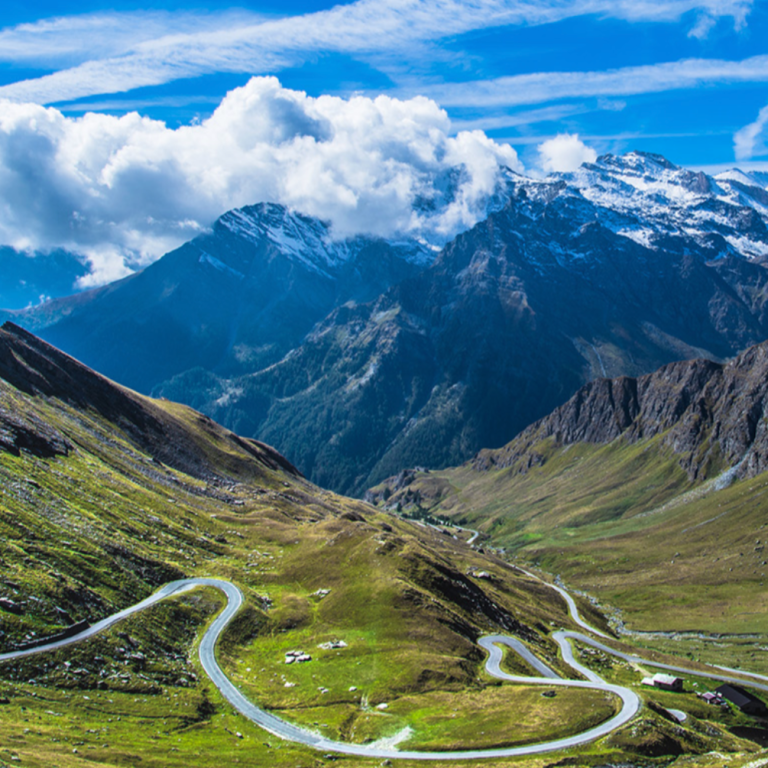
Cueno
To the south west of Turin lies the town of Cueno which opens up to the southern alpine passes towards France. The Colle dell' Agnello at 2,744m to the north, the Col de la Lombarde at 2,352m to the south and wild passes in between including the Colle di Sampeyre and Colle Fauniera, previously known as Col di Morts.
Some of the pass road are so small, they resembles a track rather than a road. This is a beautiful and remote area feeling to be at the edge of civilisation.
Route Tip:
Piedmont is where the most epic, highest and remote passes can be found in Italy.
2,744 m, Col Agnel / Colle dell'Agnello, France / Italy, pass, connecting Queyras and Pontechianale: Hannibal is believed to have crossed the mountains in 218BC not far from here at the Col de la Traversette (although it could have been further north at Mont Cenis or even the Petit St Bernard). The pass maintained a remoteness as this border region between Italy and France is a region less developed. The road is totally magnificent and a must ride pass.
2,641 m, Colle del Nivolet, Italy, pass / dead end from Locana (Piedmont): The most beautiful climb in the Alps. While this is a subjective assessment, the Nivolet has an unreal dreaminess about it that makes it so special. A tough yet lovely road that weaves its way up the mountain and ends in nowhere. You just ride this road for the sheer pleasure. Click here for a detailed climbing journal.
2,481 m, Colle Fauniera, Italy, pass, connecting Ponte Marmora / Valgrana and Demonte: Formerly known as Colle di Mortes due to battles in war, this pass is a busted up road through the most wild, forgotten and remote parts of the Italian Alps. A rickety mountain road connecting mountain villages. The Giro only rode it once in 1999, won by Marco Pantani for whom a statue remain permanently on the pass. This is definitely a bucket list pass.
2,350 m, Colle della Lombarda, France / Italy, pass, connecting Isola, via Isola 2000 and Vinadio: The southern Piedmontese alps are remote and not very developed (compared which the French side which boasts a ski resort just below the pass). The Italian pass road is less traveled and totally enchanting. It is on my bucket list!
2,284 m, Colle di Sampeyre, Italy, pass, connecting Sampeyre and Stroppo / Elva: Located in the southern Piedmontese Alps, this is the little sibling of the Colle Fauniera both in terms of height and difficulty. The landscape is somewhat more open than the Fauniera but the remoteness is similar. The village of Elva is a lovely destination coming from Sampeyre.
2,176 m, Colle delle Finestre, Italy, pass, connecting Susa Valley and Val Chisone: The climb begins innocently enough on tarmac, winding steadily upward through forested slopes, but it gradually tightens its grip. Gradients are persistent, often steep, and the rhythm is one of steady attrition rather than explosive effort. Near the top, the character changes dramatically as the road turns to gravel. This is one of the most storied ascents in the Alps.
2,006 m, Simplonpass / Passo del Sempione, Switzerland, pass, connecting Brig, Switzerland and Domodossola, Piedmont: The Simplonpass is included here due to its historic significance as a key pass road over the centuries. It is busy though.
1,438 m, Mottarone, Italy, pass, connecting Stresa with Armeno: The Mottarone is in Piedmont but overlooks the Lago Maggiore which is in Lombardy. It provides the most exquisite views over the lakes to both sides: Lago Maggiore and Lago di Orta.
Trento / Lake Garda
The Trento is a varied regions with lakes, the Dolomites and the lower alpine foothills towards the Venetian plaine.
This is a vast area and offers endless cycling possibilities. Hence the focus on the north of Lake Garda and the Trento/Ventian pre-Alps is only a small selection of the possible cycling areas here.
Lake Garda
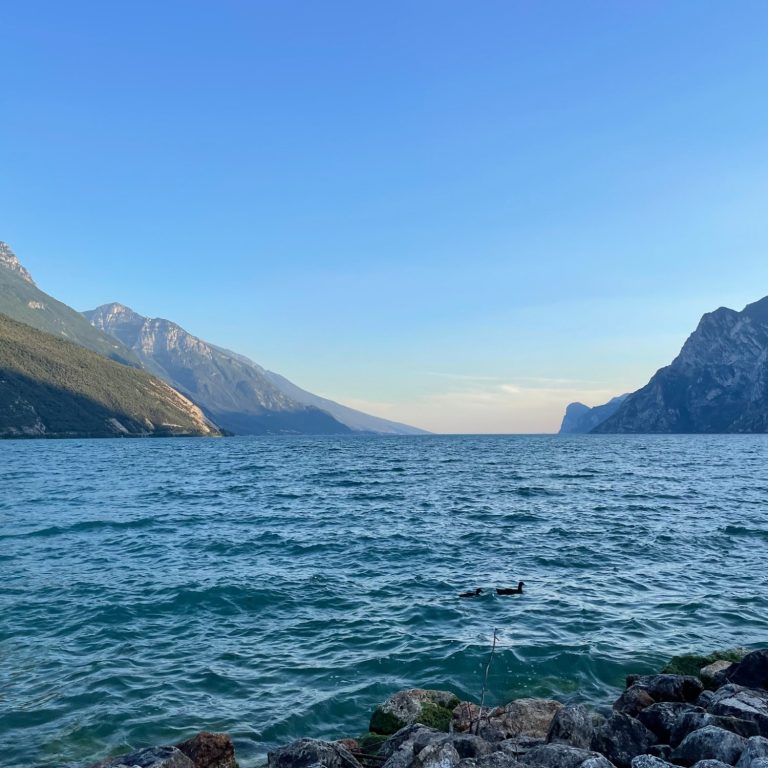
Lake Garda, its northern end to be precise, needs a mentioning in its own right as there is a lot of cycling there. The north is mountainous with pass roads and where the cycling action is.
There are a number of Giro climbs around Riva del Garda, there are smaller climbs, loop and valley rides. In addition to road riding, there is a good variety of gravel and mountain biking trails available. Further to the passes listed below, there are lovely shorter rides from Riva to get on your bike for an hour or two which you can check out here.
Riva also allows you to be based in one location while exploring a great variety of riding terrain. It also gives easy access to the rest of the Trentino and the Venetian Prealps.
These are great passes to ride around Lake Garda from Riva del Garda.
1,650 m, Monte Bondone Pass, Italy, pass, various ascends: The road begins in Trento and climbs almost immediately. The gradient settles into a steady, testing rhythm—rarely savage, but never generous. Monte Bondone doesn’t rely on spectacle or extreme gradients. Its challenge lies in length, consistency, and the calm persistence it demands—an old-school climb that rewards steady effort and respect for the mountain. Click here for a detailed climbing journal.
1,617 m, Monte Baldo/Bocca del Creer, Italy, pass, various ascends: The climb starts from Mori, covers 22.8km, 1490m of elevation gain and it ends at the Refugio Graziani at 1617m. The Passo San Valentino is en route which featured in the 2025 edition of the Giro. If you do one ride at Lake Garda, this is the one. Click here for a detailed climbing journal.
1,174 m, Passo Santa Barbara, Italy, pass, connecting Arco and Ronzo Chienis: At 1,057m altitude gain over 13 km and an average gradient of 8.1% which dips frequently into double digits, this climb is tough but super regular. It featured in the Giro due to its toughness and is a ride in solitude through and enchanted forest with the odd view over to Lake Garda. Click here for a detailed climbing journal.
Route Tip: This circular ride from Riva is not too strenuous but gives a real good feel for the lay of the land and where the more challenging passes in the "Valley of the Lakes" are. This can be ridden clock or anti-clock wise.
Trento/Venice Pre-Alps
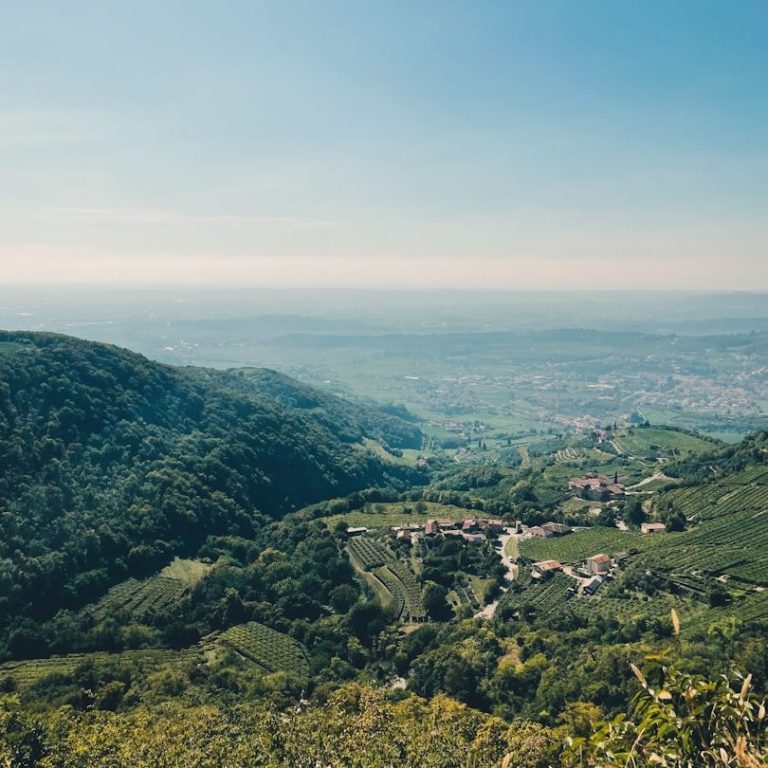
Fascinating area that starts in the Dolomite mountains and ends in the flat lands and the vineyards of Valpolicella and Grappa. The change in the landscape comes with the rise of the temperature and no less stunning scenery.
With the lower altitude, the choice and variety of roads increases. This allows to create circular rides including climbs with quite a few of them in the HC category. This is an area too large and diverse to even start to describe comprehensively but there are two climbs that stand out with the Passo del Manghen in the north and the Monte Grappa in the south.
Passes furher afield in the south eastern Italian Alps that stand out.
2,047 m, Passo Manghen, Italy, pass, connecting Borgo Valsugana and Molina di Fiemme: Unlike the grand, sweeping highways of some Alpine passes, Manghen is narrow and twisting, climbing through dense forest in tight, rhythmic switchbacks. The gradients are consistently steep, often biting into double digits, and there is little chance to fully relax. As you gain height, the trees thin and the views suddenly open to reveal the wild Lagorai range. Top pass!
1,726 m, Monte Grappa, Italy, dead end: Must ride road, whichever of the ten ways up you chose. Its location as the guardian of the Venetian plaines and its history as battleground in the first world war make this place special. Climbing all ten different ascents gives you a "gold pass". The Monte Grappa also features heavily in the Giro. Click here for a detailed climbing journal.
1,703 m, Monte Zoncolan, Italy, pass: Included here due its fame and mythical status in the cycling community. For me, this is a road with silly gradients as there are many in the lower altitude range across the Alps. I suppose conquering the Zoncolan is a special achievement purely to overcome the pain in your legs.
712 m, Passo San Boldo, Italy, pass: This is just the best pass ever built. It is not very long or high in altitude but it is totally unique. The switchbacks are built through tunnels at either end of the short ramps as the gorge the pass climbs is too tight to accommodate a regular pass road design.
Route Tip: This circular pre-alp ride combines many of the features of this region. Dense forests, steep climbs, busy valleys and some remote and rickety roads. Climbs should not be underestimated even though they are at lower altitude.
Aosta Valley
Riding through a natural amphitheatre of giants
Tucked into Italy’s northwest corner, the region is surrounded by the highest mountains in the Alps—Mont Blanc, Monte Rosa, the Matterhorn, and Gran Paradiso—and every ride unfolds under their shadow.
The valley floor offers fast, flowing riding along the Dora Baltea, linking stone-built villages, vineyards, and castles that cling to rocky outcrops. It’s perfect for warm-ups or recovery days, but the real character of the Aosta Valley reveals itself the moment you turn uphill. Almost every side road climbs, and climbs seriously. The ascents are long, steady, and unapologetically alpine, rising quickly from the valley into high, quiet terrain.
What makes cycling here special is the sense of scale and solitude. Many climbs—such as those to Colle San Carlo, or Col de Joux—wind through protected landscapes and sparsely populated valleys, where traffic is light and silence dominates. Forests give way to open pastures, rocky slopes, and vast skies, with the air cooling as the views grow wider.
The Aosta Valley also feels deeply historic. Roman roads, medieval villages, and ancient mountain routes remind you that these passes have been used for centuries, long before they became challenges for cyclists. Yet despite the history, the riding feels raw and authentic rather than polished or touristy.
Cycling in the Aosta Valley is demanding, but immensely rewarding. It’s a place for riders who enjoy long efforts, big scenery, and a sense of remoteness—a region where every climb feels earned, and every descent feels like a journey back through the mountains.
This ride to Champoluc at the start of the valley is delightful, below are a number of the prominent climbs in the Aosta Valley.
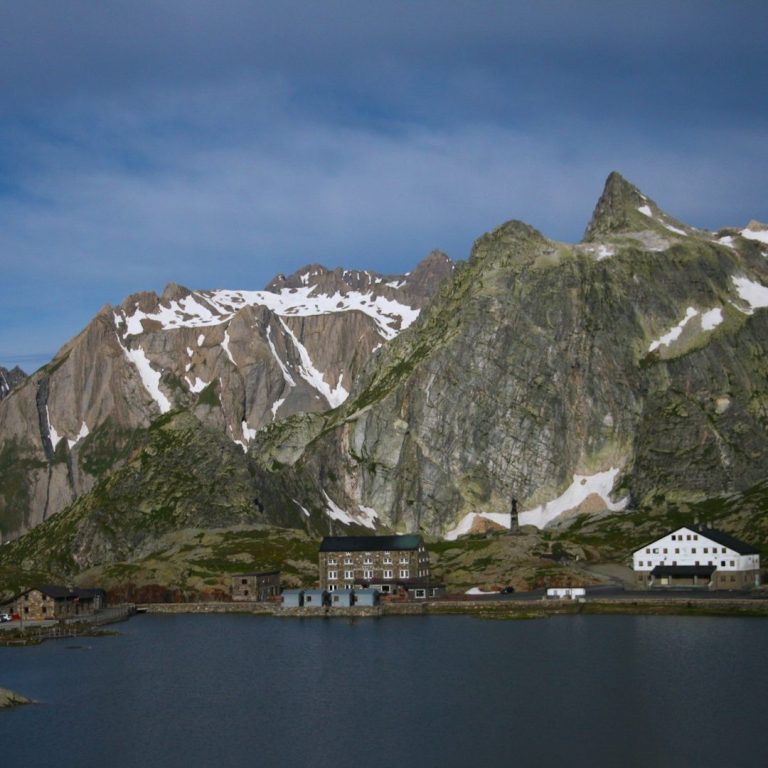
The Great St Bernard Pass is probably one of the oldest passes in the Alps, first paved by the Romans. While the main road can be busy, taking the quieter route on the opposite side of the valley offers a far more peaceful ride.
The climb is long, at around 40 km, and gains just over 2,000 m of elevation. The scenery on the Great St Bernard is extraordinary, shaped by the immense altitude of the surrounding mountains. At the summit sits the historic hospice, where monks famously bred the dogs that gave the pass its name.
Route Tip: Check out this route to explore the St Bernard Pass
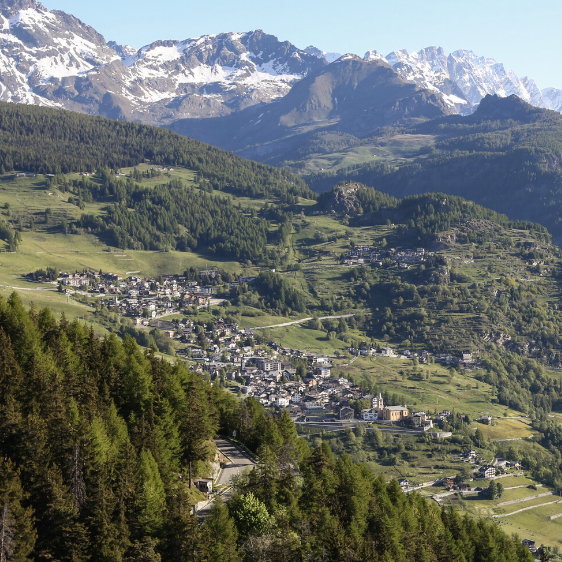
On the northern side of the Aosta Valley, toward Switzerland, there are several lower-lying climbs, one of which is the Colle di Saint-Panthaléone. This is a 16 km ascent that gains around 1,200 m of elevation, reaching a pass height of 1,665 m. The road offers breathtaking views over the Aosta Valley and the surrounding mountains and is increasingly being used by the Giro d’Italia. Several of these lower passes can be linked together to create a challenging and rewarding ride.
Route Tip: Check out this route to explore Colle San Panthaleon
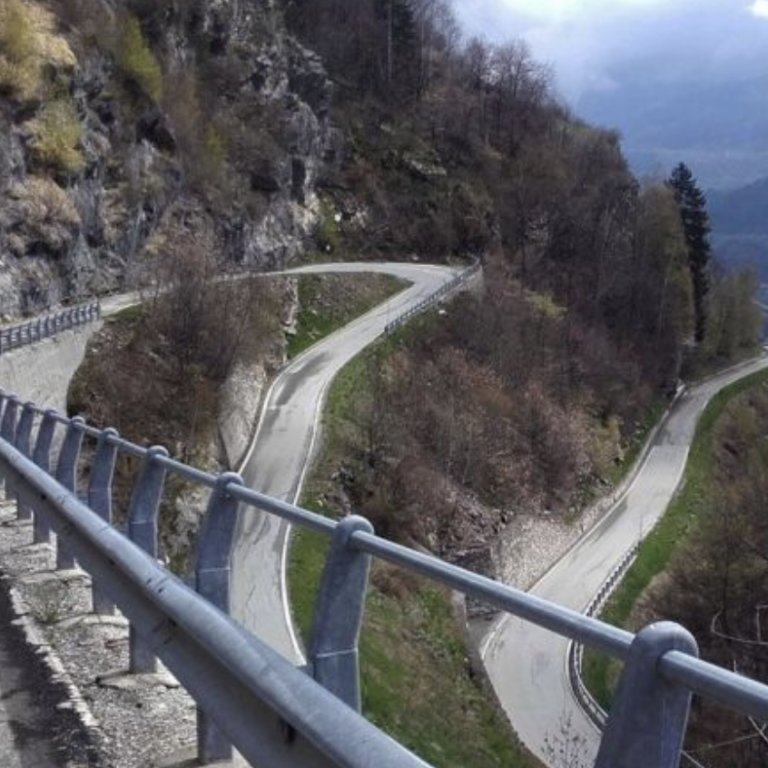
The Aosta Valley is lined with many smaller climbs at lower elevations. These routes follow quiet roads through rustic villages, vineyards, and alongside the river, offering excellent views and a relaxed riding atmosphere. Along the way, you pass churches, castles, and plenty of inviting places to stop and explore.
On the southern side of the valley, the ride passes through a delightful canyon after climbing the Col d’Introd. Aosta itself is an ancient Roman town and makes a great starting point, even if it can be a little busy. Overall, this is a valley best enjoyed at an unhurried pace, taking in both the rich culture and the beautiful scenery.
Route Tip: Explore the climbs to the West of Aosta
Route Tip: Explore the climbs to the East of Aosta
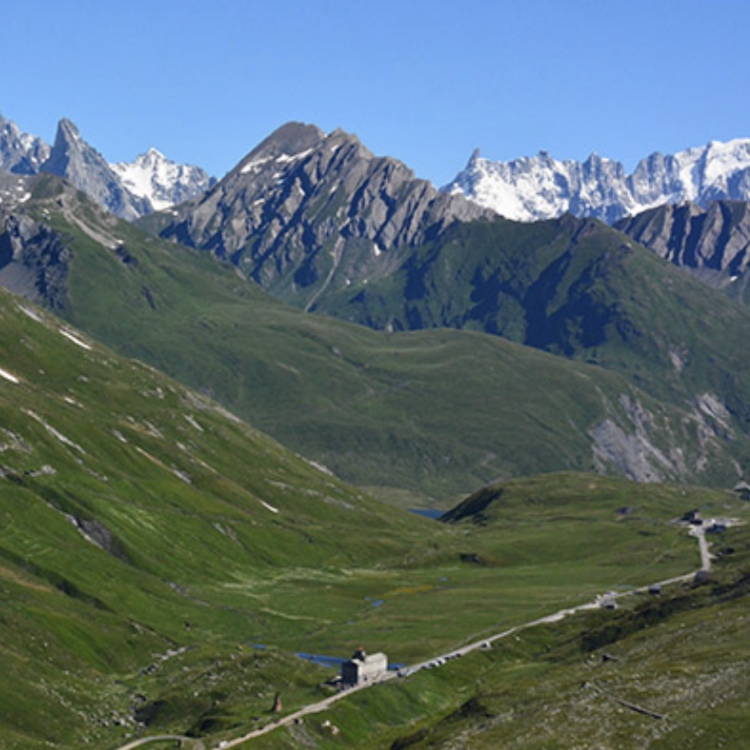
The Colle di San Carlo and the Petit Saint-Bernard Pass are two distinct climbs, but for much of their lower sections they run almost parallel. The Colle di San Carlo is a demanding 10 km ascent, gaining 1,000 m of elevation to reach 1,959 m, with gradients that remain persistently above 10%.
Once this climb is conquered, a descent leads to La Thuile, from where the Petit Saint-Bernard can be reached. Combined, this makes for a ride of around 54 km with approximately 1,800 m of climbing. For an even bigger day, the route can be extended with a descent into France and the Tarentaise Valley, adding further climbing and distance.
Route Tip: Check out this route to explore the Small St Bernard and San Carlo Pass
Further suberbe climbs in the Aosta valley.
2,006 m, Breuil-Cervinia, Italy, dead end from Châtillon: The last village in this valley used to be Valtournenche before Cervinia was built as a ski station. The first expedition to climb the Matterhorn (or Cervin in Italian) started from Valtournenche and the mountain dominates the valley. The ride to Cervinia brings you as close to the mighty Matterhorn as a road can. Wonderful.
1,642 m, Col de Joux, Italy, pass, connecting Saint-Vincent with Brusson: Sitting at the entry to the Aosta Valley, this pass is somewhat of shortcut to the adjacent Val d'Ayas with its wonderful Evancon river. Climbing the Col de Joux provides an entry to both valleys.
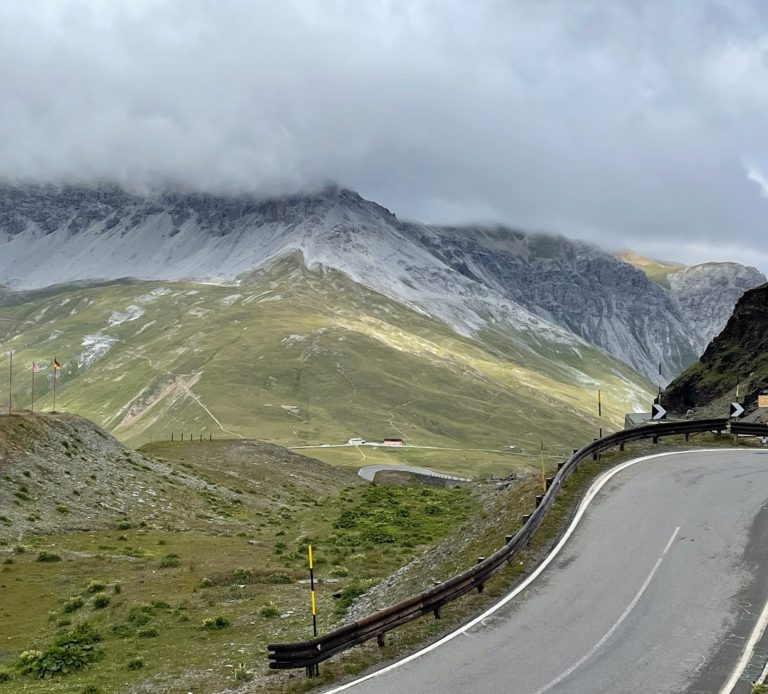
Discover Italy
Wherever you go, cycling is in the Italian blood and the people make you welcome.
Explore crossing Italy: a shorter route of 500km crossing the Alps from near Venice to Sondrio near Milan, a 1,250 km route crossing the entire Alps east to west and a 1,780 km route riding Italy south to north.
Explore the Alto Adige/Südtirol: a 530km circular ride from Innsbruck
Explore the Bergamo Alps, Trento and Alto Adige: a 560km ride from Lake Como to Bozen or Innsbruck
Explore the Aosta Valley and Piedmont: a 10day ride from Bourg St Maurice in France to Lindau in Germany crossing the Aosta valley and the Piedmont.
I hope the insights and suggestions here help to plan ahead and hopefully some of the routes, passes and travel tips here will make your Italian cycling experience as enjoyable as the times I had in Italy.