Alpe d'Huez - France
Alpe d'Huez is probably together with the Tourmalet and the Mont Ventoux in its own league of Tour de France royalty. There are many epic stages in the Alpes but Alpe d'Huez has so much TdF history, so many battles have been fought on these slopes, and so many races have been decided here that Alpe d'Huez is the premier climb in the French Alps.
With 21 hairpin bends, and 1122m climbing, this road is ridden to reach the top. There is no other reason than to put your head down and go. And go as fast as you are capable of. This is not a ride into a hidden mountain landscape, a cast away pass or climbing the highest roads. The road to Alpe d'Huez is a racer's road, a test of endurance and stamina like no other climb in France. The entire road screams faster, harder, better. It starts with a timing clock and ends at the stage finish at the back of Alpe d'Huez. Each of the bends has a number, gradient, altitude and the name of a previous winner or winners of this most iconic of climbs. Each corner has a history, e.g. bend 7 is the Dutch corner which will explode in in orange July. This is a must ride climb.
Aple d'Huez 1841m - Ascend from Bourg d'Oisans
The ascend to Alpe d'Huez is 14km long and climbs 1122m at an average gradient of 8%. It has 21 switchbacks and a relentlessness about it. The fastest official Tour de France ascent of Alpe d'Huez is widely credited to Marco Pantani in 1997, with a time of 37 minutes and 35 seconds, so start pedalling. Due to its relentlessness, it is hard to break it into sections but I think, these three have a different character:
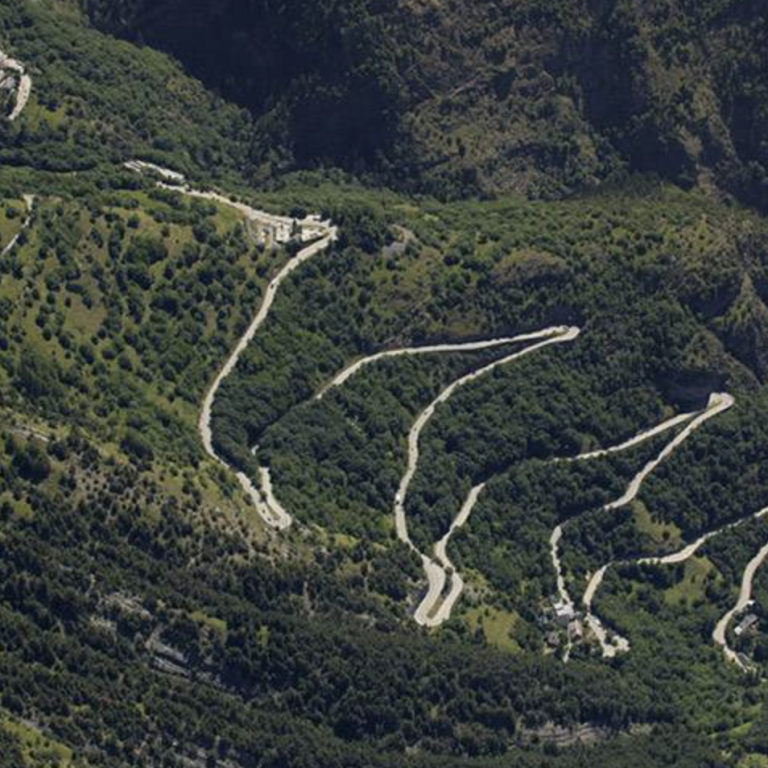
Tough start to Dutch Corner
The first 7.5km climb 650m to the Dutch Corner at 1,370m climbing through switchback after switchback. It starts with a bang. The first 2.5km and 230m are hard and set the tone. After that the switchbacks and ramps come in fast succession, the gradient often in double digits up to 14%. The steady hard gradient starts to take its toll. On the upside, the views into the Romanche valley and the mountain range across which are reaching up to 3,000m are fabulous.
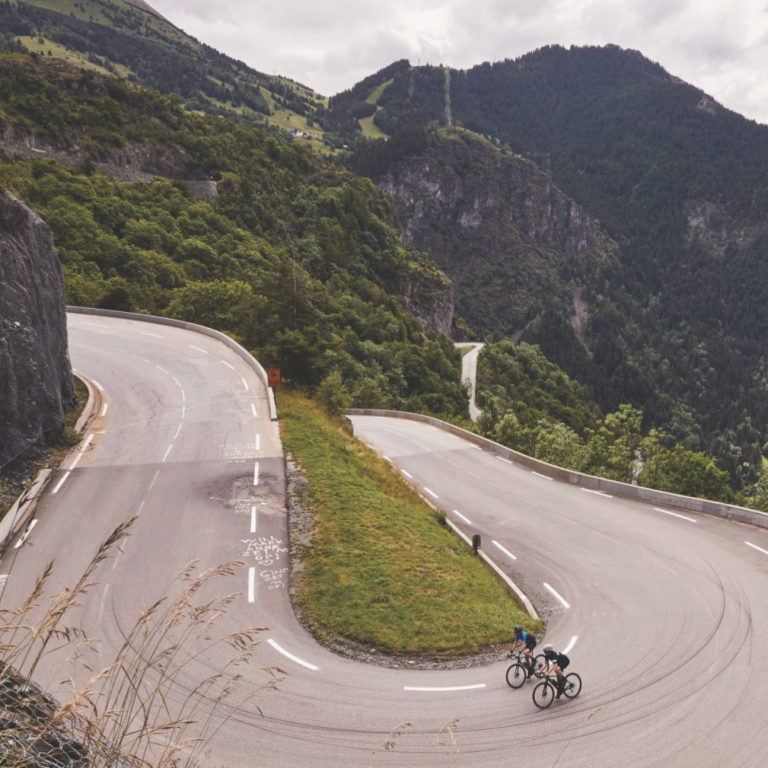
Into the mountain to Marco Pantani Corner
The middle section goes till the Marco Pantani Corner at 11km and 940m climbing into the ride. This section has longer straights going into the mountain rather just up. The route also navigates through Huez village which makes these middle 3.5km with 290m elevation gain a little more varied. As the road drives into the mountain through some sheltered parts of the valley, this part can be really hot in the summer.
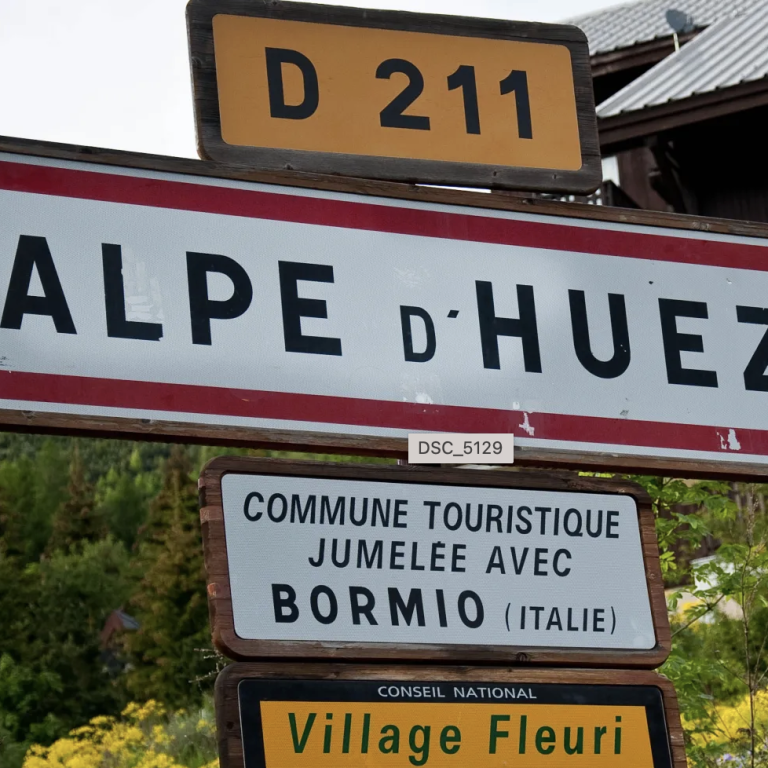
Through Alpe d'Huez to the finish
Once you pass the Marco Pantani Corner, Alpe d'Huez is in sight and the switchbacks stop. It is 4.5km with around 200m elevation gain to go. There are some steep ramps coming into Alpe d'Huez but the road is mostly flat through the ski station which sets up the last 400m well for a sprint finish. Once at the finish, there is a permanent podium with stationary bikes and a wall with the names of all the winners behind. Great spot for a photo.
Alpe d'Huez from Bourg d'Oisans
Length: 14km
Altitude gain: 1122m
Max altitude: 1841 m
Average gradient: 8%
Max gradient: 11.3%
Route Tip: A nice circular ride is from Le Bourg d'Oisans to Alpe d'Huez, descending via the Col de Sarenne (also frequently used in the TdF) and to come back via a road high above the Romanche valley. Around 58km and 2000m climbing.
For further exhaustion, a ride from Le Bourg d'Oisans to Alpe d'Huez and then to Col de la Croix de Fer via Allemond and back will be good days work.