Germany - Lake Constance and Alps
Lake Constance is the complete holiday region with cycling at its heart.
Hundreds of km of cycling paths, quiet back roads, hills and climbs and a great lake as the perfect backdrop.
The Lake
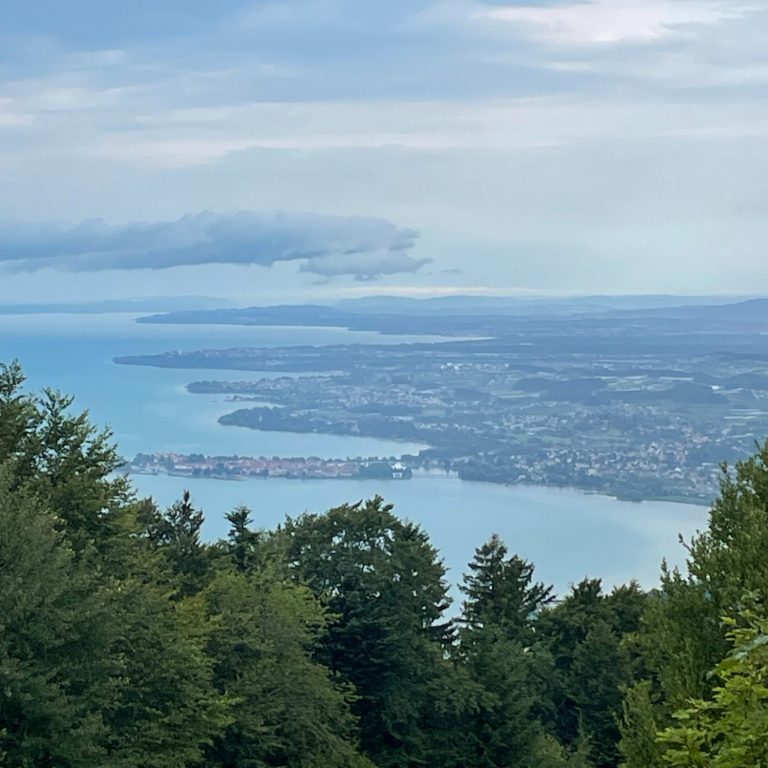
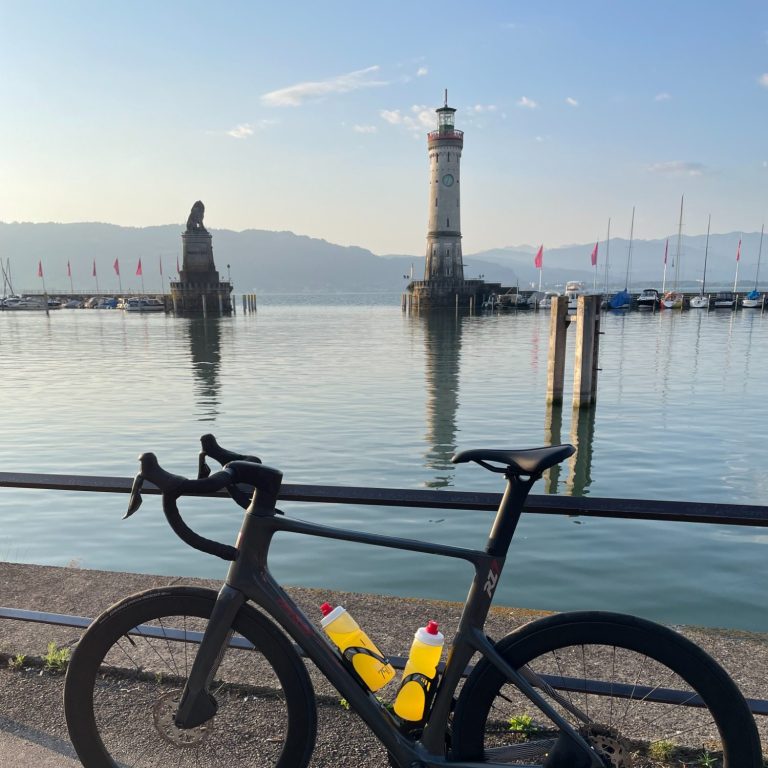
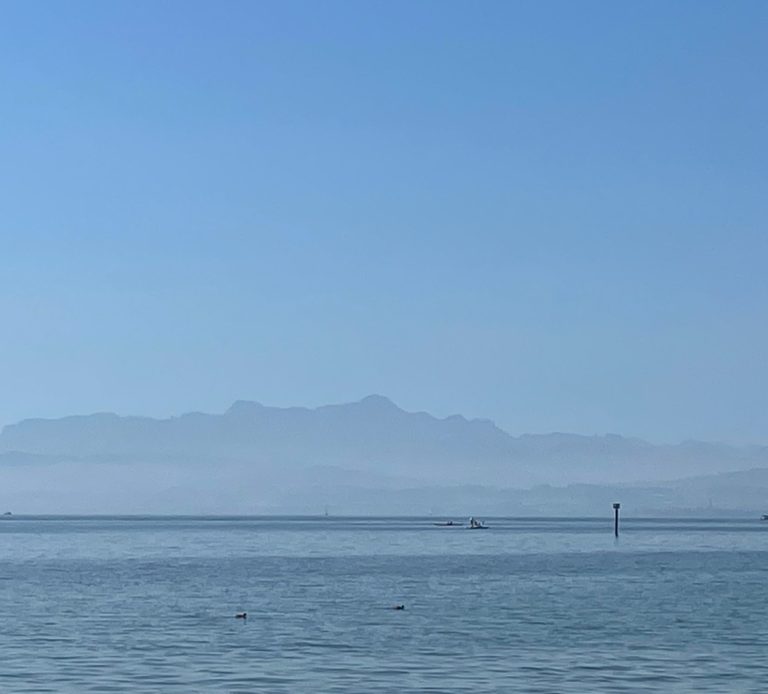
Lake Constance is the largest lake in Germany and borders Austria in the west and Switzerland in the south. It offers leisurely and sporty riding, day and mutli day tours. There are great little towns on the lake like the island town of Lindau, the medieval fortress of Meersburg and the delightful old town of Constance. Thermal spas and beaches provide plenty of places to recharge, the food is hearty and the views over the lake are wonderful. The island of Mainau has the most magnificent gardens and as this is a historical landscape, there is plenty of culture and history. This is a great place to combine riding with relaxation. The local climb is the Pfänder mountain in Austria with a lovely panoramic views over the lake. This is a category 1 climb of 7.1km length and 621m elevation gain that has some bite though.
The German northern shore of Lake Constance has great areas to ride and an almost endless variety of routes. Here are some suggestions.
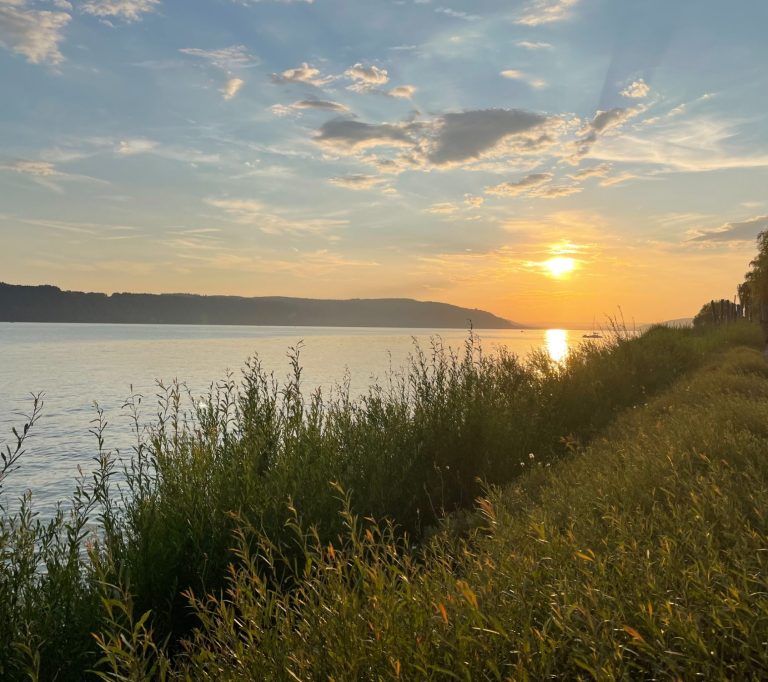
Lake Constance - Hills around Friedrichshafen
Route Tip:
The area north of Friedrichshafen is the hilliest on the German side of the lake. The Höchsten is the highest point with 834m altitude and can be climbed five different ways.
The Gehrenberg and Heiligenberg are the two other notable climbs and all three can be combined in a great ride of varying length and elevation gain. The tip of the Gehrenberg has some notably steep sections.
The suggested route is 93km km long with and elevation gain of 1,440m. Apart from the climbs there are some lovely passages like the Fuchstoble and the Deggenhäuser Tal and sweet towns like Markdorf.
There is hardly any traffic and the superb roads make it wonderful to ride. The restaurant at the Höchsten is worth a stop for its wonderful views over the region and its great cakes.
Circumnavigating Lake Constance
Route Tip:
The lake can be navigated nearly entirely on bike paths which is great for families on multi day tours. If you are riding more sporty, sometimes riding on the road is unavoidable though.
The whole way round is about 220km and can be broken up in parts. Alternatively you can take a boat across the lake to get back to where you started.
A half - circumnavigation loop ride takes you from Friedrichshafen to Constance and back by catamaran ferry which is a lovely way to end the ride. This is an 80km ride with 520m elevation gain and is mainly flat with the exception of some climbing at the back of Constance. It comes past the medieval town of Meersburg and the walled town of Überlingen. The Birnau monastery, which is between these two towns, with its great baroque church is worth a stop.
There is an annual event to cycle around the lake with, the Bodensee Radmarathon. It offers four routes of varying lengths and is normally held in September, find out more here.
Allgäu north east of Lake Constance
Route Tip:
This is an area mostly of rolling hills stretching north from Lindau towards Ulm and towards the east along the Austrian border. This is a 90km ride through rural areas with an open landscape. You ride on endless side roads through quaint towns and villages.
It first climbs out of Lindau to Scheidegg through Austria which is the main but relatively modest climbing effort. From there, the route goes to Wangen which is a very pretty town and a great stop for lunch in its many restaurants in the old town. Up and down the route goes to Vogt and back to Lindau via a couple of pretty lakes, Schleien and Degersee which is a nice place to stop for a break at the Degersee Stube.
Along this ride, the terrain towards the Austrian border is more alpine and towards the north it through lovely rolling hills, farmland and forests.
Lake Constance Factfile
Bike shops: 18 Grad BikeStore Friedrichshafen, Der Keller Fahrrähder Friedrichshafen and Wangen
Towns to visit: Lindau (island town), Langenargen (hisoric castle on the lake), Friedrichshafen (fantastic promenade and Zeppelin museum), Meersburg (medieval fortress town), Überlingen (walled city), Constance (historical downtown between Rhine and lake)
Ferries: Catamaran between Friedrichshafen and Constance, Ferry between Meersburg and Constance, Ferry between Friedrichshafen and Romanshorn (CH)
Best cake on route: Der Löwen Hotel & Bäckerei Hagnau, Berggasthof Höchsten, Great beergarden on route in Meersburg is Rebgut Haltnau
Gardens to visit: Insel Mainau - Island gardens (spectacular island garden, reached by ferry from Unteruhldingen or by road from Constance)
Spa pools and thermal spas: Bodensee Therme Überlingen, Therme Lindau, Bodensee Therme Konstanz, Meersburg Therme
Outdoor pools with lake access: Freibad Fischbach, Strandbad Friedrichshafen, Strandbad Immenstaad, Strandbad Eriskirch, plus many more
Alpine passes and climbs in Germany
Riding in the German Alps and Pre-Alps (Allgäu)
Germany’s Alpine passes are concentrated entirely in Bavaria, across the Allgäu and Bavarian Alps. With more than 150 minor passes and mountain saddles, the region offers an enormous variety of cycling, but at a gentler pace than the high Alps further south.
The rolling foothills of the Allgäu gradually give way to higher mountains, creating a landscape of flower-filled Bavarian villages, traditional farmhouses, beer gardens, castles and monasteries. The atmosphere is relaxed and unhurried, while the roads are generally smooth, scenic and well maintained. Numerous cycle paths also provide quieter alternatives to the busier main roads.
The German Alps are busy and traffic can be an issue, however, as the lower passes are easily accessible and popular with tourists, motorcyclists and drivers. Riding here is about picking routes that incorporate climbs and quieter roads while riding early in the day can also make a significant difference. There so route suggestions further down.
Good bases include Berchtesgaden, which also provides easy access to the Austrian Alps around Salzburg; Oberammergau for the mountains around Garmisch-Partenkirchen; and Sonthofen for exploring the Alps around Oberstdorf - see travel destinations.
For cyclists, the Bavarian Alps and Pre-Alps offer a wonderful combination of scenic roads, manageable climbs and traditional Alpine scenery. We have selected some of the highest and nicest passes in the German Alps to help you explore the region.
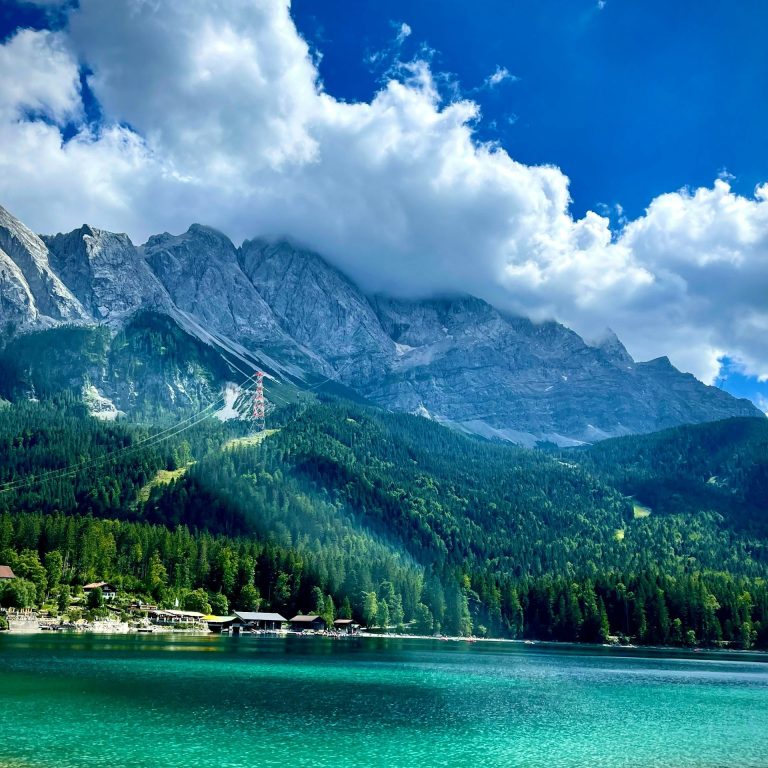
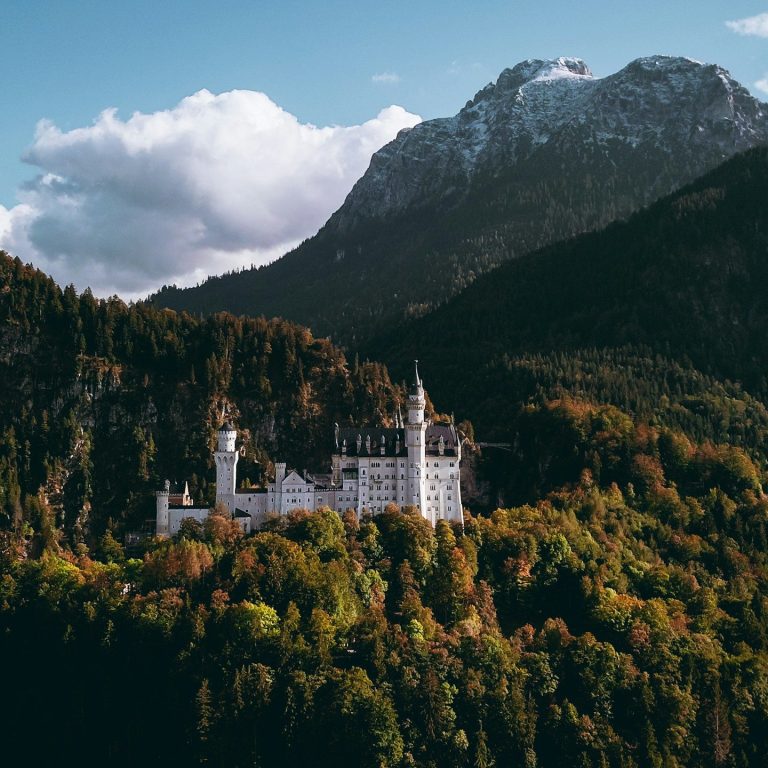
Significant passes and climbs in the German Alps
1,560 m, Rossfeld Panoramastraße, Germany, circular road from/to Berchtesgarden: This is a beautiful but extremely steep and technically demanding climb, with several sections over 20% gradient and a maximum of around 25%. After the toll section, the road becomes quiet, with only occasional tourists. The upper part has some steep ramps but is generally a beautiful climb with around 6% average gradients, good road surface, and excellent summit views.
1,409 m, Riedbergpass, Germany, pass road connecting Fischen and Balderschwang: The Riedbergpass is a tough little Alpine climb and Germany’s highest paved mountain pass. From Fischen/Obermaiselstein, the ascent is particularly demanding, with long sections above 10% and several steep ramps. The road surface is excellent, but traffic can be heavy and fast-moving in summer. Despite this, the pass offers a rewarding climb with impressive mountain scenery and a few restaurants near the summit.
1,178 m, Oberjochpass, Germany, pass road connecting Bad Hindelang in Germany and Schattwald in Austria:
A beautiful, winding road climbs from Bad Hindelang to the pass, with eight well-spaced switchbacks and a smooth, perfectly engineered surface. The route continues into the Tannheimer Valley and towards the picturesque Haldensee, with lovely mountain views throughout. A scenic and enjoyable Alpine road that is as rewarding to ride as it is to admire.
1,129 m, Spitzingsattel, Germany, pass road connecting Neuhaus and Valepp: The climb to Spitzingsattel/Spitzingsee a tough part of the route toward Valepp and Rottach, which is the a highlight. The road is wide and in good condition, with beautiful Alpine scenery, waterfalls and streams. The climb is steep (often over 10%) for nearly 2.5 km, with no hairpins to provide respite. It’s relatively short but physically demanding. Traffic can also be heavy on good-weather days and holidays.
1,123 m, Sudelfeldpass, Germany, pass road connecting Brannenburg, Niederaudorf and Bayrischzell: The Sudelfeld climb from Brannenburg is a beautiful and well-maintained ascent, with much of the lower section shaded. The opening kilometres are relatively easy before a very steep section of up to around 18%, including a short but steep tunnel. After the tunnel, the gradient eases and the remainder of the climb is more manageable. Traffic is generally limited because of the toll road and daytime motorcycle restrictions, although it can become busier, particularly in good weather. Early mornings and weekdays are recommended for a quieter ride. The road is wide and in excellent condition, and the climb provides a good route into the Sudelfeld ski area, with options to continue towards Bayrischzell/Schliersee or Kufstein.
1,118 m, Ammersattel, Germany, pass road connecting Plansee and Groswang: Despite the at times heavy traffic, particularly motorcycles, this is a beautiful Alpine road with plenty to enjoy. The route winds through dense pine forest, with a small river running alongside the road and a handful of idyllic houses scattered through the valley. The scenery has a character of its own, quite different from the landscapes around Plansee or Ettal. The route also passes close to Linderhof Palace, one of Bavaria’s most famous and beautiful sights. Although the palace itself isn’t visible from the road, it is well worth stopping to visit if you have the time.
941 m, Achenpass, Germany/Austria, pass road connecting Kreuth (Germany) and Achensee (Austria): The Achenpass connects Lake Tegernsee in Germany with Lake Achensee in Austria, with the border crossing the pass itself. The route has a distinctly different character on either side: the German section winds through dense woodland, while the Austrian side opens into beautiful alpine meadows with impressive mountain views. Although the road is not a major through route, it can still be busy at times. A cycle path on the Austrian side provides a quieter alternative. Riding early in the morning or outside the main season transforms the route, giving the pass a wonderfully peaceful and remote Alpine character.
869 m, Ettaler Sattel / Ettaler Berg, Germany, pass road connecting Oberau and Oberammergau: The route passes the famous Ettal Abbey and can be particularly busy during the peak tourist season and when the Oberammergau Passion Play is being performed. It remains an enjoyable road to cycle though, with a cycle path providing a quieter option through the wider sections of the valley. Ettal Abbey is certainly worth a stop, making this a rewarding route despite its popularity.
858 m, Kesselberg, Germany, pass road connecting Kochelsee and Walchensee: The Kesselberg is a steady, well-surfaced climb through forest, with a series of sweeping hairpins and a consistent gradient. The main attraction is the view over Lake Kochelsee, which provides a welcome backdrop to the ascent. Traffic, particularly motorcycles, can be noticeable, but early morning or quieter weekdays offer a more relaxed experience. As part of a longer ride towards Innsbruck and Seefeld, the Kesselberg makes an excellent opening climb, with the road continuing to rise gradually for many kilometres beyond the pass.
This wonderful 562 km journey across the Bavarian Alps runs from Lindau in the west to Salzburg in the east, with around 8,790 metres of climbing. It can be ridden in five days by stronger cyclists, although six days allows more time to enjoy the landscape and the many places worth stopping along the way.
The route broadly follows the German–Austrian border, occasionally crossing into Austria to take in passes and mountain roads that mark the frontier between the two countries. In addition to Alpine climbs, the journey explores the rich variety of the lower mountains: countless small climbs and saddles, sparkling lakes, hidden valleys, rivers and open farmland and pastures.
This is classic Bavarian cycling country, with castles and monasteries, picturesque villages and traditional beer gardens providing plenty of opportunities to stop and refuel. The landscape is particularly appealing in the transition between the rolling hills of the Allgäu and the higher mountains further south. The journey culminates dramatically in Berchtesgaden, with the climb to the Rossfeld Panorama Road, Germany’s highest road and a fitting finale to the tour.
Both ends of the route are easy to reach by train. Lindau has good rail connections, while Salzburg is particularly convenient, with direct links to Munich and the wider European rail network.
The route makes every effort to use quiet side roads and cycleways, although around 133 km are on state roads. Traffic is therefore an unavoidable part of cycling in this busy corner of the Alps, particularly around the larger valleys and transport corridors. Nevertheless, these sections are outweighed by the peaceful lanes, mountain roads and beautiful landscapes that make this such a memorable journey through Bavaria.
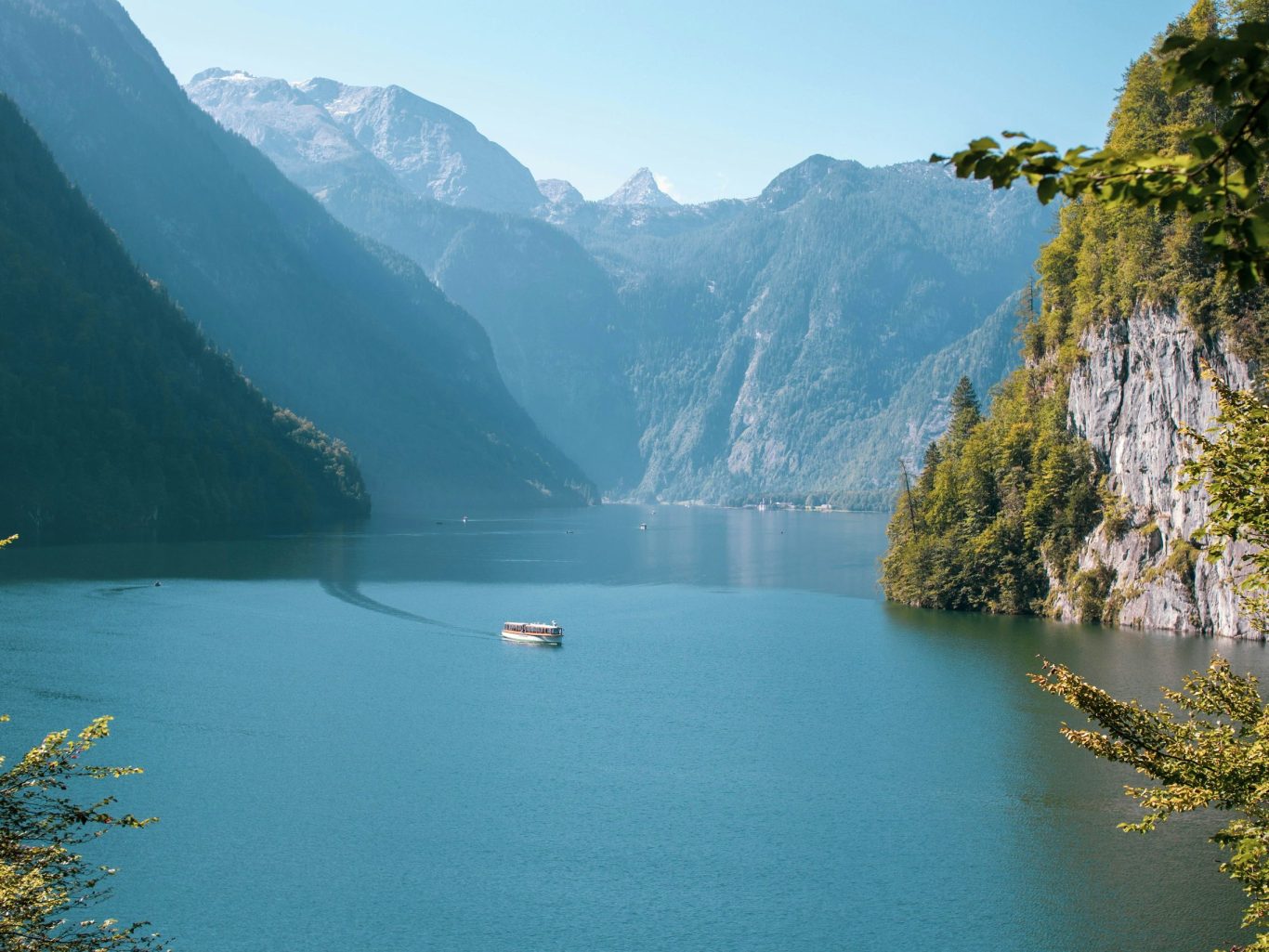
Lovely day routes in the German Alps
Circular routes from Sonthofen:
Lovely route between Germany and Austria climbing the Riedbergpass - 95km, 1,770m elevation gain.
Ride from Sonthofen to lake Haldensee in Austria via the Oberjochpass - 85km, 1,220m elevation gain.
Circular routes from Berchtesgarden:
Mountain ride via the Rossfeld Panorama Road and Königsee - 77km, 2,080m elevation gain
Demanding ride to Loferer Alm via the lovely Klausbachtal valley - 96km, 2,270m elevation gain.
Circular routes from Oberammergau:
Circular routes from Tegernsee:
Route from Tegernsee to Valepp, Sudelfeld pass and Allgäu - 98km, 1,730m elevation gain
Discover further riding in Germany with Komoot
This is a lovely collection of routes in the Black Forest on Komoot. Explore more here.
Bavaria also has some further excellent road riding and this Komoot selection is a good starter. Explore more here.
Away from the mountains, crossing Germany West to East is a great ride through the heart of the country. Explore more here.